Зміст
The Look
The Nothing Phone 4a Pro sits at $499.
Same as the Pixel 10a. Same as a lot of other things that are boring.
This thing?
Not boring.
Especially in pink.
I’ll admit it, I am shallow about this.
I love pink tech.
I literally chemically bleached my iPhone to pink last year. I wrapped a $10,000 Leica in vinyl pink. This Nothing phone arrives in a subtle, sophisticated pink rather than that eye-melting hot magenta of the 2003 Razr days. It feels refreshing. A small act of rebellion against the endless sea of graphite black and silver aluminum.
The design shifted, though.
You remember the see-through plastic back of the old Nothing phones? The one with all the glowing LEDs visible underneath?
Gone.
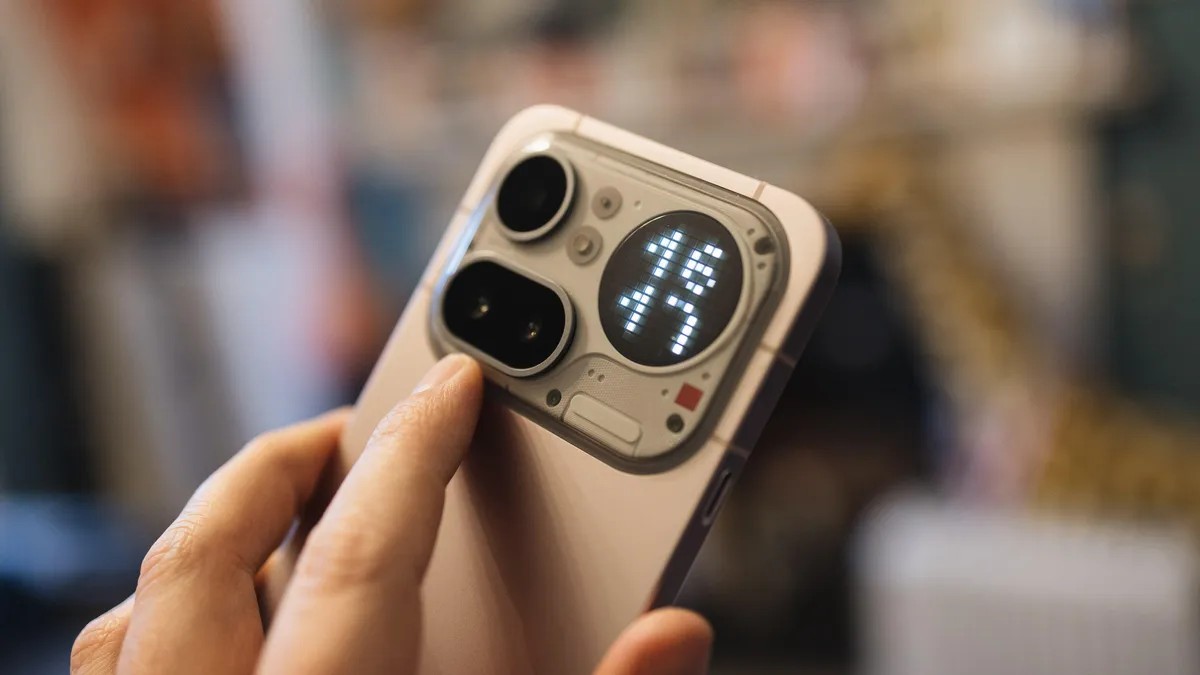
Replaced by a slab of premium-feeling aluminum that covers about 70 percent of the rear. Cover up the camera island and it’s just… another phone. Generic.
The magic lives in that horizontal camera bar.
Visible screws keep it looking industrial, rugged, slightly unfinished in a cool way. And then there’s the Glyph Matrix.
Last year, the flagship Phone 3 had a touch-sensitive glyph area. You could play games with it.
The 4a Pro just has a circular dot-matrix screen.
No touching. Just displaying.
Time. Battery. Uber countdown.
Is it useful?
Sometimes.
Glancing at the battery percentage without unlocking the phone is a minor victory. But let’s be honest.
Mostly, it’s a flex.
A visual shiv in the heart of the Pixel 10a’s sterile, smooth camera cutout. Nothing looks like a toy; the Pixel looks like a paperclip.
Inside the Box
Power comes from a Snapdragon 7 Gen 4.
Eight gigabytes of RAM base. Twelve on the model I tested.
It flies.
Menu scrolling is stutter-free. Apps pop open. I fired up Genshin Impact—graphic nightmare fuel for budget chips—and it ran smooth enough for casual sessions. It isn’t a raw performance monster, benchmarks lag slightly behind the Pixel 10a, but you won’t feel it unless you’re compiling code.
It runs Android 16 wrapped in Nothing’s interface.
Monochrome. Stark.
Too stark?
For me, yes.
App icons bleed together. I keep mistaking Twitter for Telegram.
But you can flip the switch to “Normal Mode” if color is your jam. I did stick with the custom widgets and Private Space feature. Lock sensitive apps behind a biometric gate. Useful if you hate accidental gallery swipes during Zoom calls.
Then there is Essential Space.
Press a physical button on the side.
Snapshot. Record audio.
Why?
Because you remembered something weird in a book, or need to buy specific spices for a recipe.
Old method: Open Notes. Type. Forget to save.
Essential Space method: Button press. “Remind me to buy thyme.” Phone listens. Saves the screenshot context. Searches later.
It actually works.
It turns the phone into an external brain. A clunky, slightly buggy, but genuinely clever external brain.
Support promises three years of OS updates.
Six years of security patches.
You can hold onto this till 2031 and it won’t brick your data.
Google promises seven. Nothing is one year short.
Does it matter?
For most people, no. Security is what matters. And six years is plenty long for a sub-$500 phone.
Shooting the Breeze
Here is where things get messy.
The triple-camera array looks aggressive.
50-megapixel main. 50-megapixel 3.5x zoom. 8-megapixel ultrwide.
The main lens is a joy.
Colors punch through the screen. Blues are deep. Grass is aggressively green. Details hold up.
Switch to the ultrwide and the soul leaves the body.
The sky turns pastel gray. The vibrancy flatlines.
It’s a jarring transition.
Cheap phones always do this, but doing it here, with such a strong main camera, feels like a betrayal. If you travel and rely on that ultrwide shot of the canyon, be ready for some editing software to save your soul.
The telephoto lens is the sleeper hit.
3.5x optical zoom keeps things sharp.
Jump to 7x (digital mix) and you lose some texture. Hair turns into a smudge.
But for grabbing a distant menu board or a friend’s face at a party? Perfect.
Head-to-head with the Pixel 10a:
The Nothing is louder.
Pixel images are balanced, natural, boring. Good base for editors who want control.
Nothing images are ready. Vibrant. Punchy. The red awning of that pizza place I shot? Glowing in the Nothing. Dull brick in the Pixel.
Nature shots tell a different story.
Ivy on a brick wall.
Pixel gets the green right. Emerald. True to life.
Nothing warms it up. Turns it yellowish-brown.
Which do you want?
Depends on if you are selling a painting or editing a portrait. For quick snaps? I’ll take the punch over the truth any day.
Juice
The battery is 5,080mAh.
Sounds big.
In real-world abuse, it struggles.
My video streaming test? Dropped 10 percent in the first hour.
By hour three, it was at 73 percent.
Below average.
The Pixel 10a hung on longer in that same test.
But here’s the thing about torture tests: they lie.
Normal usage? Scrolling news, some maps, a few texts. It lasts all day.
Keep the brightness low. Don’t binge YouTube for four hours without a plug nearby.
It charges fast.
50 watts wired.
From dead to “good enough” takes minutes.
You do have to buy the charger yourself though. Typical.
The Verdict
The Nothing Phone 4a is an anomaly.
Usually, cheap phones ask for sacrifices.
You lose the telephoto lens.
You lose the processor.
You lose the dignity of a non-glossy back panel.
Nothing refuses to cut those corners.
Sure, the battery is thin. Sure, the software is a weird mix of genius and minimalist pretension. But for $499, you are getting a camera setup that shames the Pixel for raw punchiness. You are getting a design that people will look at twice. You are getting six years of safety.
If you want the safe, predictable, battery-toting boring phone? Buy the Pixel 10a.
If you want to hold a slab of aluminum that feels like it belongs in a cyberpunk film?
If you like your colors loud and your notifications silent?
This is yours.
Just don’t ask for the pink in stock for more than two minutes.