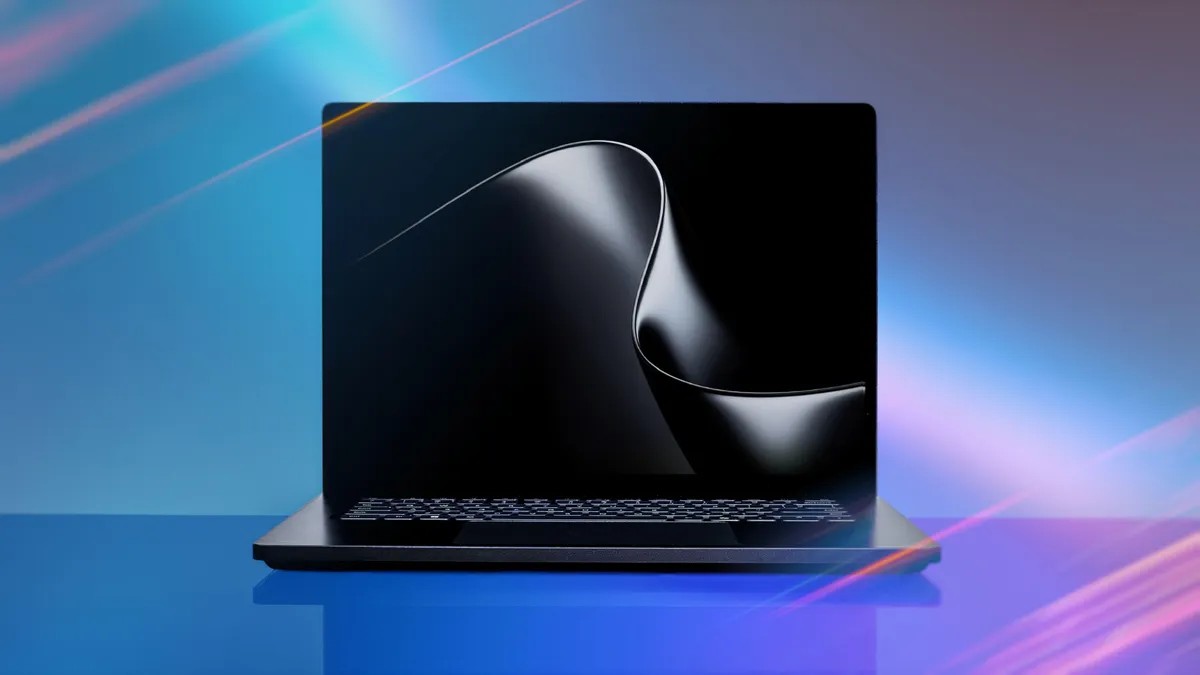
Buckle up. Jensen Huang isn’t whispering about a quiet improvement.
During a keynote in Taipei at Computex, the Nvidia CEO declared that the personal computer is being reinvented.
Microsoft and Nvidia are huddling together, getting cozy for the launch of something called RTX Spark.
A Firecracker for Laptops
It is an Arm-based system-on-a-chip.
Shortened to SoC, this little guy brings Nvidia’s Blackwell architecture into the cramped spaces of thin-and-light Windows laptops.
The promise is seductive. High-power processing. Creative work. Gaming. All without the massive fans, heat, and power hunger of a discrete graphics card.
Nvidia wants you to believe it can handle heavy loads.
Snapdragon X chips from Qualcomm already tout “all-day battery.” They achieve that because they don’t try to lift a car with one arm.
Spark is different.
It is intended for workloads that would normally kill your battery instantly. Think 90GB 3D scenes. 12K video editing. Running local AI models with context windows that stretch to one million tokens. Playing AAA games at 144 frames per second.
Can it really do all that on battery?
We’ll see.
This is just the start of a planned chip lineup.
The first devices hit this fall:
- Microsoft Surface Laptop Ultra
- Dell XPS 16
- Asus ProArt P14 / P16
- HP Omnibook X and Ultra models
- Lenovo Yoga Pro 9i
- MSI Prestige N16 Flip
That Microsoft entry is interesting.
The Surface laptop line hasn’t gotten a serious screen update in forever. No discrete GPUs either.
This new “Ultra” model packs a 262ppi mini-LED touch screen. 2,000-nit brightness for HDR.
It feels like what the Surface Laptop Studio should have been three years ago. Maybe this pulls the dead product back from the grave.
“We’re giving creators the power they’ve been asking for.”
There will also be tiny desktops.
Developers seem to be driving a resurgence in these form factors. Acer, Asus, HP, and Lenovo will compete against AMD’s Ryzen AI Halo boxes.
Nvidia plans to cover desktop, laptop, and workstation categories with each new generation of this silicon.
Prices are a mystery right now.
Inflation, supply shortages, and the insatiable AI gold rush have made components expensive. Memory and storage are scarce. You’re paying a premium.
Inside the Spark
This chip is a cousin of the DGX Spark.
Originally built for Linux desktops aimed at developers, it now finds its way into Windows. Designed alongside MediaTek, it sports 6,144 CUDA-cores.
A 20-core “Grace” CPU handles the general lifting.
Memory is where it gets tricky.
Unified memory means the CPU and GPU share the pool. Up to 128 GB is possible. That helps with those huge AI models.
But here’s the catch.
Entry-level systems might only ship with 16 GB of RAM.
Compare that to an RTX 50-series discrete card which has 12 GB dedicated video RAM. If the system runs low, everything stutters. The unified memory architecture can become a bottleneck.
Gaming performance? Nvidia cites 100 fps at 1440 p.
Whether that includes DLSS is unclear.
The AI horsepower is advertised as 1 PFLOPS.
Wait. That sounds fast.
It is measured in FP4.
FP4 is a weird, new data format. Faster than FP8, but less precise than full integers. It’s the current darling for large models because the trade-off in accuracy is negligible for many tasks.
This is the first consumer SoC to support FP4 in hardware.
Apple’s M5 chips don’t do it.
That might hurt macOS in the AI race. Or maybe it doesn’t matter yet.
The power draw is volatile.
Anywhere from single-digit watts up to 80.
Watch your settings.
If the laptop manufacturer throttles it, you get a warm paperweight. If they let it breathe, it gets hot.
Intel usually specifies narrower bands for mobile chips. Nvidia’s range feels wide open. Dangerous for battery life.
There is an NPU on there too.
Nvidia doesn’t talk about it much, but it qualifies these devices for Windows “Copilot Plus.”
That implies at least 40 TOPs.
Strict divisions remain though.
This isn’t a workstation card in disguise.
No ECC memory support.
No certification program for enterprise apps.
Pro tools stay separate from consumer toys.
The Windows Problem
Windows is changing to accommodate this.
Arm is not x86.
Windows doesn’t natively run x86 instructions on Arm hardware like it does on Intel or AMD chips. It uses a translation layer.
Qualcomm had “Prism” to translate those instructions.
Now, with Nvidia in the mix, Prism needs work.
Microsoft is updating core Windows components.
Why?
To balance cooling.
To distribute tasks across CPU cores efficiently.
To manage that shared memory for TensorRT AI tasks.
And for gaming.
Nvidia has more to prove than Qualcomm.
They are working with Epic Games on Easy Anti-Cheat support. This is vital for multiplayer titles on Arm devices. The Xbox app support is being tightened up too.
Adobe is rewiring its engines.
Photoshop and Premiere Pro will have new pipelines to tap directly into the Spark’s GPU.
It’s not plug-and-play. It requires re-engineering.
Then there’s OpenShell.
Nvidia’s security layer for AI agents.
Coming to Windows.
You’ll set guardrails. Define which local models can run. Hide your data when it queries the cloud.
Microsoft will reveal the details at its Build conference in June.
One thing is clear.
Your Taskbar will get crowded.
Microsoft plans to put AI agents right there in plain sight.
All these updates, this translation work, this heat management—it is all leading there.
But will it matter if your laptop cooks your lap to hit 80W?
Probably.