
When people hear the word supercomputer, they usually picture Deep Blue. That IBM machine beat Gary Kasparov at chess in 1997. It became the public face of high-performance computing. The win was controversial. Some argued the computer was too reliable or that Kasparov played poorly. The truth is messier. IBM actually dismantled Deep Blue soon after the match. It didn’t survive as a working system.
Watson changed the game later. It beat Jeopardy! champions Ken Jennings and Brad Rutter. It handled natural language and trivia with ease. These systems were brilliant. But they paled in comparison to what was on the November 2013 TOP500 list.
TOP500 tracks the 500 most powerful commercially available systems. The name sounds ironic. These aren’t commercial in the sense that you can buy one off a shelf. They are institutional monoliths. They look like a throwback to the 1950s. Early computers filled entire rooms. Modern ones fill warehouses. They use racks of cutting-edge hardware to produce petaflops of power.
Your laptop has four cores. A supercomputer has hundreds of thousands. The top entry had over three million cores.
Зміст
How Supercomputers Are Measured
TOP500 uses the Linpack benchmark. It feeds a computer linear equations. It measures how fast the machine solves them. An alternative method is in the works. The ranking matters because it tracks global progress. The list updates every six months. New systems rise into the ranks. China’s Tianhe-2 took the top spot in November 2013.
Here is how the top 10 looked in early 2014.
10: SuperMUC (Germany)
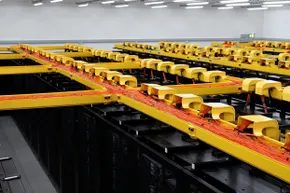
9: Vulcan (United States)
The rankings shifted again. SuperMUC slid from fourth to tenth. That drop hurts. But efficiency remains the headline. Water cooling makes the difference. Air cooling can’t compete. IBM’s numbers are stark. Heat removal is 4,000 times faster. That’s not a typo. It’s physics.
Why does this matter? Power bills. Carbon footprints. The cost of keeping a brain alive. SuperMUC saves 40 percent energy. That’s massive for a machine this big. 150,000 cores don’t run on goodwill. They run on electricity. The Leibniz Supercomputing Centre knew this. They installed hot-water cooling. It keeps the processors from melting. It’s simple. It’s effective.
Germany’s second fastest. Europe’s third. Nearly double last year’s tenth place. Speed isn’t everything. Stability matters. Efficiency matters. SuperMUC proves you don’t need to burn the planet to compute.
But the US isn’t sitting still. The next entry on the list changes the game.
9: Vulcan (United States)
Vulcan. Sandia National Laboratories. New Mexico. It’s not just fast. It’s dense. Cray systems. Xeon processors. InfiniBand networks. The architecture is different. It’s about packing power into a smaller footprint. Less space. More compute.
How does it compare? SuperMUC is broader. Vulcan is deeper. The energy density is higher. That brings new cooling challenges. Not hot-water tanks. Micro-channel cooling. Liquid cold plates. The hardware needs to breathe differently.
Who uses it? National security. Climate modeling. Astrophysics. The applications are high stakes. Vulcan runs simulations that predict outcomes. Outcomes that affect policy. Outcomes that cost billions.
It’s not just about speed. It’s about precision. At 150,000 cores, a single bit flip can cascade. SuperMUC handles that with scale. Vulcan handles it with design. Tight integration. Low latency.
Which is better? Depends on the problem. SuperMUC for general purpose heavy lifting. Vulcan for specialized, high-density tasks. The line is blurring. Both are pushing the limits of what’s physically possible in a data center.
The cooling systems tell the story. One uses water loops. The other uses direct-to-chip liquid. Both solve the same problem. Heat is the enemy. Power is the resource. Efficiency is the metric.
Vulcan’s entry into the top ten isn’t just a rank change. It’s a statement. The US is doubling down on density. On efficiency. On doing more with less.
The race isn’t over. It’s just getting hotter. Literally.
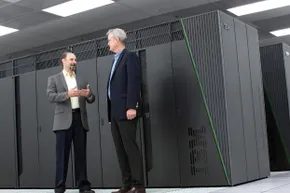
Vulcan: NNSA’s Powerhouse Opens Doors to Industry
Vulcan took the number nine spot on the list, marking the first entry in the top 10 to run on IBM’s formidable BlueGene/Q architecture. It relies on Power BQC processors—16-core chips clocked at 1.6GHz—to deliver raw computational muscle. The system clocks in at 4.3 petaflops. That is a significant jump, besting its predecessor by more than a petaflop while leveraging nearly 400,000 cores to get the job done.
It is not operating in isolation. Livermore National Laboratory (LLNL) in California houses two of the top 10 supercomputers, and Vulcan is one of them. The machine falls under the purview of the U.S. Department of Energy’s National Nuclear Security Administration (NNSA).
The real story here, however, is who gets to use it.
In mid-2013, LLNL made a strategic move. They opened up Vulcan’s clock time to U.S. businesses. This was not a free-for-all. Companies could access the hardware for collaborative projects, but they had to cover a share of the operational costs. The goal was clear: boost scientific and technological advancement, sharpen U.S. competitiveness, and expand the high-performance computing (HPC) workforce.
Academic and research institutions were also invited to the table. The collaboration targeted specific, high-stakes fields.
- Energy
- Security
- Atmospheric science
- Bioscience
“Vulcan is intended for collaboration with academic and research institutions in areas such as energy, security, atmospheric science and bioscience.”
This arrangement turned a classified-heavy facility into a hub for public-private partnership. It allowed external entities to tap into resources that would otherwise be inaccessible, provided they had a compelling reason to do so and the funds to keep the lights on.
8: JuQUEEN (Germany)
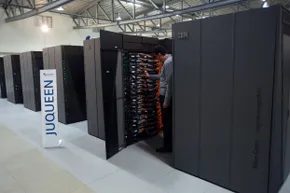
JuQUEEN didn’t just appear out of nowhere. It’s built on IBM’s BlueGene/Q architecture, a platform designed for massive parallel processing. The system hits a peak performance of 5 petaflops, running across roughly 459,000 cores. That’s a staggering amount of compute power, but it doesn’t come for free.
Unlike some entries on this list that have been humming along for a few years, JuQUEEN has a specific history. It was constructed in 2012 to replace JUGENE. JUGENE itself had been a heavyweight, ranking as the ninth fastest system on the November 2010 TOP500. Replacing a top-tier machine isn’t just about having a newer logo on the rack. It’s about sustaining scientific momentum.
Access isn’t open to the public. Researchers affiliated with the Jülich-Aachen Research Alliance have to pitch their projects. They need to justify why they need these specific cores. If the proposal gets approved, they get to carve out time on one of the most powerful supercomputers on the planet. It’s a competitive process. You aren’t just renting a server. You’re earning the right to use resources that define the cutting edge of high-performance computing.
This access model extends beyond JuQUEEN. Scientists can request time on two other German giants: SuperMUC and HERMIT. HERMIT sits at number 39 on the TOP500 list. All of this is coordinated through the Gauss Centre for Supercomputing (GCS). There’s also the Partnership for Advance Computing in Europe (PRACE). These organizations manage the allocation of what is essentially national and continental infrastructure.
7: Stampede (United States)
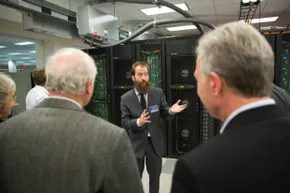
The rise and architecture of Stampede
Stampede didn’t stay at the top for long. It clawed its way into the No. 7 spot in November 2012. By June 2013, it had pushed up to No. 6. Now, it’s slipped back to its previous ranking on the most recent list. But the hardware hasn’t changed. The system runs on Intel Xeon E5 8-core 2.7GHz processors paired with Intel Xeon Phi coprocessors. That combination gives it roughly 462,000 cores. The result? Nearly 5.2 petaflops of raw performance.
The money for this beast came from a grant from the National Science Foundation (NSF). TACC, the Texas Advanced Computing Center at the University of Texas in Austin, houses the Dell PowerEdge system. It sits there, humming along, waiting for work.
Who gets to use NSF-funded supercomputers?
Since January 2013, Stampede has been open to scientists and researchers across every field. It’s part of the NSF’s Extreme Science and Engineering Discovery Environment (XSEDE). Think of it as a virtual network. It openly shares computing power from 16 supercomputers and other resources. Ninety percent of Stampede’s capacity goes to XSEDE. The TACC director controls the remaining 10%.
Qualified researchers at any U.S. institution can submit proposals via the XSEDE website. They don’t just walk in and plug a laptop into a port. They have to apply. They have to prove they need that kind of power.
6: Piz Daint (Switzerland)
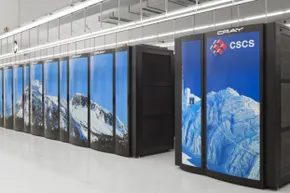
The Cray supercomputer known as Piz Daint has been running since April 2013. It didn’t stay in the shadows for long. A major upgrade pushed it straight into the No. 6 spot on the global ranking. This move dethroned JuQUEEN. Suddenly, Piz Daint was the most powerful supercomputer in Europe.
The system lives at the Swiss National Supercomputing Centre. It combines Intel Xeon E5 processors with NVIDIA graphical processing units. This hybrid setup is not just about speed. It’s about doing more with less energy. The machine boasts 116,000 processing cores. That hardware allows it to hit 6.3 petaflops of computing power. Researchers use it for modeling weather and climate patterns. They also use it for scientific computation in many other fields.
Efficiency matters here. Piz Daint ranks among the most energy efficient supercomputers. It scores 3,185.9 megaflops per watt. This metric comes from the GREEN500 list.
Piz Daint is the only supercomputer to make the top 10 in both the TOP500 and GREEN500 lists.
Most systems trade power for power consumption. This one doesn’t. The GREEN500 ranking takes all the supercomputers in the TOP500 list and ranks them by energy efficiency. Piz Daint’s hybrid architecture keeps energy usage low. The GPUs are more energy-efficient than traditional CPUs. That design choice makes the difference.
5: Mira (United States)
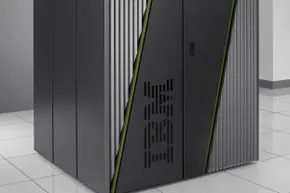
Why IBM’s Mira Dominated the 2013 Supercomputing Landscape
Mira wasn’t just another entry in the top 500 list. It went fully operational in 2013 and immediately established itself as a powerhouse, peaking at a staggering 8.6 petaflops. To put that number in perspective, Mira outperformed Switzerland’s Piz Daint by more than 2 petaflops and surpassed the Stampede system by nearly 3.5 petaflops. The gap wasn’t subtle. It was a statement.
At its core, Mira is a beast built on IBM’s BlueGene/Q platform. It houses 786,000 processor cores, a massive infrastructure located at the Argonne National Laboratory in Illinois. This site serves as a research hub for the U.S. Department of Energy (DOE). Mira didn’t appear out of nowhere either. It replaced Intrepid, an older IBM system that had ranked fourth on the same list back in 2008. The upgrade was significant, marking a clear shift in computational capability for DOE-funded science.
How Access to Mira Works for Researchers
Getting time on Mira isn’t a simple matter of paying a fee. It operates under a strict allocation model designed for high-impact science. The primary gateway is the Innovative and Novel Computational Impact on Theory and Experiment (INCITE) program. Researchers must submit proposals through the DOE’s Office of Science to gain access.
The distribution of resources is precise:
– 60% of Mira’s capacity is dedicated to INCITE winners.
– 30% supports the Advanced Science Computing Research Leadership Computing Challenge.
– The remaining 10% is held in reserve for urgent, time-sensitive computations that can’t wait for the standard review cycle.
This structure ensures that the system serves both planned, large-scale projects and sudden, critical needs. It balances long-term scientific goals with immediate operational demands.
The Japanese Contender: K Computer
Moving from the U.S. to Japan, the K computer represents a different approach to high-performance computing. Located at the RIKEN Advanced Science Institute, this system was designed by Fujitsu and utilizes SPARC64 VIIIfx processors. Like Mira, it entered the scene with serious intent, challenging the established order of supercomputing dominance. Its architecture focused on efficiency and power density, aiming to deliver massive throughput without consuming an unreasonable amount of energy.
The Rise and Relative Decline of the K Computer
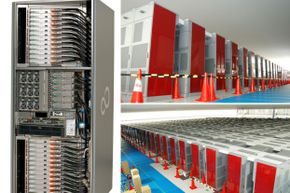
Fujitsu’s K computer held the crown for the world’s fastest machine on both early 2011 rankings. Today, it sits at number four. That drop doesn’t mean it’s weak. It still crushes IBM’s Mira with a raw speed of 10.5 petaflops. It remains the only Japanese entry in the global top ten.
The machine lives at the RIKEN Advanced Institute for Computational Science in Japan. Its daily grind includes global disaster prevention, meteorology, and medical research. It does all of this without relying on IBM architecture. Instead, it runs on Fujitsu’s own SPARC64 VIIIfx octo-core processors. A massive 705,000 cores handle the heavy lifting. They churn through calculations at a pace that still feels incredible.
But let’s be clear. The top three machines are in a different league. They are leaps and bounds more powerful.
3: Sequoia (United States)
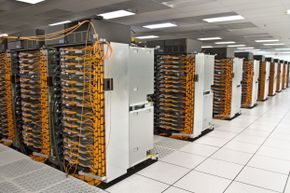
Sequoia dropped out of the number one spot in June 2012. By November, it was second. Now, it sits at number three. It isn’t falling behind. It’s just being outpaced. The machine still commands respect with 1.6 million processing cores and a staggering 17.2 petaflops of raw computational power.
Think about what that number actually means.
Back in 2008, IBM’s Roadrunner made headlines. It was the first machine to crack the 1 petaflop barrier. That’s one thousand trillion operations per second. IBM claimed it performed like 100,000 laptops from that era. Sequoia isn’t just an upgrade. It is 17 times faster than that 2008 benchmark.
The hardware inside isn’t exactly cutting-edge by today’s consumer standards. Sequoia relies on IBM’s BlueGene/Q design. Each chip has 16 cores running at 1.6GHz. That clock speed looks sluggish now. But scale changes everything. With 96 racks of these chips working in unison, the collective output becomes terrifyingly efficient.
Who Needs This Much Power?
You might wonder why anyone needs 17.2 petaflops. The answer is hidden behind closed doors at the Livermore National Laboratory.
This is part of the National Nuclear Security Administration under the U.S. Department of Energy. Sequoia, along with its sibling Vulcan, handles classified work. The most critical task? Simulating nuclear explosions.
They don’t need real detonations. They need physics. Real-time physics.
Sequoia is 63 percent faster than the fourth-ranked computer on the November 2013 list. That gap isn’t just ego. It’s necessity. When you are modeling the implosion of a warhead without a single test shot, milliseconds matter. Microseconds count. The difference between a successful simulation and a failed one can cost millions or lives.
This brings us to the next contender in the race for raw computational dominance.
2: Titan (United States)
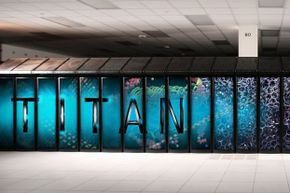
The Hybrid Power of Titan at Oak Ridge
It sits in a room at Oak Ridge National Laboratory in Tennessee, humming quietly while doing heavy lifting. Titan isn’t just a name. It lives up to it. This machine sits at number two on the Top500 list, holding steady since June 2013. It doesn’t look like much from the outside. Just cabinets. But inside, there is serious hardware.
Cray built it. Or rather, they integrated it. The core consists of AMD Opteron 6274 processors. You are looking at sixteen cores per chip running at 2.2GHz. But those CPUs are just the support crew. The real stars are the NVIDIA GPUs attached to each node. Together, they deliver 17.6 petaflops. That is a massive number. The system uses roughly 561,000 cores to get there.
Why does this matter? Because Titan is a hybrid. It is not just CPUs. It is not just GPUs. It is both. This design choice changed everything for the Oak Ridge Leadership Computing Facility (OLCF). They didn’t need new buildings. They didn’t need new power grids. They could slot Titan into the same physical space that previously held Jaguar.
Jaguar was their old beast. Titan is nine times faster. Yet, energy consumption only went up by about 60 percent. That is efficiency. You get nine times the work for a fraction of the power increase. If they had built an all-CPU system of that size, the electricity bill would have been astronomical. The GPUs kept the heat and power draw manageable.
Programming for Accelerated Hardware
There is a catch. You can’t just run old code and expect magic. The GPUs demand a different approach. You have to write software that understands how to talk to parallel processors. It is not plug-and-play.
To solve this, the OLCF didn’t go it alone. They partnered with Cray and NVIDIA. The goal was clear: make these machines usable for scientists. The result was the Center for Accelerated Application Readiness (CAAR). This group works on best practices. They write the guides. They create the frameworks so researchers don’t have to figure out every low-level detail from scratch.
How do you actually use this power? You don’t just buy time on it. It is a resource for the public good. Researchers submit proposals through the U.S. Department of Energy’s INCITE program. If your project makes the cut, you get access. It is competitive. It is rigorous. But for those who win, it is the best computing power on Earth.
Titan proved that hybrid architecture wasn’t a niche experiment. It was the future. It showed you could scale without breaking the bank on electricity.
1: Tianhe-2 (China)
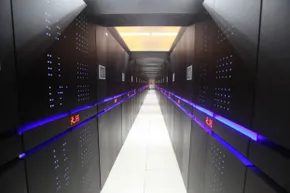
Tianhe-2 arrived in 2012, beating its projected schedule by two years. It didn’t just enter the rankings. It jumped straight to number one.
The machine processes at 33.9 petaflops. That’s nearly double the performance of Titan or Sequoia. It’s also more than ten times faster than Tianhe-1A, which was sitting at number ten in June 2013.
This isn’t just a software tweak. The hardware is massive.
It runs on a mix of Intel Xeon E5 processors. Custom processors. And Intel Xeon Phi coprocessors. In total, there are about 3.12 million cores.
Who builds China’s top supercomputer?
The National University of Defense Technology (NUDT) developed the system. It sits at the National Super Computer Center in Guangzhou. The goal is education and research.
Right now, it is China’s only entry in the top ten. But for sheer processing power in a single machine, the bragging rights are solid.
“Tianhe-2 gives them bragging rights for sheer processing power in a single machine.”
Why Ubuntu Kylin matters for Chinese tech
Tianhe-2 runs on a custom version of Ubuntu Linux called Kylin. This wasn’t built in a vacuum.
It came from a partnership between NUDT, the China Software and Integrated Circuit Promotions Centre (CSIP), and Canonical, the creators of Ubuntu.
This highlights a broader trend. All of the top ten supercomputers, and most of the top 500, run some flavor of Linux. Windows doesn’t hold a candle here. Not yet.
Kylin isn’t stuck in the server room though. It is a freely available, open-source operating system tailored specifically for Chinese users. You can download it from Ubuntu’s site. It works on personal computers too.
That means the same OS powering one of the world’s fastest machines is also on your desktop. If you live in China, or just want to use Chinese-input optimized Linux, it’s an option.
How does it compare to other supercomputers?
Tianhe-2’s specs are specific. 33.9 petaflops. 3.12 million cores. Intel Xeon E5 and Phi.
Compare that to Titan. Or Sequoia. The gap is wide. Nearly double.
It’s also worth noting why Linux dominates here. Open source. Flexibility. Control. You can tweak the kernel. You can manage the hardware directly. That’s why every top entry runs it.
Where can you get Kylin?
You don’t need a supercomputing grant. Go to Ubuntu’s site. Download Kylin. Install it. It’s free.
It’s not just for China anymore. Though it’s tailored for that market.
The hardware is powerful. The software is open. The results are undeniable.
And the rankings change. Next year, someone else might be number one. But for now, Tianhe-2 holds the line.