


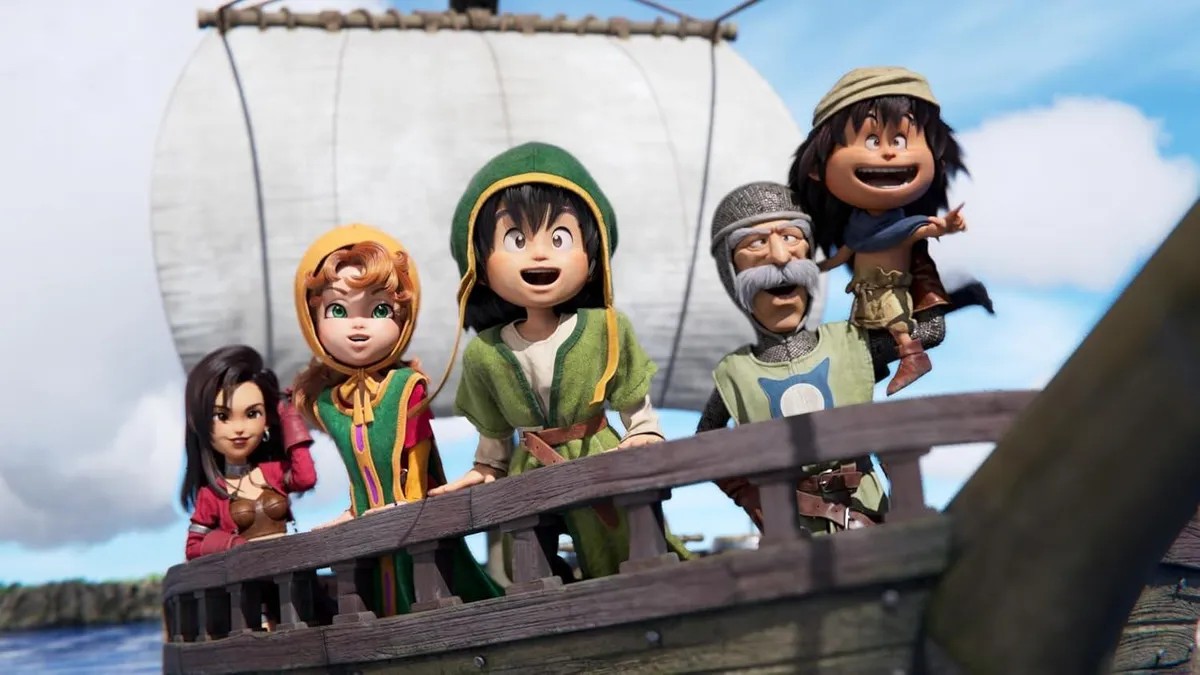
The resurgence of long-form, character-driven Japanese roleplaying games (JRPGs) continues, with Square Enix leading the charge through remakes of its iconic Dragon Quest series. Following the success of remakes for the first three games, and more recently Dragon Quest III, the company has revisited Dragon Quest VII, originally released for PlayStation in 2000. This remake is not simply a graphical upgrade; it’s a carefully balanced modernization of a beloved classic.
Зміст
The Evolution of a Fan Favorite
Dragon Quest VII occupies a unique position in the franchise’s history. Unlike the first six games, which were divided into two trilogies, DQVII was designed as a standalone experience. This divergence has led some fans to view it as less central to the overall Dragon Quest canon, though it remains a highly regarded title. The remake acknowledges this by streamlining the experience while preserving its core charm.
Streamlining the Experience
One of the most noticeable improvements is the reduction in initial wait time before engaging in combat. The original DQVII was notorious for its lengthy prologue, forcing players to endure an extended period of dialogue before taking control. The remake cuts this down from nearly three hours to around one, a significant improvement over even the 2016 3DS version, which took closer to two. While still longer than many modern games, this adjustment makes the experience more accessible for new players.
Beyond the prologue, DQVII: Reimagined introduces quality-of-life features such as instant enemy defeat for out-leveled opponents, fast travel, and clear quest markers. These additions enhance accessibility without sacrificing the game’s core mechanics.
Visual and Audio Fidelity
The remake retains the original’s character designs but elevates them with enhanced 3D models and detailed animations. The environments have also been improved, providing a more immersive experience. Coupled with the series’ iconic melodies dating back to 1986, the game delivers a nostalgic yet visually polished presentation.
A Fragmented Narrative
Despite these improvements, DQVII ’s story remains its weakest point. Like many JRPGs, it follows a familiar hero’s journey: a humble protagonist destined to defeat a god. The narrative is structured around the discovery of lost islands, each containing a self-contained problem that must be resolved. While charming, this episodic format lacks the grand narrative buildup found in other Dragon Quest titles. The game’s story serves the gameplay loop, but doesn’t necessarily stand out as a compelling narrative in its own right.
The Engaging Vocations System
The most intriguing aspect of DQVII is its vocation system, the series’ take on class mechanics. Players can freely switch between over 20 vocations, each with unique abilities and a signature “Let Loose!” move. The system encourages experimentation, with tiered classes unlocked by mastering previous ones. The new “Moonlighting” feature allows players to retain skills while switching vocations, further incentivizing exploration. This system provides depth and replayability, ensuring that the 40-hour campaign feels rewarding.
A Modernized Classic
Dragon Quest VII: Reimagined is a solid recommendation for JRPG fans, particularly those familiar with the series. The game’s streamlined mechanics, improved visuals, and engaging vocation system make it a worthwhile experience. However, those unfamiliar with the genre or expecting a groundbreaking narrative may find the pacing and episodic structure less appealing.
The game is available now on PC, PS5, Nintendo Switch, and Xbox Series X and S for $60.


