


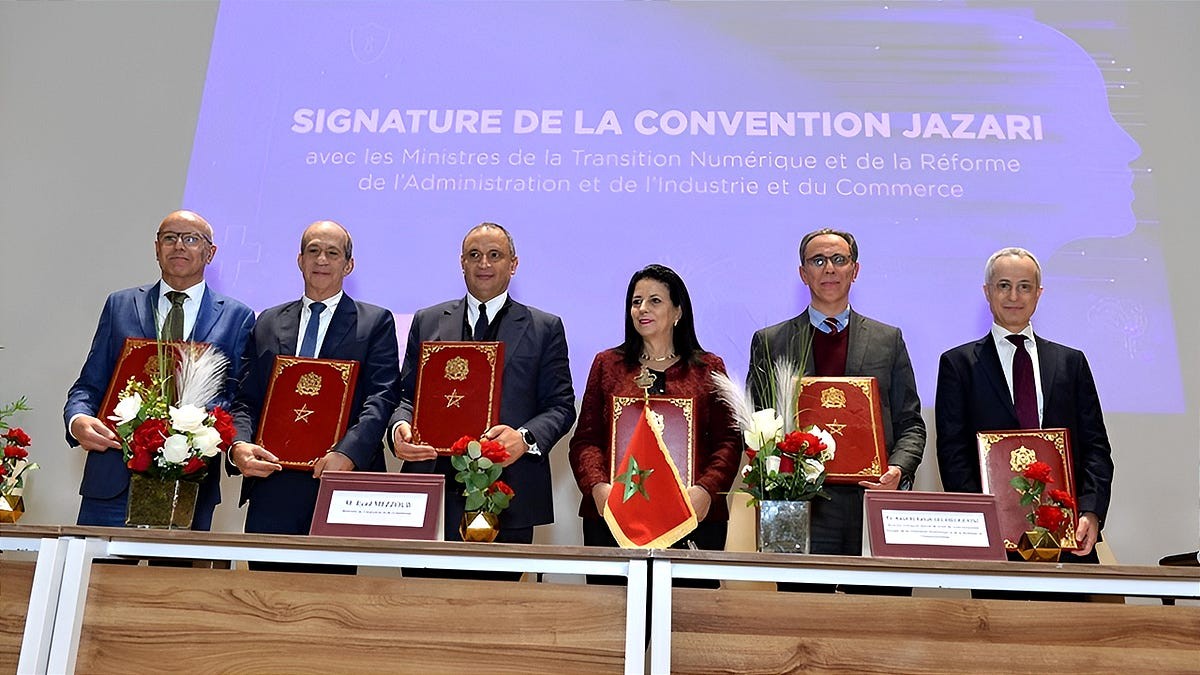
Morocco is accelerating its national Artificial Intelligence (AI) strategy with the establishment of the JAZARI Industry X.0 Institute, a new research and innovation center designed to bridge the gap between academic AI development and industrial application. The initiative, backed by the Ministries of Commerce & Industry, Digital Transition, and Economy & Finance, represents a significant step toward realizing Morocco’s ambitious AI goals.
Зміст
National AI Strategy: A $10 Billion Push
The JAZARI Industry X.0 Institute is a key component of the “AI Made in Morocco” strategy launched earlier this year. This national plan aims to inject 100 billion Moroccan dirhams (approximately $10 billion USD) into the country’s GDP by 2030, create 50,000 AI-related jobs, and train 200,000 professionals in AI skills. This follows the 2025 announcement of the broader Jazari Institutes network, intended to establish AI centers of excellence across Morocco’s 12 regions.
Bridging Academia and Industry
The new institute will operate in partnership with four Moroccan universities—Euromed University of Fez, Sidi Mohamed Ben Abdellah University, Moulay Ismail University, and Al Akhawayn University—and will focus on accelerating the transfer of AI technologies from university research labs into practical industrial applications. This includes fostering collaboration between academic institutions, startups, established industries, and investors.
Why This Matters: Regional Leadership and Economic Sovereignty
Morocco’s AI push is not merely about economic growth; it is also about establishing regional leadership in AI development within Africa. The country’s “Maroc IA 2030” roadmap aims to position AI as a pillar of national sovereignty and inclusive economic development. This initiative comes as Morocco’s ICT market is expected to grow from $6.95 billion in 2025 to $10.08 billion by 2030, driven by the adoption of advanced digital services and the rollout of 5G infrastructure.
Talent Shortage: A Critical Challenge
Despite these ambitious plans, Morocco faces a significant challenge: a shortage of skilled ICT professionals. The country currently graduates 18,000 ICT specialists annually, falling short of the estimated demand of 40,000. This talent gap is further exacerbated by the emigration of qualified professionals to Gulf countries, where salaries are significantly higher. The JAZARI network is designed to address this issue by scaling up domestic AI talent development.
The JAZARI Industry X.0 Institute will deliver four core functions: AI training, applied research, shared digital infrastructure, and incubation programs for AI startups. This holistic approach underscores Morocco’s commitment to building a sustainable, sovereign AI ecosystem.
Morocco’s strategic investment in AI is a clear signal of its intent to lead in technological innovation within the region. The success of the “AI Made in Morocco” strategy will depend on overcoming the talent shortage and effectively translating research into tangible economic outcomes.


