The National Centre of Meteorology has done something no other national weather service has.
They aren’t running a pilot program.
They aren’t waiting for more data.
The Abu Dhabi-based authority just turned on the first real operational agentic AI in its forecasting centers.
Two specific tools are live. Al Rasid. And Forecaster Assistant.
It’s not just about faster clicks. It’s about shifting the weight of analysis to machines while humans keep the keys to the car.
How They Work
Let’s look at what they actually do.
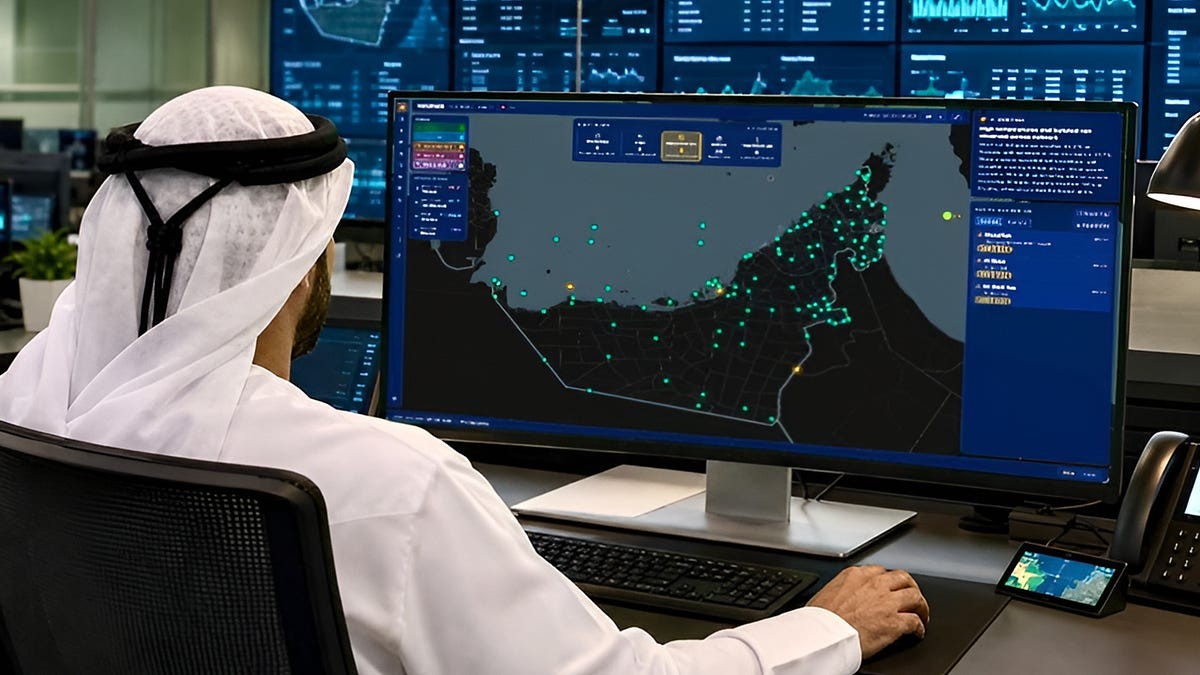
Al Rasid is the watcher. It runs 24/7. It cross-references radar. Satellite feeds. Seismic networks. Air quality monitors.
If a number crosses a threshold.
It alerts you.
It also spits out daily national briefings. No waiting. Just visual alerts the moment conditions change.
Forecaster Assistant is the thinker. It takes the spaghetti mess of global numerical prediction models and compares them. It looks for where they agree and where they diverge.
Discrepancies get flagged. Uncertainty gets noted.
It even drafts preliminary weather bulletins and marine updates. A hazard dashboard gets built for the coming days automatically.
Sounds futuristic? Maybe.
But here’s the kicker.
All this output goes through a human.
“The technology is meant to support specialists, not replace them,” said NCM Director General Dr. Abdulla Ahmed Al Mandous.
Experts hold final authority.
Always.
Why It Matters
The UAE isn’t just dabbling here. This is live, integrated infrastructure. Most countries are still in testing phases. The UAE has moved past pilots into an active operational layer.
They plan to expand this fast.
The roadmap covers:
– Climate services
– Aviation meteorology
– Seismology
– Multi-hazard early warning systems
And air quality monitoring.
There’s a strict governance framework too. Data protection is locked down. Decisions are traceable. Outputs must be explainable. If the AI makes a move, we know why. Performance gets evaluated against specific indicators constantly.
It’s part of a bigger push. The federal government announced back in April that agentic AI should cover 50% of all government sectors. Ministers are being assessed on adoption speed now.
This isn’t accidental. It’s policy.
The UAE wants to move from digital transformation to autonomous, intelligence-driven operations.
Weather is the test case.
Seismology comes next.
And then the rest of government follows.
The goal isn’t to fire meteorologists.
It’s to give them eyes everywhere.
Will it be perfect? No. AI isn’t.
But it’s faster. And for a country where climate resilience is non-negotiable. Speed might just be the difference.
Or maybe we’re just moving faster toward errors we can’t see yet.
Who knows?