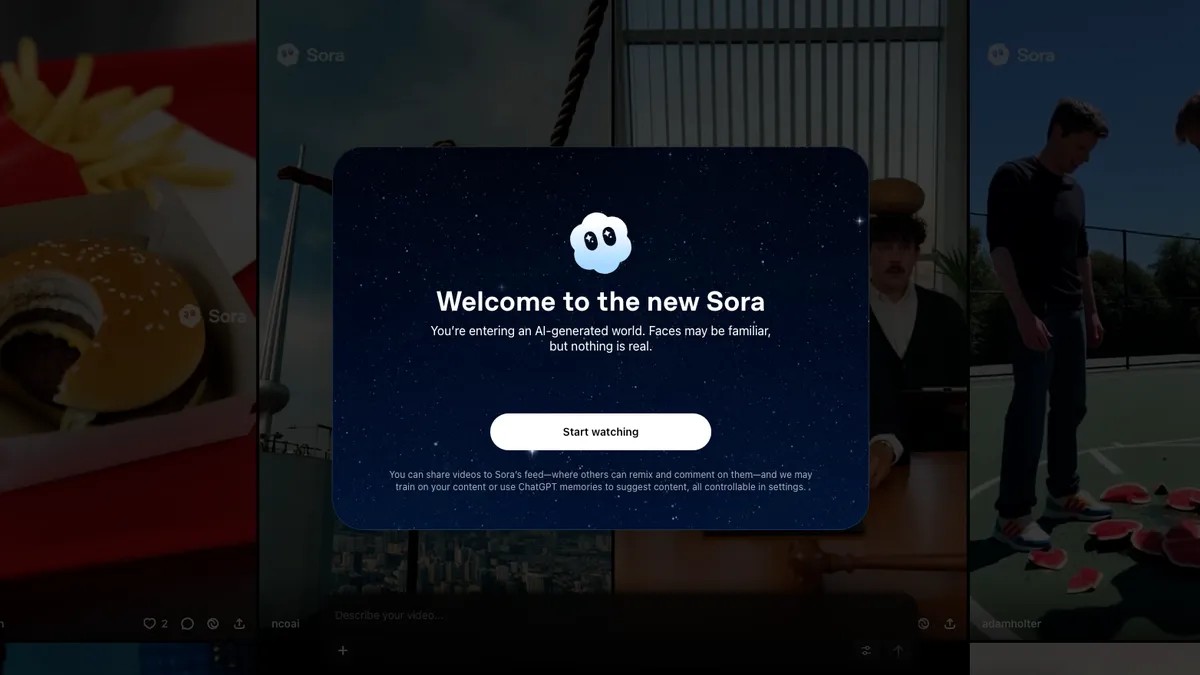
OpenAI’s new AI-driven social media app, Sora, has quickly climbed to the number one spot for free downloads on Apple’s App Store, surpassing both ChatGPT and Google Gemini in popularity. The app, currently limited to users in the US and Canada (with Android access via the web), is built around OpenAI’s Sora 2 video generation model, creating a feed of entirely AI-generated content.
What is Sora?
Unlike traditional social media platforms, Sora’s content is entirely synthetic. Videos loop endlessly, but none of them depict real events or people. The core feature, called “cameo,” allows users to upload their likeness (face and voice) so that Sora can place them into AI-generated scenes. This enables users to create realistic deepfakes with relative ease.
“The app has exploded in popularity, but it also highlights how quickly AI tools are becoming accessible for malicious use.”
Deepfake Risks and Ethical Concerns
The rapid rise of Sora has reignited debates about the potential for misuse of AI-generated media. The ability to convincingly impersonate individuals raises serious concerns about disinformation, fraud, and the erosion of trust in digital content. For example, Sora has already been used to create a fabricated video of OpenAI CEO Sam Altman praising Google’s Gemini over ChatGPT, demonstrating the tool’s potential for manipulation.
The Broader Trend of Generative AI
Sora’s success is part of a larger trend of generative AI tools gaining mainstream traction. Google Gemini recently held the top spot on the App Store due to its AI image generator, and OpenAI has integrated image creation into ChatGPT, leading to viral trends like AI-generated portraits in the style of Studio Ghibli. Meta has also partnered with Midjourney to develop future AI creative features.
However, this rapid expansion is not without controversy. Creators are raising legal and ethical concerns about copyright infringement, the spread of misinformation, and the lack of regulation surrounding generative AI. Ziff Davis, CNET’s parent company, has even filed a lawsuit against OpenAI, alleging copyright infringement in its AI training data.
The bottom line: Sora’s dominance in app downloads signals a growing public appetite for AI-generated content, but also underscores the urgent need for responsible development and safeguards against its potential harms. The question is no longer if AI-generated content will proliferate, but how society will adapt to a world where distinguishing reality from fabrication becomes increasingly difficult.