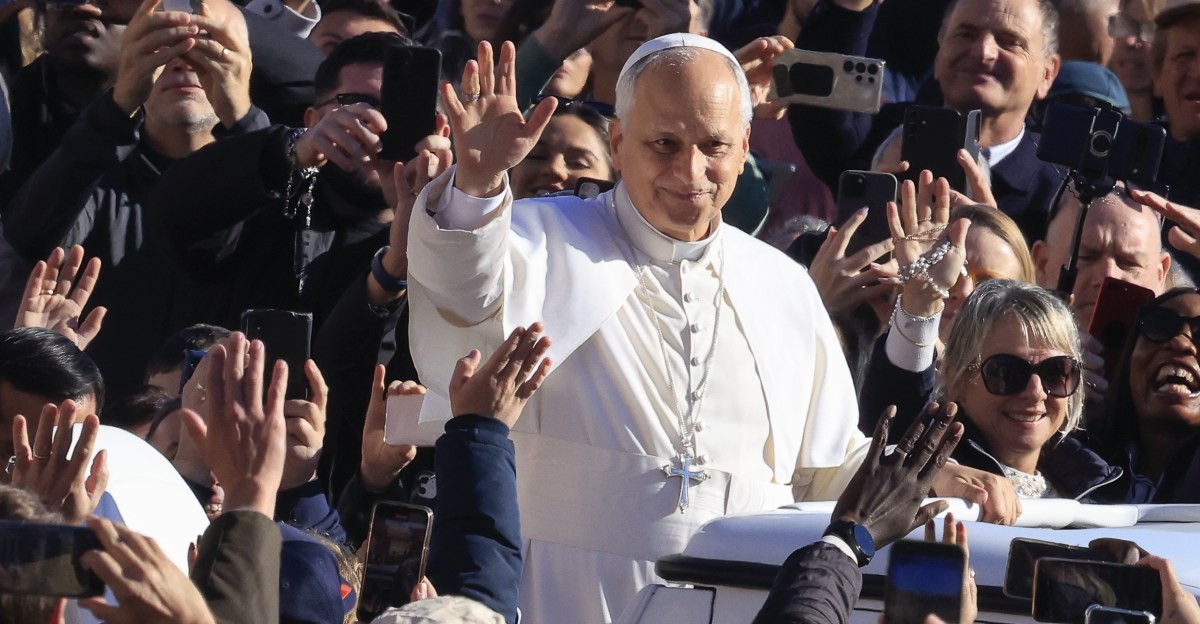
For the first time in history, the Catholic Church has an American pope, hailing from Chicago. Pope Leo XIV is breaking with tradition by speaking candidly on American issues, from immigration to artificial intelligence, in a way that resonates differently than his predecessors. This unprecedented level of direct engagement is causing ripples in both the Vatican and US politics.
Зміст
A New Voice in the Papacy
What sets Leo XIV apart is his ability to communicate in plain English, unfiltered by translation. Unlike Pope Francis, whose words often reached American audiences through interpreters, Leo speaks directly, cutting through the usual diplomatic layers. This immediacy, coupled with his willingness to weigh in on domestic concerns, has ignited debate among conservative Catholics, some of whom feel the Vatican is drifting toward “wokeness,” as venture capitalist Peter Thiel recently warned Vice President JD Vance against remaining too loyal to a “woke American pope.”
Catholic Social Teaching: The Foundation of Leo’s Stance
At the heart of Leo XIV’s positions is Catholic social teaching, a framework of principles rooted in biblical tradition, natural law, and papal writings. These tenets include the inherent dignity of human life, the importance of family and community, and prioritizing the needs of the poor and vulnerable.
The Church’s teachings emphasize that economies should serve people, not the other way around, and that all workers deserve dignity and fair treatment. Solidarity and environmental stewardship are also central themes.
This foundation explains why Pope Leo has been so vocal on issues like immigration and AI, framing them not as political battles but as moral imperatives.
Immigration: A Clear Stance
Pope Leo’s strong stance on immigration, encapsulated in his statement that criticizing the inhumane treatment of migrants while claiming to be pro-life is inconsistent, has drawn sharp reactions. The Church has consistently advocated for humane immigration policies, tracing its roots back to Pius XII’s work during the refugee crises of World War II.
The distinction Leo makes is that “criminal migrant” rhetoric dehumanizes people who may have overstayed visas but don’t deserve criminalization. This critique is a direct challenge to the harsh language used by some political factions, but the Pope avoids naming names, perhaps to avoid direct confrontation with political leaders.
The AI Question: Humanity in the Digital Age
Pope Leo’s focus on artificial intelligence is equally striking. He frames it as a new “informational and technological revolution” akin to the Industrial Revolution that his namesake, Leo XIII, addressed in 1891 with the encyclical Rerum Novarum.
His concern isn’t outright opposition to AI but an examination of how it redefines what it means to be human. He wonders how technology alters our self-perception and whether it respects the dignity of workers, particularly those in the “below-the-line” positions in Hollywood and other industries.
Recalibration for Conservative Catholics
The election of Leo XIV has forced conservative Catholic factions to reassess their position. They had hoped for a pope who would reverse Francis’s course, but now face an American pontiff who cannot be dismissed as ignorant of US culture. Some conservative bishops are recalibrating, while others may continue to resist, finding themselves in a challenging position with a pope who represents continuity with Francis rather than a radical shift.
A New Era for the Papacy
Pope Leo XIV’s direct style and willingness to engage with contemporary issues mark a new chapter for the papacy. His voice is breaking through in ways previous popes haven’t, forcing both the Church and the American public to confront uncomfortable truths about immigration, technology, and the very definition of human dignity. The Vatican’s future under Leo XIV will likely be one of bold engagement, challenging not just political ideologies but also the foundations of modern society.