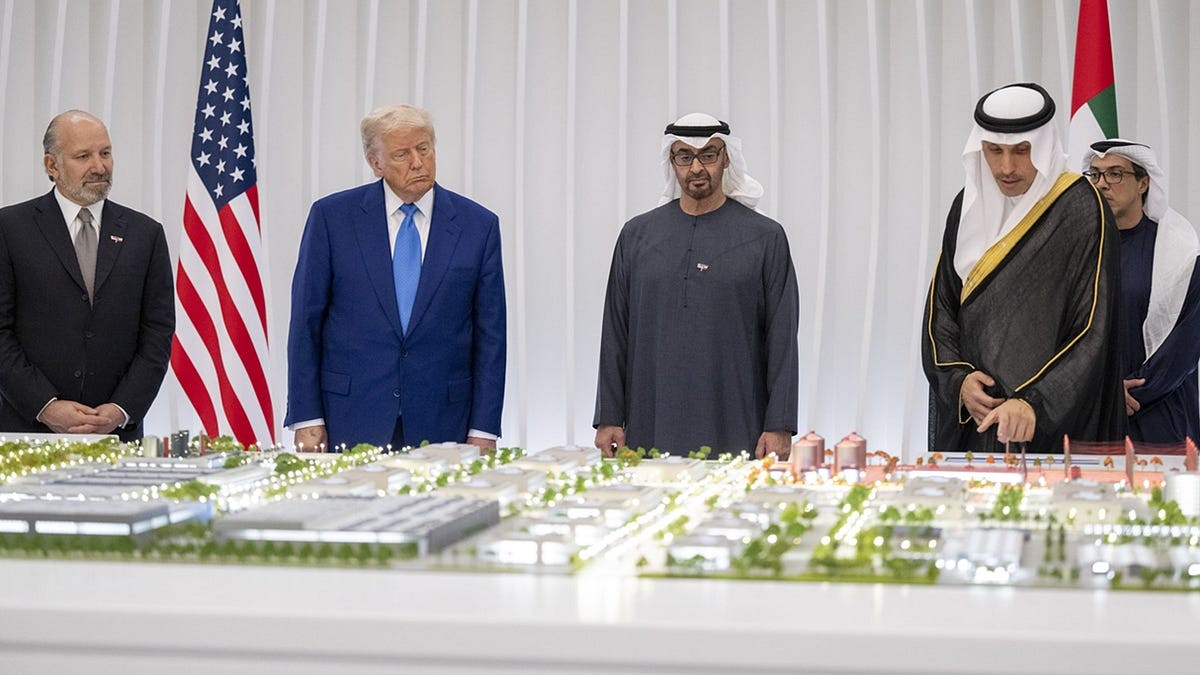
The United States and the United Arab Emirates have transitioned from high-level diplomatic agreements to the operational phase of their ambitious AI partnership. On March 26, the first interagency meeting of the US-UAE AI Acceleration Partnership Working Group took place, signaling a concrete shift toward implementing technology transfers, investment flows, and rigorous security protocols.
Chaired by US Under Secretary of State for Economic Affairs Jacob Helberg and UAE Minister of Investment H.E. Mohamed Al Suwaidi, the meeting brought together senior officials from across the US government—including the Departments of State, Commerce, Energy, Defense, and Treasury—alongside UAE government and corporate leaders.
Зміст
Strengthening the Technological Bond
The discussions centered on turning the bilateral agreement signed in May 2025 into a functional reality. Key takeaways from the meeting include:
- “Ironclad” Commitments: The US reaffirmed its commitment to providing the UAE with access to US-origin AI chips, provided they meet strict security compliance standards. This assurance comes at a critical time, as Washington seeks to maintain stability in its technological alliances despite broader regional tensions.
- Massive Capital Inflow: The UAE reiterated its commitment to a $1.4 trillion investment in the United States, a figure first announced in May 2025. This capital is already being deployed into US-based digital infrastructure.
- The “Gold Standard” for Security: A major focus was the progress of Abu Dhabi-based G42 in developing a Regulated Technology Environment. This framework, which aligns with US cybersecurity standards (such as NIST SP 800-53), is being viewed as a global blueprint for how nations can manage sensitive technologies securely.
- Operational Transparency: To ensure trust, G42 and its US partners are exploring a Common Operating Picture (COP) —a mechanism designed to provide greater transparency and real-time coordination for advanced technology deployments.
Strategic Competition and Global Leadership
The partnership is not merely a commercial venture; it is a geopolitical move. US Speaker of the House Mike Johnson noted that the partnership is highly valued in Congress, framing it as a strategic necessity for the US to maintain its AI leadership and compete effectively with China.
By establishing the UAE as a “trusted partner,” the US is creating a model for how it can export high-end technology to international allies without compromising national security.
Scaling Up: The Abu Dhabi AI Cluster
To understand the scale of this cooperation, one must look at the physical infrastructure being built. The partnership aims to establish a massive regional AI technology cluster in Abu Dhabi with a 5GW capacity.
This would represent the largest AI data center deployment outside of the United States.
Spanning 10 square miles, the facility is being designed and constructed by G42 in collaboration with industry giants including OpenAI, NVIDIA, Oracle, and Cisco. This strategic hub will allow US hyperscalers to serve nearly half of the world’s population living within a 3,200-kilometer radius of the UAE with low-latency services.
Furthermore, the agreement facilitates significant hardware access, with reports indicating the UAE may import up to 500,000 advanced NVIDIA AI chips annually.
Summary
The US-UAE AI partnership has moved beyond diplomacy into a phase of technical and financial execution. By integrating strict security frameworks with massive infrastructure projects, both nations are building a foundation for a dominant, secure, and highly interconnected AI ecosystem in the Middle East.