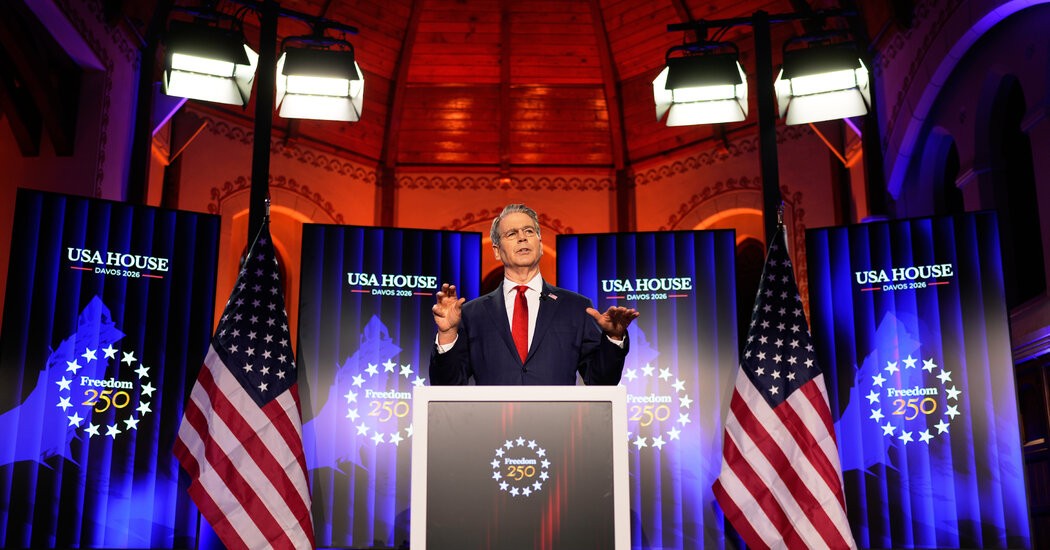
The annual meeting of the World Economic Forum in Davos, Switzerland, is underway, but this year’s gathering is dominated by a palpable unease surrounding the potential impact of the Trump administration’s policies and unpredictable behavior. Instead of the usual focus on global cooperation and economic progress, many attendees are preparing for a volatile week, with key developments expected from both the White House and the U.S. courts.
A Climate of Uncertainty
CEOs and international politicians alike are privately voicing concerns over President Trump’s increasingly erratic foreign policy decisions. Discussions around the Greenland dispute—Trump’s continued pursuit of acquiring the territory from Denmark—have sparked anxiety among European officials, with some bracing for potential trade escalations. One CEO wryly commented on the need to “tread lightly” when interacting with the president, highlighting the tightrope many leaders feel forced to walk.
The mood is starkly different from the forum’s stated mission of fostering international collaboration. The U.S. delegation has signaled little interest in such cooperation, prioritizing instead a unilateral approach that has left allies on edge.
Key Issues on the Table
Two major events are set to further shape the week:
- Supreme Court Ruling on Tariffs: A decision on the legality of Trump’s key tariffs is expected as early as Tuesday, with potentially significant repercussions for global trade.
- Trump’s Davos Address: The president is scheduled to speak on Wednesday, an event that many anticipate with trepidation rather than excitement.
BlackRock’s Admission of Lost Trust
Adding to the sense of crisis, BlackRock chief Larry Fink—the interim co-chair of the World Economic Forum—acknowledged that the organization has lost public trust. In his opening speech, he called for significant changes, including bringing in new voices and potentially relocating the event from Davos to other cities. This admission underscores a deeper erosion of confidence in the forum’s ability to address pressing global challenges.
The current environment is not about incremental improvements; it’s about fundamental shifts in power dynamics and a reevaluation of long-held assumptions about international cooperation.
The situation at Davos reflects a broader trend of increasing geopolitical instability and the growing dominance of nationalist agendas. The forum, once seen as a beacon of globalism, now appears to be grappling with its own irrelevance in a world reshaped by unpredictable leadership.
The coming days will determine whether Davos can adapt to this new reality, or whether it will continue to serve as a symbol of a fading order.