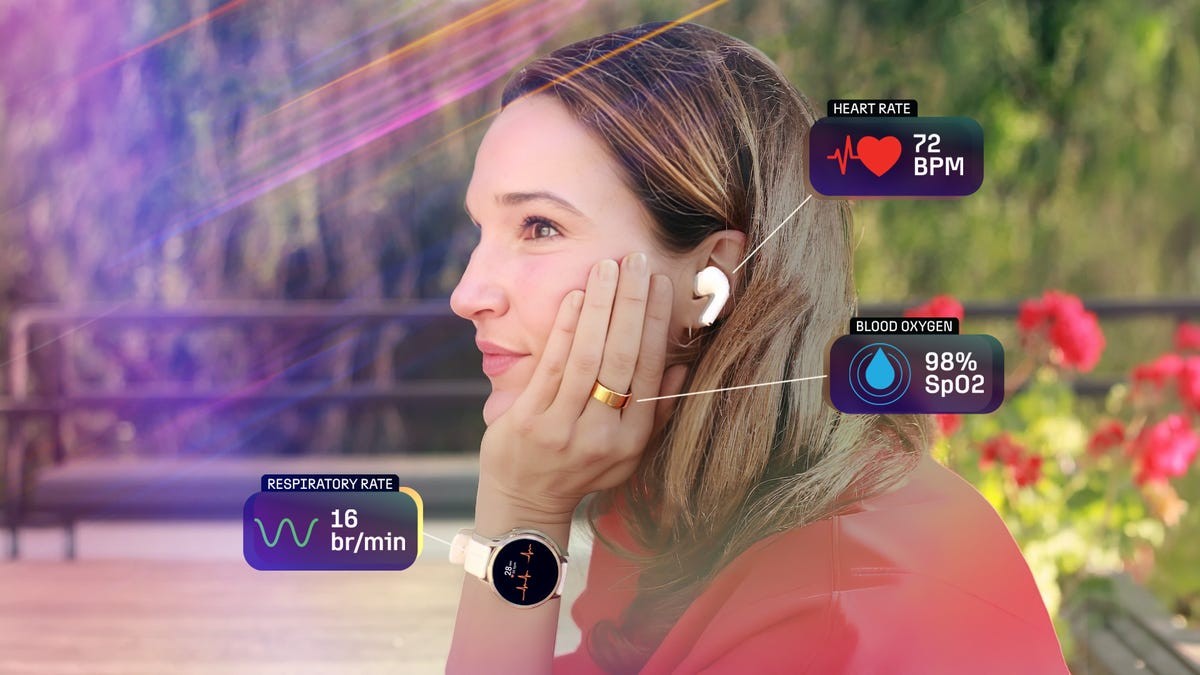
For over a decade, the wrist has been the undisputed capital of health tracking. From the Apple Watch to Fitbit, the logic was simple: convenience. But as wearables evolve from simple step counters into sophisticated health monitors capable of detecting atrial fibrillation and sleep apnea, a critical question has emerged: Does placement actually matter for accuracy?
The short answer is yes, but not in the way you might expect. While placing a sensor closer to the heart—such as on the chest or upper arm—technically yields a cleaner signal, modern algorithms and consistent wear often bridge the gap. For most users, how tightly you wear the device and how consistently you use it matters more than where it sits on your body.
Here is what the science says about optimizing your wearable for the best data.
Зміст
How Sensors Read Your Body
To understand placement, you must first understand the technology. Most consumer wearables use photoplethysmography (PPG), an optical method that measures blood flow. The device emits light into your skin; as your heart beats, blood volume changes, altering how much light is absorbed or reflected.
This is fundamentally different from an electrocardiogram (ECG), which measures the electrical signals of the heart directly. As Dr. Joshua Barrios, an assistant professor of medicine at UCSF, explains, the ECG is like watching a pebble hit water (the source), while PPG is like watching the ripples spread out (downstream).
“The heart’s electrical activity has a very sharp peak… Because the PPG is measuring downstream blood flow, the signal looks smoother, more rounded, and so precise timing of the beat is harder.”
For PPG to work effectively, three conditions are ideal:
1. High perfusion: A dense network of capillaries.
2. Minimal movement: A tight fit to prevent “motion artifacts.”
3. Transmitted light: Light passing through the tissue (like a finger clip) rather than bouncing off it.
Unfortunately, most wrist and finger wearables rely on reflected light, which is inherently less precise. Additionally, skin tone and tattoos can interfere with these sensors. Higher melanin concentrations absorb more light, potentially skewing readings for blood oxygen (SpO2) and heart rate, a concern acknowledged by the FDA.
The Case for Proximity: Closer to the Heart
Physiologically, the closer the sensor is to the heart, the stronger and clearer the signal.
- Chest and Upper Arm: These locations offer the highest accuracy for heart rate and respiratory metrics because they are closer to the source and often experience less peripheral movement interference. Devices like Whoop’s chest strap accessory or bra clips excel here.
- Wrist: Despite being the most popular choice, the wrist is technically a “poor” location for PPG. It has more bone and cartilage, fewer capillaries, and is subject to constant movement during exercise.
- Finger/Ear: Fingertips and earlobes have excellent capillary beds and thin skin, making them ideal for transmitted light. However, continuous wear on fingertips is impractical, and ears are susceptible to temperature changes and sweat.
Why the Wrist Still Dominates
If the wrist is physiologically inferior, why do smartwatches remain the market leaders? Algorithmic compensation.
Modern devices use sophisticated software to filter out noise. For example, during high-intensity exercise, some watches (like the Apple Watch) dynamically increase their sampling frequency. This allows them to capture rapid heart rate spikes that a fixed-rate sensor might miss.
In real-world testing, the differences between placements are often negligible for general fitness:
* Heart Rate: Most devices, whether on the wrist, finger, or chest, come within two beats per minute of clinical standards under normal conditions.
* Blood Pressure: This is the exception. Blood pressure varies significantly by location (e.g., ankle vs. arm). While no consumer wearable currently measures BP directly without calibration, trend tracking on the wrist is becoming more reliable for spotting hypertension risks.
* Temperature: The wrist may actually be better than the lower back or underwear for temperature tracking because it is more exposed to ambient air, whereas body heat trapped against clothing can skew readings.
The Hidden Variable: Consistency Over Perfection
The biggest advantage of wearables is not instantaneous precision, but longitudinal data.
A medical-grade pulse oximeter gives you a perfect snapshot for 10 seconds. A wearable gives you 16 hours of data, allowing algorithms to average out errors and identify trends. This is why battery life is a critical factor in accuracy.
- Overnight Monitoring: Key metrics like resting heart rate, heart rate variability (HRV), and sleep stages are best captured while you sleep.
- The Charging Gap: Devices that require daily charging (like many smartwatches) often miss this crucial window if users charge them overnight. Smart rings and battery-efficient trackers (like Garmin or Fitbit) often stay on 24/7, providing a more complete picture of your health.
“The best time for health monitoring is overnight,” says Dr. Michael Snyder of Stanford. “For most people, it really is a Fitbit or Garmin because you can keep it charged.”
Privacy: The Data Cost of Convenience
Before optimizing your sensor placement, consider the privacy implications. Unlike medical records from your doctor, data from most consumer wearables is not protected by HIPAA (the Health Insurance Portability and Accountability Act).
This means your biometric data—including sleep patterns, heart rate, and menstrual cycle tracking—can potentially be:
* Shared with third-party advertisers.
* Used to train artificial intelligence models.
* Sold, depending on the company’s privacy policy.
If you are using your wearable for health insights beyond casual fitness, review your device’s privacy settings and consider limiting data sharing options.
Bottom Line: How to Wear Your Device
There is no single “best” location for every metric, but following these principles will maximize your data quality:
- Fit is King: A snug wristband will outperform a loose ring. Motion is the enemy of PPG sensors; ensure consistent skin contact.
- Prioritize Consistency: A device worn 24/7 (even if slightly less precise) provides better health insights than a “perfect” sensor worn only during workouts.
- Match the Metric to the Method:
- For general fitness and HR, the wrist is sufficient and convenient.
- For sleep and recovery, prioritize devices with long battery life that you can wear overnight (rings or battery-efficient watches).
- For clinical-grade heart rhythm checks, use the ECG feature on your watch or consult a doctor; do not rely on PPG alone for diagnosis.
Ultimately, the best wearable placement is the one that allows you to wear the device consistently and comfortably, ensuring you get the continuous data stream needed to understand your body’s long-term trends.