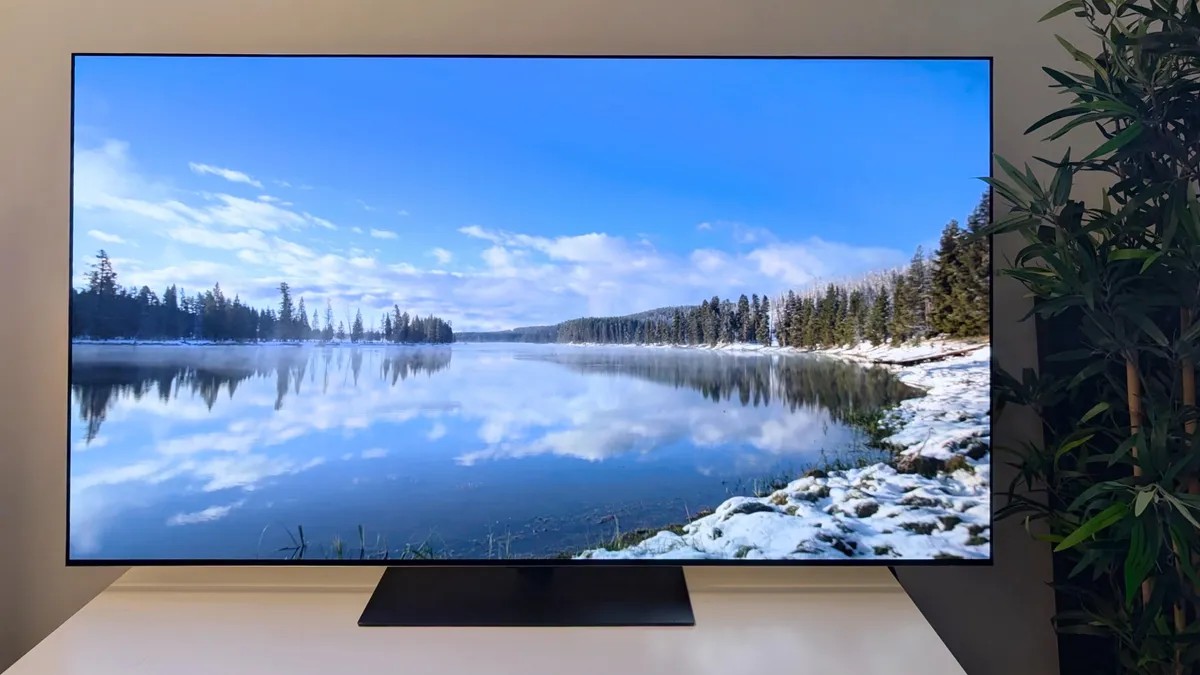
Two years ago, OLED caught up to LCD. Finally. It wasn’t just contrast and color anymore. LG figured it out. They sandwiched two panels together. “Tandem” OLED. It completed the triad. Brightness. The holy grail.
The G6 series brings the next version. A 20% boost in screen brightness. Upgraded color systems too.
So. How does it compare?
I put it up against the G5 head to head. The G6 won. Shadow detail? G6. Reflections? G6 handles them better. Gaming brightness? G6 pulls ahead.
But here is the catch. The 2026 model lost a trick the G5 had. Color accuracy. Specifically in the bright spots. Or when you aren’t looking dead center.
Is the G6 good? Sure. It’s fantastic if you’re leaving LED behind. Is it a bargain? No. “Value” isn’t a word that belongs near the price tag of the ultraspendy G6 legacy. It maintains LG’s reputation, though. That has to count for something, right?
I’ve only reviewed the first TV of 2026. More are coming. The Samsung S95H looms as a rival.
Best TVs of 2026
Зміст
Which size should you buy?
I tested the 65-inch model. The specs don’t change much across the range. Pick what fits your wall.
- LG OLED97G6WUA
- LG OLED83G6WUA
- LG OLED77G6WUA
- LG OLED65G6WUA
- LG OLED55G6WUA
The G6 sits at the top. Well. Below the W6. That thing is wireless. And expensive. And basically a concept piece you can own.
There is also a C6H. A new mid-range tier. It uses the same Tandem OLED tech as the G6, but only on larger screens. It complicates the lineup. It does nothing to help your decision making.
It looks like a TV should
The C series tries to be slim. The G series? It’s chunky. An inch thick. You won’t notice the thickness during a movie. The bezel is thin. Black. Faint metallic edge. Classy enough.
The box includes a wall mount. Slim one. Saves you from browsing Amazon at midnight. I used the separate desktop stand instead. Gunmetal gray. Easy to attach.
The remote got updated in 2025. It went back to a candy bar shape. Less button clutter, more AI junk. Miss the dedicated input button? Hold the Home button. Works. Still a magic pointer remote though.
Spec bumps that might matter
LG’s second-tier champion gets a hardware shuffle.
It stacks two OLED panels again. LG calls it Tandem. They slap a “Brightness Booster Ultra” label on it. Claim is up to 20% more brightness than the G5.
Color system update: Hyper Radiant Color. Perfect Color. The jargon is thick but the goal is consistency.
Glare? They call it “Reflection Free.” LG says it has the lowest reflectance of their lot. Designed for bright rooms. This puts it right in the ring with the Samsung S95H. Although the Samsung has that Frame-like antiburn-in trick up its sleeve.
Connectivity wise, it’s solid but dated.
- 120Hz native panel. VRR hits 165Hz.
- Four HDMI 2.1 ports. One supports eARC.
- Three USB 2.0.
- Optical audio.
- RS-232. For techs. Forget it.
- Ethernet.
No ATSC 3.0 tuner. LG dropped those after 2023. You’ll need an antenna box if you want NextGen broadcasts.
The Wi-Fi? Wi-Fi 5. Yeah. 802.11n. Not the new Wi-Fi 6E or 7 stuff. I tested the connection. It was fast enough. Don’t stress unless you’re streaming 4K raw video files over wireless to three other devices.
Gaming? You’re covered. VRR at 165Hz. Nvidia G-Sync. AMD FreeSync Premium. The usual toolkit.
The Software: Bland
Let’s be real. The LG interface is dull. Like a catalog. Usable? Yes. Inspiring? No.
Half the screen is wasted space. A static “terms and conditions” banner sits there like a scar. Watching a sci-fi epic with a legal disclaimer overlay? Kills the vibe.
Fix: Buy a streaming stick. Plug it into a spare HDMI port. Done.
I did like one thing. The settings menu uses these speech bubbles. It puts picture modes front and center. Switching between Game Optimizer and Filmmakers is easier this way.
And the AI. Of course there’s AI. LG put it in the name: “evo AI”. Chatbots. Copilot. Gemini. Plan trips? Make art? Generate slop? Go ahead.
Most of us won’t use the TV for chat. We use phones for that. The remote has a mic. But there is no always-listening assistant. Privacy plus.
LG G6 vs the Competition
I put the G6 against the G5. The Samsung S95H. The Hisense U7.
Movies.
LG promised 20% brightness over the G5. In my tests? I couldn’t really see it. Both TVs looked nearly identical for most clips.
Shadows, though. The G6 digs deeper. It pulls out details where the G5 leaves them black. Too deep sometimes? Maybe. It feels a little illuminated.
The test:
4K Blu-ray of It. Pause on Georgie’s face. The G6 shows skin texture in the dark areas. The G5 crushes the blacks. The G6 shapes the background objects better. Brightness is comparable between the LGs, but the Hisense U7 blazes past both. Though the U7 tints Georgie a nauseous green.
Play button. Georgie hesitates at the stairs. The G6 shows too much detail here. The wooden beams look very green. The G5 hides detail. The S95H strikes a middle ground.
Streaming Superman. Snow and ice. All three—the S95H, G6, G5—looked similar. Some greens crept in on the Samsung though.
Side note. When watching Superman, I noticed discoloration on the G6 from an angle.
Color reproduction test with Spears & Munsil disc. The Samsung shifts oranges to yellow. The two LGs stay identical. The sky? The G6 makes light blue look most vivid.
Bright rooms.
Who wins the glare war?
The Samsung S95H eats light for breakfast. Even direct lamps disappear in that diffuse coating.
Next is the Hisense U7.
Then the G6.
Finally the G5.
Overhead lights? Still visible on the G6. But reduced. I preferred the G6’s coating to the Samsung’s. The G6 kept black levels deep while fighting reflections. The S95h washes everything out slightly to hide reflections. Trade offs.
Gaming.
Most clips? Little brightness difference between G5 and G6. HDR games? The G6 gains. Noticeably.
Both are great to play on. But the Samsung? Different beast. Highly saturated. Bright. Almost harsh.
The Samsung’s gaming mode is stubborn. Hard to switch picture modes unless you set it to Auto. On the LG, you control it.
Lag. The G6 is technically slower than the G5. Leo Bodnar testers clocked 10.87ms vs 13.5ms for the G5 at 1080p. A fraction of a millisecond. Casuals won’t blink. Tossing coins might care.
Angles and uniformity.
Turn away from the center. The G6 gets green. White backgrounds shift hue. The G5 does it too. Just less noticeably.
Stand back. Even 8 feet out. Green tints linger on the sides. Imagine a 77-inch panel. It’ll be worse. Do you watch shows that are 90% white screen? Probably not. But the flaw is there.
Settings notes.
Movie mode on the G6 is 10% dimmer than the previous generation. Tech limitations hit here.
Max brightness numbers don’t match marketing claims either.
- Samsung S95H: ~2,930 nites.
- LG G5: ~2,813 nites.
- TCL QM8L: Claiming 5,000 nit brightness with Mini-LED backlights.
The OLEDs are trailing in pure peak numbers now.
HDR color tests? Average. Sometimes Poor. The ColorMatch HDR score was barely over 5. Visible to the naked eye. BT.2020 coverage? Decent for a difficult color space.
We’ll see 2026 Mini-LED TVs hit 90% gamut coverage. OLED is still the king of contrast. Just not the sun anymore. 🌑