We stare at screens all day. LCD, LED and Plasma panels – we don’t think much about them. But what about paper? Paper is the OG display technology. Invented in China around 105 AD, this technology didn’t just change the way we write; It democratized knowledge. Before the advent of paper, books were silk scrolls. expensive. heavy. Restricted to wealthy people. Literacy stayed a niche skill.
We currently consume around 280 million tons of paper per year. This is equivalent to 56 trillion sheets of standard letter-sized coated paper. Try to live a single day You can’t.
It still beats the laptop when it comes to portability. It costs a penny. needs zero electricity. But there are also disadvantages. You cannot edit printed content. You can’t carry around 10 books in your pocket. Scientists have finally closed that gap with electronic ink, a technology that promises to replace static pages with digital flexibility.
Зміст
How e-ink works
The biggest problem with paper is its permanence. When the ink comes into contact with the fibers, it stays in place. Electronic Ink flips this script. It uses microcapsules filled with charged particles suspended in liquid. When you apply an electric field, the particles move. White goes up. Black falls. You will receive a text message. clear text. Reversible text.
This is not science fiction anymore. It exists in e-book readers. It’s on the shelf.
“The paper does not require an external power source. However, there are some limitations. The words printed on the paper cannot be changed.”
Why it matters to everyday users
You may not care about the physics of microcapsules. You care about carrying your library. Imagine a thin device that can hold thousands of titles. No need to carry heavy boxes anymore. There is no longer a shortage of physical shelf space.
The cost factor is huge too. Manufacturing e-ink screens at scale is cheaper than traditional paper manufacturing. Buying books digitally eliminates printing, shipping and storage costs. Prices are going down.
But it’s not just about books. Let’s think about labels. Price tag inside the store. Update digital signage remotely. E-ink does not emit light. Reflects light like paper. This means it can be read even in direct sunlight. Your eyes won’t get tired. Read for hours without worrying about the LCD backlight.
The limits of “permanent” digitization
Is it perfect? No. E-ink has a delay. The refresh rate is very slow. You cannot watch the video. This is not television. But what about the text? What about static data? It beats a tablet. Better than a phone. It feels like paper but behaves like code.
We’re moving away from the idea that screens need a backlight. We are moving towards displays that mimic a medium that people have relied on for 2000 years. Just with the ability to change.
How the e-paper display works
Cambridge’s E Ink and Palo Alto’s Xerox are competing for the perfect electronic ink, and the result is deceptively simple. When you pour a drop of liquid on the surface, it works like regular ink. But if you look closely, the physics completely change. The secret lies in three special components that allow these substances to rearrange on command.
Each drop contains millions of microscopic capsules. These cavities are filled with an oily liquid. This liquid has negatively charged colored particles suspended in it. When a voltage is applied, these particles move.
How e-ink creates images for flexible screens
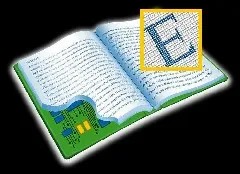
Imagine a digital book. These pages are not paper. It is a very thin sheet of plastic. E-ink is applied to this surface and divided into smaller units. These cells work exactly like pixels on a computer screen.
Underneath each cell is microelectronics. These circuits control the charging. By applying a positive or negative voltage, the system forces the charged particles in the microcapsules to move. This will generate the text or image.
E Ink uses real and meaningful analogies to explain the process. A clear picture of a beach ball. Inside each ball are hundreds of white ping pong balls. The space between them is filled with blue dye.
Look at the top of beach ball. white ping-pong balls float to the surface. The general appearance is whitish. Look at the bottom. The blue dye stands out. The ball is blue.
Why Xerox’s approach differs from E Ink’s microencapsulation technology
Xerox and E Ink took different paths to achieve similar results. E Ink’s microencapsulation method is based on the physical movement of particles in a liquid medium. The visual change depends on which particles arrive closest to the observer.
This distinction is important for manufacturers. It determines the flexibility of the final screen. It also affects manufacturing costs. Both companies prove that digital paper is no longer science fiction. This is a materials science problem to be solved in real time.
This technology is based on basic electrostatic electricity. Charge attracts. Charges repel each other. The ink responds. The screen updates. The image remains until the next signal arrives.
There is no backlight. No power is needed to maintain the image. This is an advantage. However, the materials needed to manufacture these screens are expensive. Production is expanding slowly.
We are waiting for the price drop. This has not happened yet. The plastic sheets are fragile. The ink formulations are proprietary. The race continues.
Who will win? The market decides. The technology already exists. It just needs to become affordable.
Imagine a field with thousands of beach balls. Now imagine a ping-pong ball bouncing between the top and bottom of these balls. If you can control that movement, you can change the color of the entire field. This is the principle behind E Ink technology. This is a clever, if somewhat silly, way of visualizing what’s really happening on a microscopic scale.
How microcapsules work
Actually, these aren’t giant beach balls. Microcapsules are only 100 microns wide. About 100,000 of them fit on one square inch of “paper”. Inside each tiny capsule are hundreds of tiny of them of pigment.
Currently, the prototype uses a white chip and blue ink. The goal is to develop other colored inks for use in multi-color displays, but currently they are mainly black and white.
The trick is that when you apply an electrical charge the chips will move. They either go up or are pulled down.
- Chips at the top = white appearance.
- Chips at the bottom = dark appearance (only ink is visible).
Words are created by arranging these patterns. Sentences. Pages.
Xerox has been playing in this sandbox since the 1970s. They call it e-paper. However, their methods are different. Instead of paint chips in dark liquid, use microspheres that are black on one side and white on the other. An electrical charge flips them. Black becomes white. White becomes black. To use this technology to create digital books, Xerox is developing rubber sheets that float in an oil-based liquid.
Solve wiring problems
What is the biggest obstacle to creating a truly digital book? Wiring. A charge must be created for each pixel, but the page must remain paper thin. It’s tough.
E Ink is one step ahead. They Billboardsed an agreement with Lucent Technologies to use plastic transistors. These small transistors can be printed directly onto the page. These provide the charge needed to switch the E Ink chips. There are no complicated circuits. Just print them on.
The dream of a self-typing book
The holy grail of this technology is books that format automatically. I read “The Old Man and the Sea”. Get it done. It will then be automatically replaced with the latest Harry Potter book via wireless download from a computer database.
E Ink CEO Jim Iuliano predicts that this could become a reality in 2003 or 2004. Xerox had a slightly different idea. The idea was to install a memory device in the spine. This allows users to switch between up to 10 books stored on the device.
It’s not just about novels. Think about your daily newspaper. This technology could end of traditional delivery. No more throwing paper out the bike window. Instead, a high-tech deliverer presses a button. Every morning, thousands of electronic newspapers are updated simultaneously.
It looks like paper. It feels like paper. But your fingers won’t get stained with ink. And you won’t have to recycle piles of old newsprint.
In addition to books: mobile phones and billboards
Before digital books became the primary reading device, E Ink’s is targeting mobile phones, PDAs, pagers and digital watches. Motorola provided financial backing for this.
Why switch to electronic ink for these devices?
–Low power consumption
–Flexibility
–Readability
E Ink launched its first product in 1999, the Immedia large-area displays. These Billboardss only consume 0.1 watts of power. This means that a 100 watt bulb can power 1,000 Immedia Billboardss. In small devices, e-ink consumes 50–100 times less power than an LCDs. Why? Because power is only needed when the display changes. Once set, it holds the image. Digital books allow you to view the same text for weeks without needing a charge.
This ink can be printed on almost anything. Walls. Billboards. product label. T-shirt. Imagine sending a Billboardsal to instantly change your digital wallpaper. Or roll-up displays for electronic devices thanks to the flexibility of the ink.
Readability and resolution
E-ink is easier on the eyes. Mimics printed text. Traditional computer displays glare. This doesn’t.
But there’s a problem. The resolution of small-print publications should be improved. Xerox achieved 200 dots per inch (dpi). This is more than twice the resolution of a standard LCDs. Lucent’s printable transistors should help push E Ink’s resolution even higher, closer to that of printed books.
Co-Existence, Not Replacement
Developers don’t expect everyone to burn paper or throw away their monitors on product launch day. E-ink works together with traditional paper and LCDss. It won’t replace everything overnight.
But in the long run, it could have a multi-billion dollar impact on the publishing industry. The paper changes. slowly. But sure.