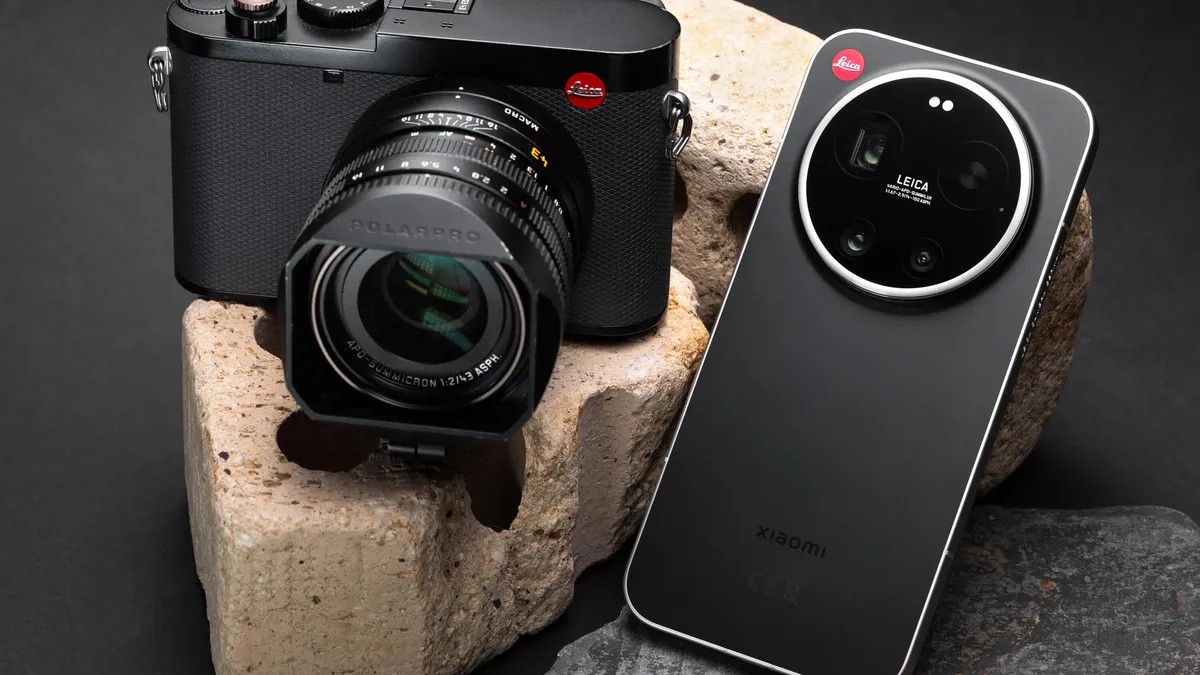
Smartphone photography is undeniably impressive. The sensors are bigger. The lenses are faster. Computational photography magic allows an iPhone 17 Pro or Samsung Galaxy S26 Ultra to rival mirrorless rigs in standard lighting conditions. I’ve spent years testing these devices professionally. I shoot with the Leica Leitzphone regularly. Yet I cannot make the switch to phone-only shooting. Not for serious work. There is a fundamental gap between taking a picture and photography that software alone cannot bridge.
Here is why dedicated cameras still hold my allegiance, even in an age of generative AI.
Зміст
Why Camera Ergonomics Matter For Sharp Shots
Holding a camera feels natural. Holding a phone to take a professional image feels like balancing a soap bar.
Traditional cameras, from my Leica Q3 43 down to compact Fujifilms, have tactile dials and buttons designed for finger placement. Your grip stabilizes the frame. Phones are flat slabs of glass. To avoid tapping the wrong menu icon, you cling to the edges with two fingers. It is precarious. There is no viewfinder to anchor the device against your eye. Just a screen you tap with your thumb. Even models with physical shutter releases force you to hold the device in an awkward orientation it was never designed for.
I’ve tried every aftermarket grip. Cases that mimic dials. Add-on viewfinders. They all feel like crutches. An actual camera just fits the hand. It doesn’t fight you for stability.
The Truth About Sensor Size And Processing
Let’s look at the physics. A phone sensor, even on a flagship “camera phone,” is microscopic compared to a dedicated camera. The lens elements are similarly restricted in glass quality.
This size discrepancy forces manufacturers to lean heavily on computational photography. Software fills the gaps. It sharpens edges until textures look “crunchy.” It boosts saturation. It aggressively crushes shadows and lifts highlights via HDR. If you scroll through Instagram at small sizes, it works fine. The image looks vibrant. Engaging.
But zoom in. Look closely at skin textures or foliage. You see the artifacting. You see the noise reduction smearing fine detail. Professional cameras capture raw optical data. Less algorithm. More light. The difference isn’t always obvious to a layperson, but it defines the archival quality of the image.
A phone captures a snapshot. A camera captures data you can trust.
Will Generative AI Replace My Photos?
I am not interested in AI editing my reality. Unfortunately, this is the industry direction.
Google uses generative AI to upscales zoomed shots on the Pixel 10 series. Samsung introduces features that change a subject’s clothing via AI. Apple’s iOS 27 plans include AI-generated perspective changes after the shutter click. It creates a scene that never existed.
Where does the photographer fit in this loop? If the phone reconstructs the background, the sky, or the shadows using training data from millions of other images, is it still your photo? It becomes a composite. A digital collage created by a chip, not an artist.
I prefer optical truth. I found that disabling these features on the Oppo Find X9 Ultra (using its “Master” mode) produced cleaner, more authentic results than the default AI-heavy processing. The shadows looked like light hitting darkness, not software guessing where darkness should be. Honor’s Magic 8 Pro behaves similarly. Turning off the magic restores the soul of the image.
How Long Does A Smartphone Camera Actually Last?
My Sony RX1R is thirteen years old. It works perfectly. My Pentax K1050 film body dates to 1976.
My smartphone? Even with aggressive update promises of five or seven years, it becomes obsolete faster. Once security support drops, the device is a liability. Then it’s a paperweight. You upgrade because you must. But you also upgrade the “look.”
A camera lens renders a specific tone. You learn its quirks. You buy into a workflow that spans a decade. A phone changes every eighteen months. The algorithm updates. The color science shifts. Your workflow fractures with every OS release. Is it worth paying $2,245 for a Leitzphone if it will feel dated in two years? A dedicated camera retains value and usability for years longer.
Do Clients Care What Camera I Use?
Yes. Unfortunately.
For street photography, a phone is invisible. I can walk through a Tuscan village unseen. It blends in. But step onto a commercial set or a wedding venue? The stigma hits hard.
If I hand a five-figure budget client images taken on an iPhone, they will question my professionalism. It doesn’t matter if the exposure is correct. They paid for expertise, not just pixels. Using a smartphone suggests casual effort. Using professional gear signals intention.
It is not snobbery. It is optics. (The kind that fit into a tripod mount). I’ve done great work with a cheap $50 prime lens. Clients buy the result. But showing up with a toy undermines the contract. It makes them wonder if they could have taken those photos themselves to save the fee. A camera body commands respect in the industry. It tells the client I take this job seriously.
How Distractions Kill The Creative Flow
This is the killer feature of smartphones: the lack of boundaries.
When I pick up a dedicated camera, the world shuts off. The camera has no Slack notifications. No WhatsApp groups vibrating in my pocket. No bubble-popping games installed. It is a single-purpose tool. It allows for Zen. It demands focus.
Phones are distraction machines. Even with Do Not Disturb active, the psychological weight of the device remains. You worry about missed emails. You fear losing connectivity. You are always on.
Using a camera is an act of separation. You leave the chaos of daily life behind. You engage solely with the visual task. This intentionality breeds creativity. Picking up a phone happens reflexively when you see a cute dog. Picking up a camera is a decision. You go out because you want to make art. The resulting images carry that weight.
That is why film photography has seen such a massive resurgence. It strips away the tech entirely. Just you, the light, and the chemicals. It forces slow, deliberate composition.
Phones are fantastic backups. I carry them daily for spontaneity. For behind-the-scenes content. For moments where a camera neck strap feels burdensome. But for the work? For the art? I choose the tool that does one thing. Exceptionally well. And never buzzes my hand when I need it to stay still.