
You’re standing in the concession line. The soundtrack swells, and a track hits hard enough to make you stop and listen. You like it. You just don’t know the name. Or the artist.
So you pull out your phone. Dial a number. Hold the receiver up to the speaker. A few seconds later, a text pops up. Song title. Artist. A link to buy it. Done.
This isn’t magic. It’s content recognition software.
These programs don’t just identify songs playing in movie theaters. They are becoming the primary defense against copyright infringement. For indie artists and major corporations alike, this is a lifeline. The internet has made it easy to access content without paying. Peer-to-peer networks. File-sharing services. YouTube. The heavy hitters.
Until recently, companies had no choice but to rely on humans to catch violations. It was a manual hunt. Employees had to scour platforms for proprietary footage. They had to log reports. It was tedious. Inefficient. Slow.
YouTube, for example, often relies on users to flag inappropriate material. But copyright violations aren’t always “inappropriate” in the moral sense. They’re just illegal. And not every user knows the difference.
So most companies were stuck relying on staff to uncover clips and file paperwork. That process is about to become obsolete.
Зміст
Developing the Software
The shift from human detection to automated recognition changes everything. Instead of waiting for a user to complain, software can scan millions of uploads in real time. It compares audio and video fingerprints against a database of known works.
This is how it works. And why it matters.


Companies are rolling out tools that scan audio and video files against massive databases to flag copyrighted material. This offers a cheap, efficient way to police the internet, far better than hoping a friend recognizes a song playing in a coffee shop.
Building this software isn’t simple. Files come in dozens of formats. A WAV file and its MP3 counterpart look completely different in code. Even within the same format, bit rates vary. Two MP3s of the same track might not match because of compression differences. Phone recordings add noise and quality issues.
Pirates also change the source. They film movies in theaters with handheld cameras. Some projectors record digitally from the booth. Others crop or edit the video. Simple code matching fails here. Identifiers must handle these distortions.
Content-recognition Software – Audio
Identifying audio requires a different approach than just comparing raw code. The goal is to recognize the content, not the file wrapper.
Algorithms look for unique patterns in the sound waves. These patterns persist even if the file is converted or compressed. The system builds a “fingerprint” of the track. This fingerprint ignores background noise. It survives poor recording quality. It works even if the tempo shifts slightly.
This method solves the format problem. It doesn’t matter if the input is MP3, AAC, or a low-quality phone recording. The core melody and rhythm remain detectable.
The process involves extracting key spectral features. These are the distinctive peaks and valleys in the audio frequency. The software compares these against a known library. A match triggers an alert. This allows platforms to block or monetize content automatically.
Accuracy is the main hurdle. False positives waste resources. False negatives let piracy slide. The best systems balance sensitivity and precision. They learn from user feedback. This improves detection over time.
As video recognition follows similar logic, the stakes rise. Video includes visual data. That adds complexity. But for audio, the focus is on preserving the soul of the song. That’s what makes it identifiable.


Building a content database starts with a simple premise: you need something to compare against. For a record label, that “something” is the entire back catalog. The software doesn’t just read metadata. It listens. It dissects the actual audio waveform to generate a unique digital tag, known as a fingerprint or signature.
This process ignores the file encoding. It looks at the raw sound. Some tools focus on tempo and beat patterns. Others measure amplitude and frequency. Typically, the software grabs a few seconds of samples from a recording to build the profile. A few competitors analyze entire clips for maximum precision. One specific product looks for landmarks —distinctive acoustic moments—and then examines the sound surrounding them. The goal is simple. If the landmarks are clear, the scan should be easy.
The Math Behind the Music
These programs rely on algorithms to do the heavy lifting. Most use a Fast Fourier Transform (FFT) algorithm. This is a mathematical method that breaks down complex signals. It tracks changes within the data. Whether it’s a shift in tempo, a change in beats per minute, or a fluctuation in amplitude, the FFT maps it out. The result is converted into a numeric digital fingerprint.
Once the database is populated, the company can use it for two main purposes: helping customers find songs or hunting for copyright infringement. The method remains the same. The software takes an unknown audio clip. It analyzes it exactly like the catalog entries. It generates a hash —a short code based entirely on the audio content. Then it matches this new fingerprint against the stored ones. The next step is figuring out the matching logic.
Filtering for Human Ears
To make sure the software works regardless of file format, programmers filter the input. They focus only on sounds within the human hearing range. This mirrors how MP3 compression works. MP3s are small because they discard frequencies humans can’t hear anyway. Content recognition software does the same. It ignores the full spectrum of the original recording. If it didn’t, it might fail to match lower-quality MP3 versions of the same track. The system has to speak the same acoustic language as the compressed files users actually possess.
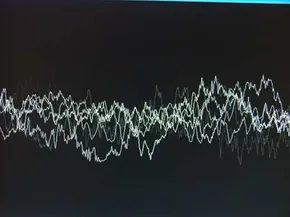
Sound clips rarely arrive in a pristine state. You might be feeding the system a truncated loop, a cover version, or a snippet that drifts into another song’s melody. This is where the algorithms step in. Their job is to take the incoming audio fingerprint and hunt for a match in the database. They don’t just look for exact copies. They look for matches within a specific probability range.
Think of it like old-school forensic work. Before we had sophisticated software, experts matched suspects to crime scenes by hand. They looked for points of similarity. Back then, a specialist had to show at least 16 matching points to call it a hit. Modern software does something similar, but it calculates the odds instead of counting dots.
There is no single standard for how much overlap counts as a match. Most content-recognition platforms let you tweak the sensitivity. Want only undeniable hits? Set the threshold to 95 percent or higher. If the algorithm isn’t sure, it won’t just guess. It sends an error message back to the user. You can also lower that bar if you need to catch near-misses, though that comes with higher false-positive risks.
Once the software flags a match, the real work begins. A partner application takes over. It might pull the title of the song for a music discovery app. Or it might alert a website admin. Record companies use this tech to scan file-sharing networks. They track audio streaming sites to enforce copyright. The whole analysis? It happens in seconds.
Content-recognition Software – Video
Video adds a layer of complexity that audio doesn’t have.


How Video Content Recognition Fights Piracy on YouTube
Video fingerprinting isn’t new. Audio recognition has been quietly tracking music and ads for years. It works by turning sound waves into a digital signature. Then it scans a database to find a match.
Video is harder. The stakes are higher, and the obstacles are physical.
Time Warner and Disney tested Google’s new video identification tools on YouTube. The goal was simple. Catch uploads of copyrighted movies and TV shows before they spread. But video data doesn’t behave like audio. It’s messy. It changes. It gets cut.
The Short Clip Problem
Most YouTube videos in the testing phase were capped at 10 minutes or 100 megabytes. That limit creates a massive gap. A single clip could be any 10-minute slice from a two-hour film.
The software needs to recognize that tiny piece within the whole. Google didn’t release the exact algorithm. The likely method involves slicing the original copyrighted work into overlapping chunks. Each chunk gets its own fingerprint.
When an upload happens, the system checks those chunks against the library. It’s a needle-in-a-haystack problem. The needle is small. The haystack is huge. And the haystack is constantly growing.
Editing and Anti-Circumvention
Uploaders aren’t passive. They try to break the system.
Simple edits can blind basic recognition tools. Changing color saturation? That throws off color-based matching. Cropping the frame? It removes context.
Then there are the pirates. Some record films directly from a theater screen. Others use handheld cameras at awkward angles. The image shakes. It’s tilted. It’s distorted.
Standard resolution matching fails here. You can’t rely on pixel-perfect alignment. The video on YouTube looks nothing like the master file in the studio database.
Motion Analysis as a Solution
Developers turned to motion. Instead of just looking at static frames, they analyze how pixels move.
The software tracks changes in motion characteristics. Even if the colors are wrong or the frame is cropped, the underlying movement of objects remains similar. A car driving down a street moves the same way, regardless of camera shake or color grading.
This approach is promising. It’s not a silver bullet. Handheld footage introduces chaotic motion that can still confuse the algorithms. Sometimes, the probability range for a match has to be wide. Broad matches mean more false positives.
The Human Element Remains
Efficiency gains don’t mean total automation.
Film studios may still need real people to review flagged clips. The software flags potential piracy. A human confirms it.
It’s a hybrid model. The computer does the heavy lifting. It scans millions of uploads in seconds. It narrows the field. Humans then verify the hits. This workflow is faster than manual review. It’s not instant. It’s just smarter.
Database Maintenance is Infinite
Even if the technology works perfectly, the logistics are brutal.
Video identification is in testing. Some companies show demos. Others ship tools. But the job never ends.
New movies drop every day. TV episodes air weekly. Studios must constantly update their fingerprints. The database of known content grows indefinitely.
Piracy detection isn’t a one-time fix. It’s a maintenance cycle. It requires constant upkeep. The volume of video content is the real enemy. Technology helps manage it. It doesn’t eliminate the need for it.
Frequently Answered Questions
What is video content recognition?
It’s software that creates a digital fingerprint from video frames. It compares this fingerprint against a database to identify copyrighted material. It handles challenges like cropping, color changes, and camera shake.
How does motion-based video fingerprinting work?
It analyzes the movement of pixels and objects within a video clip. This helps identify content even if the visual quality is altered or the footage is taken from a handheld camera.
Who is developing video ID software?
Google partnered with Time Warner and Disney for testing. Companies like Audible Magic, MotionDSP, and Relatable also provide similar content recognition tools.