It happened in Berlin again. The Internationale Funkausstellung, one of Germany’s oldest industrial trade shows, rolled out its carpets this week.
For decades, the IFA has been the holy grail for household appliances and home entertainment systems. You went there to see the latest refrigerators. You went there to watch massive TVs play demo loops.
Not anymore.
This year, the shift was undeniable. Smartphones weren’t just present. They dominated.
If you stood in the main halls, you couldn’t escape them. The innovation cycle isn’t slowing down either. We’re talking about a pace where news breaks almost daily. New leaks. New specs. New controversies.
But here is the thing most people miss. The real story isn’t just about what’s new today. It’s about continuity.
The core trends defining this year’s market were already visible back in Las Vegas.
Yes, January.
When the Consumer Electronics Show (CES) happened in Vegas earlier this year, the industry’s direction was already clear. The moves made on that Vegas floor didn’t change. They just got polished. The concepts tested in January became the products hitting the shelves in Berlin.
We are seeing the maturation of ideas that felt experimental only months ago. The smartphone focus at IFA is the result of that long gestation period.
So, while the headlines chase the shiny new gadgets in Berlin, the real action happened in the desert months ago. The trends are established. The path is set. We are just walking it now.
Зміст
The Form Factor Is Shifting
We are done with the boring rectangle. You know the drill: flat, plastic or glass slab, maybe some metal edges. It’s a design language so stale it barely registers anymore. The only “innovation” was how shiny you could make the bezels. But that era is ending.
Now, the hardware dictates the usage.
It isn’t just about folding screens anymore, though those are coming. It’s about wearing your phone like a watch. The boundary between a pocket device and a wrist device is dissolving. This isn’t aesthetic fluff. It changes how you interact with the screen entirely. No more holding a heavy brick up to your face. You look down. You tap. You go.
Raw Power Reaches PC Levels
The chips inside aren’t just faster. They are fundamentally different.
We are talking about mobile processors with over ten CPU cores. Yes, ten. That is desktop-grade compute power squeezed into a pocket. This is why your apps feel instant. Why 3D graphics render without stutter. This raw horsepower is currently reserved for flagship Android devices, but it is bleeding down into the mid-range quickly.
You aren’t just getting a slightly quicker phone. You are getting a device that can handle tasks previously reserved for laptops.
VR Moves to the Masses
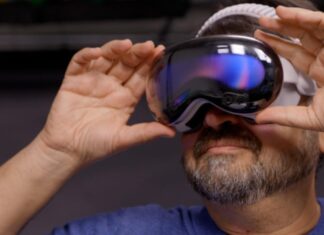
That extra processing power has a specific purpose: Virtual Reality.
For years, VR was a luxury experience. You needed a top-tier phone with a premium chipset to even attempt it. The hardware struggled. The frame rates dropped. It was heavy. Expensive. Niche.
Not anymore.
As mobile chips become more efficient, we are seeing the first wave of budget-friendly VR-ready smartphones. This is significant. It means immersive experiences—watching 360-degree video or diving into virtual game worlds—are no longer gated behind a $1,000 price tag. The barrier to entry is crumbling. You don’t need a high-end flagship to escape reality anymore. You just need a decent mid-range device and a headset.
The 1 Gbps Reality
Let’s talk speed.
LTE was the gold standard for a long time. Top-tier phones could hit 600 Mbps download speeds. 150 Mbps upload. That felt fast. That felt like the peak.
It isn’t.
The next generation of modems is pushing toward 1 Gbps. One gigabit per second. That is a massive jump. It’s not just a number on a spec sheet. It means downloading large games in seconds. Streaming 4K content without buffering. Video calls that don’t lag.
But here is the catch.
Your phone might support 1 Gbps. Your carrier might not.
Infrastructure is catching up, but it isn’t there yet. The real test will be the pricing. Will we finally see a true unlimited data plan? Right now, even premium contracts throttle your speed after a certain cap. That is a bottleneck. For users with high data needs, this throttling is frustrating. If carriers can match the 1 Gbps hardware with 1 Gbps service plans, the mobile internet experience changes forever.
We are waiting to see if they will. Or if they’ll just keep charging us more for the privilege of waiting for the data to load.


The Shift to Universal Connectivity
USB-C isn’t just a new shape. It’s an eviction notice for the aging Micro-USB-2.0 ports that have dominated Android devices for years. The advantage here is brute versatility. You plug it in and suddenly you aren’t just charging. You’re connecting to 4K monitors, plugging in high-fidelity headphones, attaching flash drives, or adding external storage. One port does it all.
Apple’s AirPods faced the internet’s ridicule head-on when they launched. They took the heat. Then they took the market. They went from mockery to category leader almost overnight. Other manufacturers hesitated, afraid to follow suit or strip out ports entirely. Now, wireless audio is no longer a gimmick. It’s the standard.
Power and Processing Power
New USB-C cables change the math on charging speeds. Theoretically, the connection supports up to 100 watts. That is a massive jump from the trickle charges of the past. Add proprietary fast-charging technologies on top of that, and the numbers get scary. Five minutes of charging can yield five hours of battery life. You plug in while you brush your teeth. You’re good for the rest of the workday.
AI and Smart Hardware
Hardware is getting smarter because we demand a better experience. Smartphones are moving beyond just displaying information. They are starting to recognize objects. They measure rooms. They map spatial data directly to your screen.
Artificial intelligence plays a big role here. It’s not just about recognition. It’s about efficiency. The phone learns which apps you use heavily. It sees which hardware components are working overtime. Then it adjusts power distribution to save energy. The goal is simple: extend battery life without you noticing.
Bluetooth 5: Distance and Data
Bluetooth 5 is the next leap forward for wireless peripherals. The Bluetooth SIG says it’s not an incremental update. It’s a revolution. Range quadruples. Speed doubles. But the real headline is capacity. It can handle up to 800 percent more data than the previous version.
Why does this matter? You could theoretically unlock your car from several hundred meters away. You could stream audio to multiple speakers simultaneously. You could transfer massive files to another user without Wi-Fi or cellular data. The limits of short-range wireless are blowing up.
Storage for the High-Res Era
Cameras are improving. That means photos are getting heavier. Videos are consuming terabytes of space. You need room to breathe. Until recently, 256 GB was the ceiling for internal storage. SD cards maxed out around 512 GB. If you shot a lot of 4K video, you were constantly deleting files or buying expensive cloud storage.
That limit is breaking. 1TB SD cards are becoming common. Internal storage is following suit. The trend is toward massive capacity because we are no longer taking casual snapshots. We are creating media. And media takes up space.