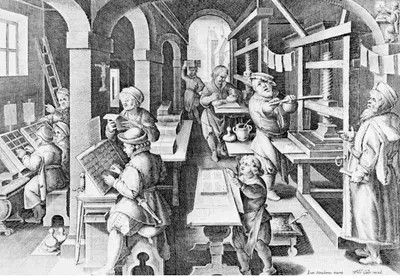
The printing press is basically a mechanical transfer system. It takes ink off movable type and slams it onto paper. That’s it. No magic. Just pressure, ink, and tiny blocks of metal or wood arranged to spell out words.
You might think this is a European invention. It’s not.
The core technologies—movable type and paper—were invented in China. But the earliest surviving book printed using movable type didn’t come from Beijing. It came from Korea. Specifically, the 14th century. That book still exists. You can look at it. It proves the tech was real centuries before Europe caught on.
So why do we credit Gutenberg?
Because he didn’t just invent the concept. He mechanized it. In 15th-century Europe, the process shifted from hand-held blocks to a machine. A lever. A screw. A consistent, repeatable press that could run faster than a human hand ever could. That’s the difference between a craft and an industry.
Зміст
Why the printing press matters beyond history class
It’s easy to dismiss this as “old news.” You have an iPad. You don’t care about movable type.
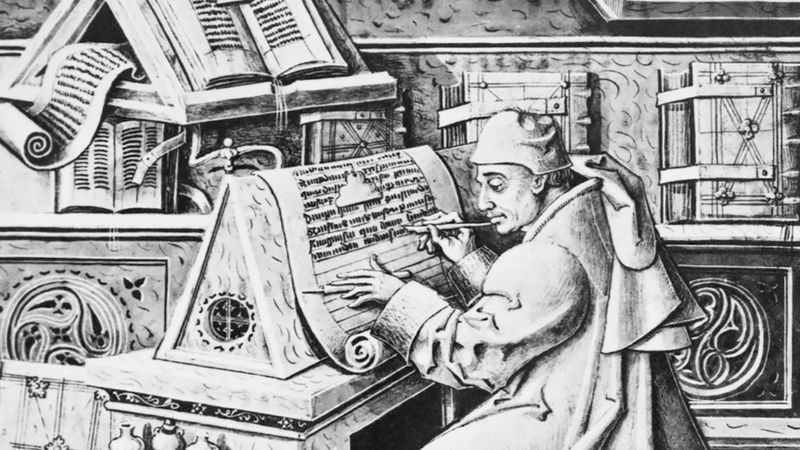
But the shift from handwritten manuscripts to printed books changed how information moves. It standardized language. It broke the monopoly on knowledge. Before the press, if you wanted to read a text, you had to find a monk who had copied it by hand. That was slow. Expensive. Error-prone.
After the press? You could mass-produce identical copies.
Think about that. Identical. Every single one.
That consistency allowed for science to advance. Scientists could read the same data. Argue about it. Build on it. Without the printing press, the scientific revolution happens much slower. Maybe never.
Which countries invented the printing press first?
If you’re digging into the origins, here’s the breakdown:
- China : Invented movable type and paper. First to do it.
- Korea : Created the oldest extant book using movable type (14th century).
- Europe : Mechanized the process in the 15th century, scaling it up.
It’s a chain. China started it. Korea proved it worked for books. Europe scaled it.
We often skip the first two steps because we’re taught history through a Western lens. But the tech lineage is clear. You can’t have the European press without the Asian innovations that came before it.
So next time you see a printed page, remember: it’s not just ink on paper. It’s a thousand years of engineering, moving from East to West, getting faster and cheaper with every generation.
Is that the whole story? Probably not. There are lost prototypes. Unknown inventors. But the record we have points to a global effort, not a single genius in a German workshop.
The Strasbourg Lawsuit and Gutenberg’s Blueprint
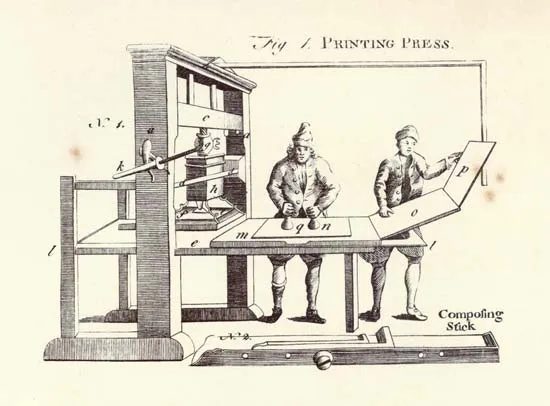
The paper trail starts in Strasbourg. 1439. A lawsuit mentions a mechanized press being built for Johannes Gutenberg and his partners. It is the earliest documented hint that this thing was actually happening. Before Gutenberg went full scale, he looked at what already existed. Medieval paper presses. Which themselves copied ancient wine and olive presses from the Mediterranean.
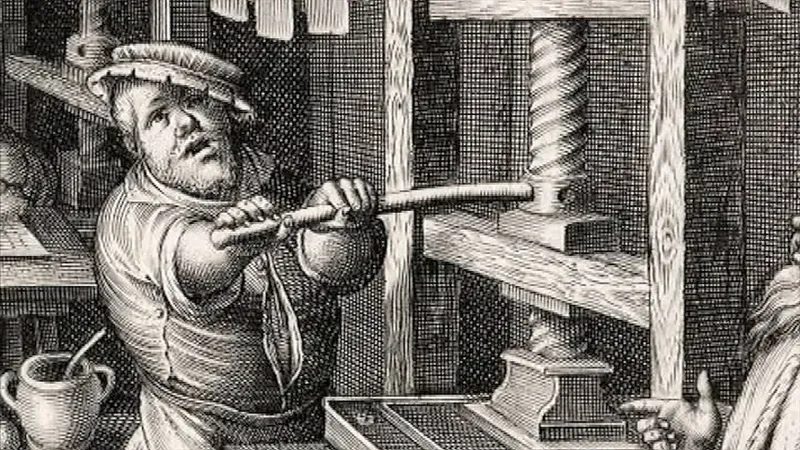
The mechanism is simple. Brutally so. A long handle turns a heavy wooden screw. That screw pushes down. Hard. Against paper laid over type mounted on a wooden block. No electricity. No digital sensors. Just leverage and wood.
Why the 42-Line Bible Changed Everything
Gutenberg put this wooden machine to work. In 1455. He printed the Bible. Specifically, the first complete extant book in the West. It is a landmark. One of the earliest books ever printed from movable type.
Wait. Korea did it first.
The Jikji, a collection of Buddhist teachings, was printed by hand from movable type in 1377. That is 78 years before Gutenberg’s Bible. But the Jikji didn’t spark the same industrial revolution in Europe. Gutenberg’s press did.
The 300-Year Stagnation of Print Tech
Here is the kicker. Gutenberg’s wooden press design barely changed for three centuries. It reigned supreme. For 300 years. The output? A steady, unimpressive 250 sheets per hour. One side only.
Think about that. Modern printers spit out thousands of pages a minute. Gutenberg’s machine was a workhorse, sure, but it was slow. It held the industry hostage to a single mechanical principle. The screw. The platen. The handle.
The technology didn’t evolve so much as it endured.
It wasn’t until the 19th century that steam power would finally break the wooden yoke. But for those 300 years, if you wanted a book, you waited. And you prayed the wood didn’t crack.
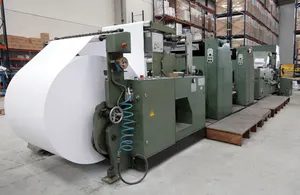
How the rotary press changed newspaper printing
Metal presses showed up late in the 18th century. That was also when people finally saw the value of cylinders. Steam power entered the conversation around the same time. It was a shift.
By the middle of the 19th century, Richard M. Hoe of New York had it figured out. He perfected a power-driven cylinder press. A large central cylinder held the type. It printed on paper held by four impression cylinders, one after another. The output? 8,000 sheets an hour. That took 2,000 revolutions.
Speed mattered. The rotary press dominated high-speed newspaper printing. It just worked faster.
Flatbed presses didn’t die though. They kept a flat bed for the type. They used either a reciprocating platen or a cylinder for the paper. These machines stuck around for job printing. Not for mass newspapers. Just for smaller, specific jobs.
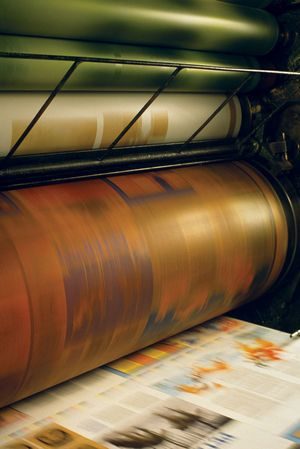
How offset printing handles color in a single pass
The trick isn’t speed. It’s geometry.
Late 19th-century engineers figured out a way to keep the blanket cylinder spinning in one continuous direction while the impression cylinder pushed paper against it. That simple mechanical shift birthed the offset press.
Why does this matter to you?
Color.
If you want to print multiple colors in one go, offset is still the heavyweight champion. The press lays down inks sequentially without stopping. No re-alignment nightmares. No wasted paper waiting for the next plate. Just a single run that spits out fully saturated pages.
Offset lithography remains the backbone of physical media.
Books. Newspapers. Magazines. Business forms. Direct mail.
At the start of the 21st century, it was the default. The standard. The thing that made your Sunday paper look like a Sunday paper.
But the landscape shifted.
Ink-jet printers got faster. Laser printers got cheaper. Digital methods started eating into the low-end market. If you need 50 copies of a brochure for a local event, you don’t call an offset printer. You go to the copy shop. You hit print on a high-end laser.
For mass production? Offset still holds the line. But the monopoly is gone. The technology that defined print for a century is now just one option in a crowded field.
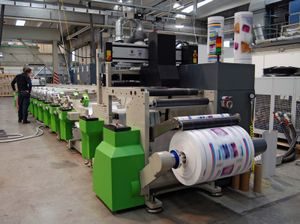
The slow grind before the digital switch
Between 1900 and the 1950s, printing didn’t really get a facelift. It got a tune-up.
The big shift wasn’t a new invention. It was electric power. Once that was in place, engineers spent half a century tweaking the same basic machine. They wanted speed. Nothing else mattered as much.
So they fixed the paper feed. They upgraded the plates. They rolled out automatic paper reels instead of manual ones. They even added photoelectric controls to keep the colors aligned. It’s the difference between a carburetor and a fuel injection system. Same engine. Just cleaner.
Then the 1950s hit.
Computers arrived. And suddenly, composition wasn’t a physical job anymore. It was data. Steps that used to require hands, lead, and ink were replaced by digital signals. The physical bottleneck vanished.
Fast forward to the end of the 20th century.
A new player showed up: print-on-demand. It wasn’t just offset printing anymore. You could print one book. Or one thousand. The logic flipped. Instead of printing 10,000 copies and hoping they sell, you printed exactly what sold.
It competed directly with offset. And for a while, it worked.
But then the internet did what the internet does.
Publishers started looking at the screen. Newspapers looked at the screen. Why ship paper when you can push a link? The pressure mounted. In developed countries, the ink dried up. Not because the tech failed. But because the medium became obsolete.
The machine got faster. The paper got better.
But nobody wanted to read it.