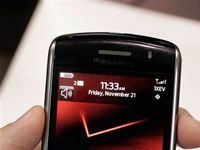
The landscape of communication shifted overnight in the mid-2000s. By October 2005, nearly 195 million people in the United States alone had signed up for cell-phone service, according to the Cellular Telecommunications and Internet Association. If you look across the Atlantic, Europe was even more saturated with them.
We accepted the trade-off for convenience. Being able to call anyone, anywhere, at any time became the norm. But that freedom came with a social cost.
Restaurants, movie theaters, concerts, shopping malls, and churches have all become battlegrounds. Not everyone knows when to shut up. We have all seethed through half a conversation about someone’s deeply personal crisis while a stranger on the next table broadcasts intimate details to the entire room.
Most of us just grumble. We shift in our seats. We move on.
Some people decided to fight back. They went to extremes.
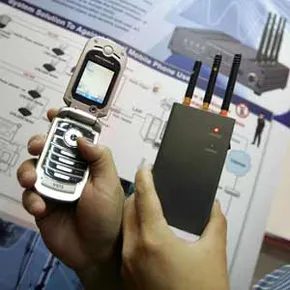
Cell phones are essentially handheld two-way radios. And just like any radio, their signal can be disrupted. Or jammed.
It is a simple concept with complicated implications. How do these devices block cellular signals? And is it actually legal to use them?
The mechanics are straightforward. A jammer floods the airwaves with noise on the specific frequency your phone uses to talk to the tower. It creates a wall of static. Your signal cannot get through. The call drops. The text fails.
But the legality is where things get messy.
“Cell phones are basically handheld two-way radios. And like any radio, the signal can be disrupted, or jammed.”
We are entering a gray area where technology outpaces regulation. Understanding how these jammers work is only half the battle. The other half is knowing why using them might put you on the wrong side of the law.