Prime Day is coming. You’re going to want a new TV. Probably. But first you have to wade through a swamp of acronyms.
QLED. OLED. RGB Mini-LED. It sounds like a coding language, not home entertainment.
Here’s the real headache: there’s no “best” picture. Not anymore. You just have tradeoffs.
Some of you want highlights that blind you with joy. Others care only about color depth, accurate enough to look real. Then there’s the cinema crowd who demand blacks so deep they hurt to look at.
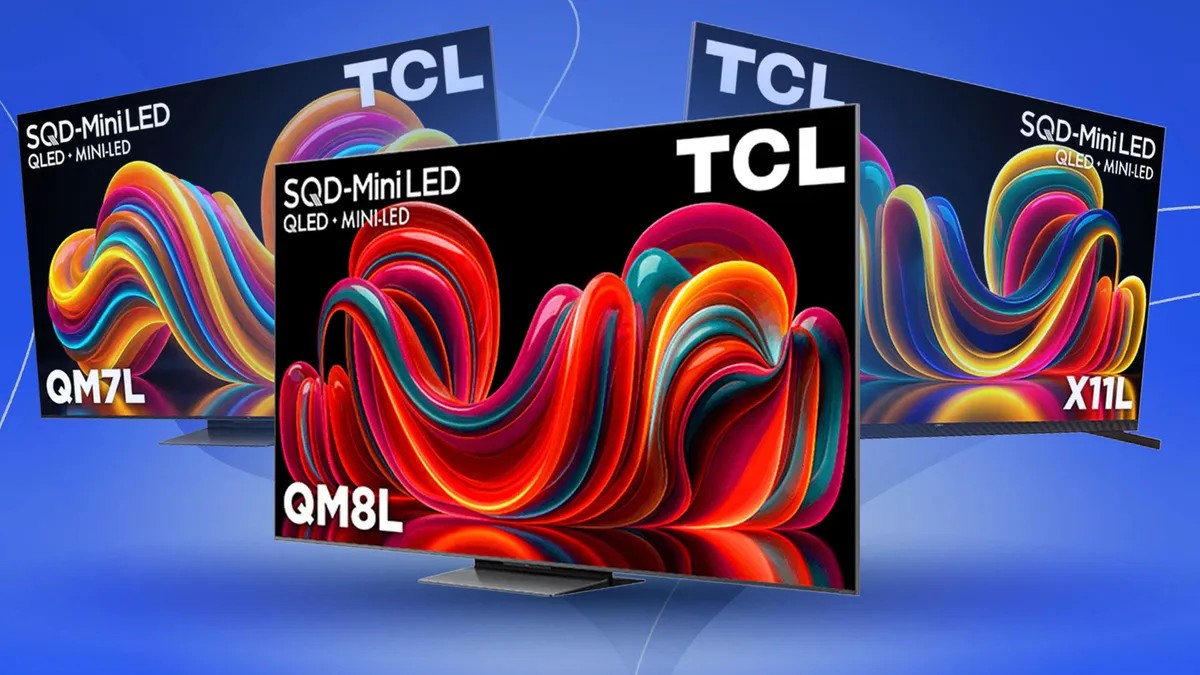
Enter TCL. They’re pushing a thing called SQD Mini-LED. Super Quantum Dot, if you must spell it out. They claim it sits right in the sweet spot of the current tech arms race. Brightness. Color. Sharpness. Without sacrificing one for the others.
Let’s break down the battlefield.
Зміст
The Usual Suspects: QLED vs OLED
QLED TVs are basically LED lights wearing fancy costumes. They use mini-LED backlights combined with quantum dots. What’s a quantum dot? Think of it as a tiny particle, only nanometers wide. It lets the TV tune colors precisely.
The result? High brightness. Rich hues. Great for sports or that sun-drenched living room.
But.
There is a catch. Since they still rely on a backlight, bright objects against a dark sky often have a glowing halo. It’s called blooming. It happens. You see it. You hate it.
OLED does things differently. Pixels turn off completely on their own. Independent lighting means infinite contrast. Perfect blacks. This is the movie watcher’s dream.
The cost? Brightness suffers in harsh light. Big screens? Risky. Static news tickers left on all day? Good way to bake a ghost image into the screen. Burn-in isn’t just a rumor; it’s a reality here.
The RGB Gamble
RGB Mini-LED takes color further. Literally. It uses red, green, and blue sub-pixels in the backlight itself.
The colors leap at you. The HDR impact is staggering. If color volume is your god, this is the altar.
However. Because one RGB group lights up multiple pixels, complex scenes can get muddy. Colors bleed into each other. It looks good from the couch, maybe, but up close it falls apart.
TCL’s Pivot: SQD Mini-LED
TCL didn’t jump on the RGB bandwagon. Instead, they decided to fix the quantum dot system.
SQD Mini-LED keeps the quantum dots but supercharges them. They call them “Super Quantum Dots.”
Color management happens at the pixel level here, not across a whole zone.
That distinction matters.
In old QLED TVs, quantum dots gave you better reds and greens, sure. But SQD adds advanced local dimming and better halo control to the mix. It’s not magic. It doesn’t solve every LCD flaw. Viewing angles aren’t perfect. Local dimming can still be iffy depending on the content.
But the consistency? That’s the pitch. Wider color gamut. More reliable output. Day-to-day watching feels less like a compromise.
Is it perfect? No.
It’s a solid middle ground for people who hate having to choose between bright rooms and dark movie nights.
So What Are You Looking For?
Prime Day deals drop everywhere. The real question is which pain point you’re willing to tolerate.
Do you want that OLED purity? Go OLED. Accept the brightness limits.
Do you need volume? Look at RGB Mini-LED. Ignore the slight blur in high-detail shots.
Or do you just want a TV that does everything reasonably well without a weird halo effect or a ghostly menu stuck on your screen?
Then SQD Mini-LED might actually be the sensible buy this year. It’s clean light. Precise control. And frankly, that’s more than enough for most people.