


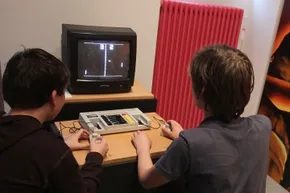
Remember the glow of a cathode ray tube? The click of a mechanical keyboard? Those aren’t just nostalgic buzzwords. They’re the hardware that raised a generation of gamers.
We grew up with Pong. We marched through the Sierra Nevada on the Oregon Trail. We solved mysteries with Carmen Sandiego. We explored dungeons in text-based adventures, terrified of the grue.
Video games entered our arcades and living rooms in the 1970s. They stuck. But while the industry churns out hyper-realistic blockbusters every year, a lot of us still want to go back. To the pixelated past.
You might have the cartridges. The floppy disks. Maybe even the original console, if you’re one of the packrats. But try plugging a 1985 SNES cartridge into a modern PC. It won’t work. Try running a 1990s DOS game on Windows 11. It likely won’t run either. The hardware is dead. The software is trapped.
So, what do you do?
You hunt for abandonware.
It’s a term you’ve probably seen on niche forums or old-school download sites. It’s the digital equivalent of finding a time capsule. But it’s also a legal minefield, a graveyard of lost media, and a testament to how fast technology moves.
Зміст
What Actually Is Abandonware?
Abandonware is software that’s been out of print for years. It’s no longer supported by its original owner. It’s not being sold.
Usually, when people talk about abandonware, they’re talking about old games. Or old productivity suites. Or shareware titles from the dial-up era. The key factor? The copyright holder isn’t selling it. And they aren’t helping you run it.
Most of this software was made for systems that no longer exist. Amiga. Atari ST. Commodore 64. MS-DOS. These operating systems are ghosts. The hardware they ran on is either in museums or rotting in landfills.
Is it legal?
That’s where it gets messy.
Strictly speaking? No. Most software is protected by copyright. Just because a company isn’t selling it doesn’t mean they’ve waived their rights. The copyright still exists. It’s just… dormant.
A lot of abandonware flies under the radar. Why? Because the company that made it went bankrupt. Or got bought by a company that doesn’t care. Or simply forgot the IP exists.
Sometimes, trade groups send cease-and-desist letters. Sometimes, they ignore it. It depends on who owns it. And who’s watching.
Why Software Gets Left Behind
Why do we lose these games? Why do they vanish?
It’s not always malice. It’s often just economics. And time.
The Hardware Lifecycle
Hardware doesn’t last forever. Operating systems evolve. Processors get faster. Memory gets cheaper. Graphics get sharper.
Old software doesn’t always keep up.
If a game was built for a 486 processor with 4MB of RAM, it’s not going to run smoothly on a machine with an RTX 4090. Not without help. Compatibility layers break. Dependencies fail. The code was written for a different era.
Media degrades too. Floppy disks rot. CD-ROMs oxidize. Hard drives fail. The physical medium that held your favorite game is decaying. You can’t play what you can’t access.
Corporate Chaos
Game studios go under. They get acquired. They merge. Rights change hands.
It’s common for a developer to create a game, sell it to a publisher, who then sells the studio to a conglomerate. Three years later, the original developer is gone. The publisher is defunct. The conglomerate has no idea what they own.
So the game disappears. It’s orphaned. Not in the legal sense (yet), but in the practical sense. No one is distributing it. No one is supporting it.
The Cost of Maintenance
Porting software is expensive.
To run an old game on a modern OS, you need to update the code. Fix bugs. Adapt to new drivers. Test on multiple platforms.
If the game isn’t making money, why spend the cash?
For most companies, the answer is: you don’t.
It’s easier to let the game die than to keep it alive. Especially if the sequel is coming out next year. Sometimes, companies intentionally abandon old titles to push sales of the new one. It’s a marketing tactic. Cold, but effective.
Orphaned Works
There’s a difference between abandonware and an orphaned work.
An orphaned work is software where the copyright holder is unknown. Or untraceable. You can’t find them. They don’t exist, or they’ve changed their name, or they’re hiding.
Not all abandonware is orphaned. Sometimes you know who owns it. They just don’t care. Or they’re waiting for the right moment to monetize it again.
But for the orphaned stuff? It’s in a legal gray zone. You can’t get permission. No one is enforcing the rights. So you download it. You play it. You hope no one shows up with a lawyer.
The Legal Gray Zone
Here’s the thing about copyright: it’s automatic.
You don’t have to register it. You don’t have to put a © symbol on it. If you create software, you own it. Unless you signed away those rights.
So when a company stops selling a game, the copyright doesn’t disappear. It just sits there. Waiting.
Some companies are nice. They release their old games for free. Or put them in the public domain. That’s not abandonware. That’s freeware. Or open source. That’s fine.
But most companies aren’t nice.
They keep the rights. They just don’t enforce them. Until they decide to monetize the IP again. Then they send takedown notices. They sue. They shut down the sites.
It’s a cat-and-mouse game.
And it’s getting worse.
The Race Against Time
More companies are re-releasing old titles.
Classic collections. Remasters. Remakes. Sometimes they charge for them. Sometimes they give them away. But the window is closing.
Some games are being saved. Preserved. Emulated.
But many are not.
They’re slipping away. Forgotten. Lost in the shuffle of corporate mergers and technological obsolescence.
We’re losing pieces of our cultural history. One pixelated game at a time.
And the law isn’t really helping. It’s stuck in a 20th-century framework, trying to regulate 21st-century digital decay.
So you download the ISO. You fire up the emulator. You play the game.
For a few hours.
Until the server goes down. Until the next lawsuit. Until the memory fades.
Why do we care so much?
Is it nostalgia?
Or is it something deeper?
The fear of forgetting?
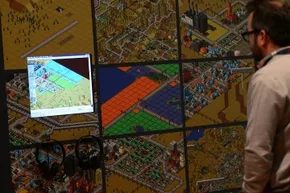

The Legal Gray Zone of Abandonware
The video game industry brings in billions. In 2014 alone, revenue hit $22 billion [ESA]. But code is digital. It copies easily. It shares instantly. This makes it vulnerable, just like books or movies. Pirating active games is illegal. The risks are obvious. But abandonware law gets murkier. The ethics are debatable. The legalities are not.
Technically, intellectual property belongs to the owner. Unless they grant a license, you cannot reproduce it. Trademarks protect names and logos. These protections stick around.
Copyright duration is the key. It outlasts the software itself. The Sonny Bono Copyright Term Extension Act of 1998 set the standard. Works created after Jan. 1, 1978, last 70 years after the author’s death. Corporate works last 95 years from publication. Or 120 years from creation. Whichever ends first.
Penalties are steep. Civil fines range from $200 to $150,000 per work. Or the owner’s actual loss. Criminal charges can mean five years in prison. And $250,000 in fines [BSA, Cornell, U.S. Copyright Office]. Usually, companies send cease-and-desist letters. Or settle for less.
Home software has only existed for decades. So almost all of it is still copyrighted. Unless the holder explicitly releases it. Most abandonware sites operate in a legal gray area. Downloading it is often infringement.
Both distribution and downloading are violations. If you get software from an unauthorized source, you risk action. Or the site does. Even owning the physical copy doesn’t always help. You can’t legally download a digital version of it.
There is a narrow exception. In 2006, the Library of Congress exempted the Digital Millennium Copyright Act. It allows hacking copy protection. Only for archival purposes. And only for computers no longer sold. Or games with physical dongles that can’t be replaced [Beschizza, Boyes].
Software companies see old titles as competition. They worry about lost sales. If they ignore infringement, they risk losing their rights. Groups like the ESA and SIIA fight back. They protect their members’ IP.
In 1997, abandonware was emerging. The term was coined. Industry groups sent cease-and-desist letters. Most sites shut down. But the hydra effect kicked in. New sites appeared. Old ones came back. The law is clear. The enforcement is messy. You can still find them. You just have to know where to look.
The Legal Gray Zone: Why Abandonware Exists
There is a distinct line between abandonware and standard piracy. Pirated “warez” are recent titles, still in print and sold by publishers, distributed illegally. Abandonware is different. It is software that has been effectively deserted by its rights holder, often with no commercial version available for modern systems.
Sites hosting this software usually walk a tightrope. They will often remove titles if a company asserts ownership. Some even redirect users to official stores where the game might be available. Others post disclaimers stating that downloads are strictly for owners of the original physical copy. To distance themselves from pirate havens, many enforce strict rules: the software must be at least several years old and not available through legitimate channels. Some operators sit outside U.S. borders, though U.S. copyright law can still reach them internationally [sources: Moby Games, Smith].
Copyright Terms and the Risk of Cultural Loss
The core argument for abandonware rests on the length of modern copyright. In 1790, U.S. copyright lasted 14 years, renewable for another 14. Today, it can extend beyond 100 years. That is longer than the video game industry itself has existed.
Without a reasonable mechanism for games to enter the public domain, they risk disappearing forever. Computer systems have short shelf-lives. Storage media degrades. In 1996, Polarware released the rights to its ’80s adventure games, but even creator Mark Pelczarski didn’t have copies of every title [source: Moby Games]. While major publishers often port popular classics to newer platforms, obscure titles from defunct companies are far more vulnerable to being lost to time.
Preservation, Education, and Market Signals
Abandonware serves purposes beyond nostalgia. It allows for scholarly study and historical analysis. Game developers also use these archives to improve their craft. Artists study predecessors; software is a multi-faceted art form combining visual design, music, interactive storytelling, and computer science.
Then there is the market signal. The prevalence of abandonware sites proves there is demand for older games. This data can guide re-releases. In 1999, Hasbro noticed the enduring popularity of the 1981 Konami game Frogger on these sites. They released a new version, which landed in the top 10 best-selling games that year [source: Smith].
How to Actually Run Abandonware on Modern Hardware
You cannot simply double-click an old .exe file on Windows 11. The architecture has changed. The drivers are different. The way the operating system handles memory and hardware interrupts is fundamentally altered. You need a bridge.
Emulators are the primary tool. These are programs that mimic the hardware of the past. If you want to play a DOS game, you use an emulator like DOSBox. DOSBox creates a virtual DOS environment on your modern PC. It tricks the old software into thinking it is running on a 1990s computer with a specific sound card and graphics chip.
For console games, the process is similar but often more complex. You need an emulator for the console itself—like MAME for arcade cabinets or specific emulators for NES, SNES, or PlayStation systems. However, legality here is thresher. You must own the original game cartridge or disc to dump the ROM legally. Downloading ROMs from the internet is generally considered copyright infringement, even if the game is abandoned.
Emulators create a virtual environment that mimics the hardware of the past.
Compatibility Layers are another option, particularly for Windows games. Tools like Wine allow Linux or macOS users to run Windows applications. For native Windows users, compatibility modes in the OS settings can sometimes trick the game into running. But for older titles, this often fails. The code relies on hardware-specific instructions that no longer exist in modern CPUs.
Virtual Machines offer a middle ground. You can install an old version of Windows (like Windows 98) inside a virtual machine on your current OS. This provides the correct drivers and environment for the game. It is slower than native execution, but it is often more stable than relying on compatibility modes.
Where to Find Abandonware Safely
Not all sites are created equal. Some are riddled with malware. Others host files that are corrupted or incomplete. Stick to reputable sources.
- Internet Archive : A non-profit library that hosts thousands of abandonware titles. They are generally careful about takedown notices and preserve the files for historical reasons.
- MyAbandonware : One of the largest collections. They have a community aspect, allowing users to rate games and report issues.
- OldGamesDownload : Focuses on accuracy and preservation. They often include original manuals and box art.
When downloading, check the file size. If a 20MB game is listed as 200MB, something is wrong. Look for user reviews. If a site requires you to disable your antivirus to download, run away

Where to Find Abandonware (and What You Actually Need to Run It)
The legal gray areas haven’t stopped people from downloading these titles. In fact, a whole ecosystem has grown around it. Most of these sites post strict rules, claiming they only host games that are effectively dead in the water commercially. It’s a self-policing community, but the intent is clear: keep the old software alive because the original publishers aren’t.
The Official Abandonware Ring was one of the first to organize this chaos. By early 2015, it was already linking to over 70 other sites. If you’re looking for specific hubs, Abandonia (now part of Abovo Media) is a big name. So is the Classic Gaming Network. Then there’s Home of the Underdogs, which focuses on PC titles that were underrated back in the day. They mix abandonware with links to buy games that are still sold, bridging the gap between preservation and commerce.
But you won’t always find these games in organized directories. They’re scattered across newsgroups and random corners of the web. And that’s where the risk creeps in. Free software from unknown sources is a magnet for malware. You have to be careful.
The Technical Reality: ROMs, ISOs, and Emulators
You can’t just double-click a 1995 installer and expect it to work on Windows 11. The hardware has changed. The media formats have changed. The software needs to be ripped and converted.
Old cartridges from the 1970s and 80s are read from their ROMs (Read-Only Memory) and converted into binary files. These are called ROMs. You’ll also hear people call old floppy disk or DOS games “ROMs,” even though that’s technically inaccurate. CD-based games from the 90s are ripped as ISOs.
To run these files, you need an emulator. An emulator mimics the hardware of an old machine so modern computers can run the old software. It’s not just the game file you need. Often, you need the emulator itself, plus maybe a license key if the site provides one.
The list of emulators is long. DOSBox handles DOS programs. VDMSound and Boxer are alternatives for that era. MAME is the gold standard for arcade games. For consoles, you have Stella for Atari 2600, Snes9x for Super Nintendo, Kega Fusion for Sega Genesis, and Vice for the Commodore 64. If you love point-and-click adventures, ScummVM runs games built with the Scumm language, like many LucasArts classics.
Mobile emulators exist too, but on iPhones, you usually have to jailbreak your device to run them. That’s a barrier most casual users don’t want to cross.
Browser-Based Gaming and Preservation Efforts
You don’t always need to install anything. Some sites offer Flash-based recreations or stream games through browser-based emulators. Nesbox is one example. It lets you upload and play NES and Sega games directly in the browser. No downloads. No installation. Just play.
But there’s a more scholarly side to this. Videotopia is a collection of playable arcade and home games, hardware, and related items. It’s curated by The Electronics Conservancy and designed to show the evolution of gaming and computer technology. It travels to museums and science centers. Great for education. Bad for convenience. You can’t just play it from your couch.
Then there’s the Internet Archive. It’s a non-profit that collects cultural artifacts. Their digital library includes thousands of video games. At the time of this writing, they have hundreds of arcade games and over 2,600 MS-DOS games. You can play them directly online using their EM-DOSBOX emulator. No jailbreaking. No downloading risky ISOs. Just click and play.
It’s a different model. One that prioritizes access over ownership. And maybe that’s the only way these games survive.
Abandonware isn’t just a gray-market loophole. Sometimes the rights holders themselves decide to set the games free. It’s a shift from hoarding IP to sharing it.
Id Software, the powerhouse behind Doom and Quake, has a history of releasing source code to the public. This wasn’t just a PR move. It allowed the community to build engines, mods, and modernizations. Activision, Apogee, and Sierra have also released older titles as freeware. Parallax Software did the same with Descent back in 1997. If you want to track these specific releases, Remain in Play is the go-to hub. They curate games that owners have explicitly authorized for free distribution.
Official Revivals and Modern Ports
Nowadays, the strategy has shifted from “free source code” to “paid modern ports.” Companies are reviving old titles for smartphones and newer consoles. You pay for the convenience of compatibility.
Take Myst. Originally released in 1993, it was ported and re-released for smartphones and modern gaming consoles in 2009. It’s not the same as running the original disk on a vintage Mac. It’s a remaster built for touchscreens and high-res displays.
Xbox Live Arcade and PlayStation Network are full of these classic downloads. You aren’t downloading an ISO from a dark web forum. You’re buying a licensed version that runs on current hardware.
Mobile gaming has eaten up a lot of this legacy content. Activision released an anthology of Atari 2600 games. Pitfall, River Raid, and Kaboom are all there. They also launched the “Lost Adventures of Infocom” app. This lets you purchase text-based adventures that defined the 1980s. Atari has done similar work, making Centipede, Asteroids, Missile Command, and Yar’s Revenge available for smartphones and tablets.
The roster extends far beyond those names. Bandai Namco has Pac-Man. Capcom offers Street Fighter II and Ghosts ‘n Goblins. Midway has Joust, Defender, and Rampage. Sega’s Sonic the Hedgehog is everywhere. These aren’t emulators struggling with input lag. They are optimized binaries meant for modern touch interfaces.
Where to Find Legit Retro Gaming
If you prefer browser-based play, the current owner of Atari lets you play revamped versions of old games for free at Atari.com/arcade. It’s quick. It’s accessible. But it lacks tactile feedback.
If you want the original versions with an old-school controller, there’s the Atari Flashback console. It’s built solely for playing old Atari 2600 games. No cartridges required. The games are preinstalled. It’s a dedicated hardware solution for a specific era of gaming.
For PC and Mac games, GOG.com is the primary destination. They secure the rights and sell downloads of older titles at reasonable prices. The key here is DRM-free files. You own the installation package. Steam is also a solid source. Many games you assume are abandonware are actually available for official sale on newer platforms through their retro catalog.
The Hardware Reality Check
You can always go fully vintage. Purchase working computers, consoles, and physical games via eBay or other online marketplaces. Pull them out of your own closet. Test them. A lot of them are still out there.
But this approach has a hard deadline. Eventually, all old hardware and physical media will go the way of the dodo bird. Circuits degrade. Batteries leak. Plastic becomes brittle. Cartridges fail.
When that hardware disappears, abandonware sites or similar digital archives might be the only way to relive those game-riddled childhoods. The legal paths exist now. But the physical medium has an expiration date.
More Resources
For those digging deeper into the history of software preservation, there is a vast ecosystem of documentation. Internet Archive’s software library holds thousands of operating systems and applications. The Library of Congress has begun collecting video games as part of its permanent collection. These efforts highlight how we choose to remember our digital past.
The line between “abandonware” and “public domain” is blurring. As more companies realize


