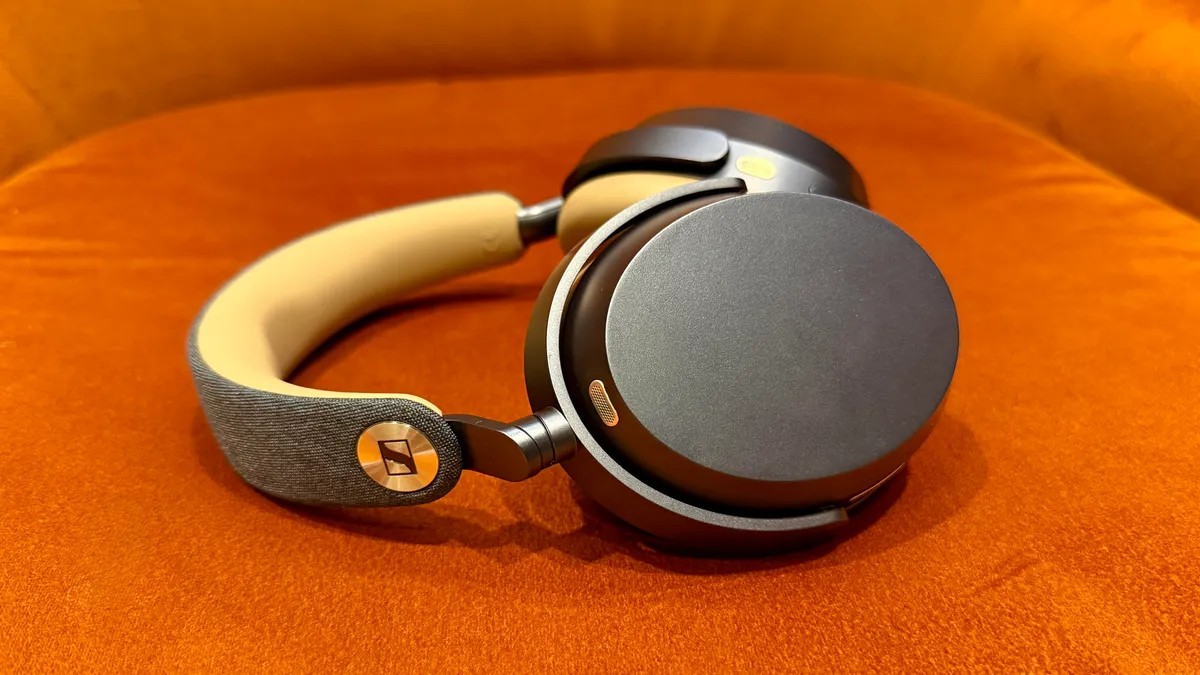
Remember when I reviewed the Momentum 4 in 2022? I wasn’t impressed. Great sound. Sure. But the design looked like it forgot who it was. Plain. Mundane. The noise cancellation? Lacking compared to the big names. Sony, Bose. They left the building while Sennheiser packed its bags for mediocrity.
Four years later. Here is the Momentum 5. It wears the exact same face. But under the hood, it has a new spine. Sennheiser finally fixed the silence issue. Added spatial audio that knows where you’re looking. A battery you can actually change yourself. Small things. But necessary ones. At $400, these drop on June 16. They look good. They sound right.
“The Momentum 5 isn’t just a fix. It’s an admission.”
Зміст
Design: Less is More, Eventually
Weight hasn’t moved. 290 grams. The 4 weighed 293. Basically the same heft on your head. Lighter than before? No. Heavier than Sony’s new WH-1000X6. That one sits at 254 grams.
But comfort wins out. The earpads are plush. Replaceable. The build feels tough, despite the plastic shell. I appreciate knowing which earpiece is left and which is right. It seems basic. It matters.
The case changed. Finally. Slimmed down. They carved out the back like a handle. It looks sharper than the bulky case for the premium HDB 6330 headphones. Those cost $500. They get better drivers and a wireless dongle. But their noise cancellation is weaker. Their calls are worse. The HDB 63 is for people who don’t care about outside noise. The Momentum is for the real world.
The controls stayed. Swipe up for volume. Swipe forward to skip. They work. Just as well as anything else I’ve tried. No friction here.
Powering up is different now. You have to press a button. On the 4, taking them out of the case turned them on automatically. Convenient? Sometimes. Annoying when they paired to your phone while sitting on your desk? Definitely. The 5 shuts down when you drop them in the case. You can also set them to auto-off after 15, 35, or 60 minutes of silence. Simple logic.
Quiet Down
Here is the fix. The microphones. Eight of them. Two per ear cup. The 4 only had four total.
This doubled count makes a difference. The Sony XM6 is still the king. The Bose QuietComfort Ultra 2? Top tier. Apple’s AirPods Max 2? Same club. Sennheiser isn’t quite at their level. Yet. But the gap closed. Fast.
Voices still pierce through. Mid and high frequencies leak in. But the rumble? Gone. On New York streets, which are loud and chaotic, the silence felt solid. Strong. I’d grade the ANC an A-minus. Good. Better than good.
Transparency mode improved too. It sounds like air now. Not processed static. Just the room, amplified slightly. More natural than the previous model.
Features That Hit and Miss
Bluetooth 5.4. It will become 6.0 with an update later. That’s good.
Wear detection is faster now. Take the headphones off? Music pauses. Put them on? It resumes. No fumbling. Spatial audio added head tracking. Sennheiser calls it “immersive” audio. There is a “find headphones” ping. A “sound zones” feature lets you set profiles for specific spots, like the office or home, which activate automatically.
Multipoint connection exists. Connect your phone and your laptop. Switch between them without unpairing.
But here are the misses.
No Speak-to-Chat. Sony and Apple have this. You start talking. Music lowers automatically. Sennheiser lacks it. No built-in voice assistant. No Auracast support for broadcast audio.
It’s 2026. You’d think these things were standard by now. Maybe not. But they feel missing.
The Sound: Still Clean, Slightly Warmer
Drivers stayed at 42mm. No hardware change. Just tuning.
Does the sound change? A little. The heavier noise cancellation presses down a bit on the air. It changes the tonal balance slightly. Not worse. Just… different. If you loved the raw, neutral tone of the 4, you might pause. If you love accurate sound, you’ll stay.
Sennheiser promises a “slightly warm” sound. It’s not neutral. There’s bass. Plenty of it. Tight. Punchy. No harsh highs. The midrange where vocals sit feels intimate. Correct. Smooth. No fatigue after four hours. That matters.
I tested the HDB 63 briefly for comparison. It sounds more expensive. Sharper. But the Momentum 5 holds its own wirelessly.
Versus the Sony XM6? The Sony has more bass energy. A bigger soundstage. But the Momentum felt clearer. More precise. It was a toss-up. A genuinely close one.
Want to tweak it? The Smart Control Plus app is decent. An eight-band equalizer. A “Sound Personalization” game where you drag a dot in a field to train the profile. I liked it. It’s visual. It works.
The USB-C wired connection remains. It boosts the signal slightly. More life in the treble. And yes, these work with that $60 BTD 70 dongle if you want lossless audio without cables. Pairing it was annoying. It took tries. But for PC connections? It saves you from Bluetooth glitches.
Calling and Conclusion
Calls are… fine. Sennheiser switched to wideband mics. You can hear your own voice (sidetone), which stops you from yelling. It works well enough.
In wind and street noise, callers said my voice sounded okay. Solid reduction. But slightly muffled. A faint whoosh lingered in the background. It’s good for casual Zooms. Not pro-level.
Future updates might fix the audio bandwidth when plugging in via USB-C to a Windows machine. Maybe the Bluetooth 6.0 update helps voice quality. We will wait and see.
I have liked this line of headphones for years. The momentum 4 had a weakness. The cancellation. Sennheiser found it. Fixed it. Now it competes.
But the price. $400 is a bold number.
The Sony XM6 lists for $450. Bose QuietComfort for the same. But those sell for less, often. If Sennheiser wants you to buy the Momentum 5 instead, they need to drop to $300. Maybe $325.
Otherwise? The competition is ready. Apple, Bose, Sony. All excellent.
The Momentum 5 is ready too. It just needs to earn its price tag in the real market, not just the lab. Will it stay expensive? We’ll have to watch the sales.