BitTorrent isn’t just another way to grab files from the internet. It’s a protocol built on a specific logic: if you want something, you give something back. This “tit-for-tat” principle was developer Bram Cohen’s answer to the chronic leeching problem that plagued earlier peer-to-peer networks. In those old systems, users could download massive amounts of data without ever uploading anything, draining the bandwidth of a few generous hosts. BitTorrent flips the script. Your download speed is directly tied to your upload contribution. Share more, download faster. It’s a simple economic rule that actually works.
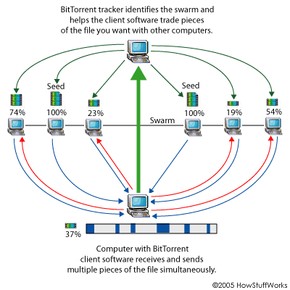
The magic happens in how the file is handled. Instead of waiting for a single server to send a file in one slow stream, BitTorrent chops the file into tiny pieces. Your client then reaches out to a tracker —a central server that acts as an introduction service. The tracker doesn’t host the file. It doesn’t care about the content. It simply tells your computer which other machines, or peers, have the pieces you need and which ones have the full copy, known as seed computers.
These active participants form a swarm.
Why the Swarm Matters
Once your client knows who is in the swarm, it starts a simultaneous download. You aren’t waiting for chunk A, then B, then C. You’re pulling pieces of the file from multiple computers at once. This parallel approach makes significantly better use of your available internet bandwidth. The more computers in the swarm, the faster the transfer. It’s why BitTorrent remains the standard for moving large, popular files. When thousands of people are downloading the same software update or movie, the swarm is robust. Bandwidth is plentiful. Speeds are high.
But the system relies on reciprocity. If you stop the BitTorrent client immediately after your download finishes, you cut yourself off from the future benefits of the network. If you keep the client running, you allow others to download pieces from you. This activity raises your standing in the tit-for-tat algorithm. High-ranking users get priority access to high-bandwidth peers. You’re rewarded for being a good citizen of the swarm.
Setting Up for Distribution
BitTorrent isn’t just for downloading. It’s equally powerful for distribution. If you have a large file to share, you can offload the bandwidth burden from your own server to the community. To do this, you need a few things. You need access to a tracker and a web server. You also need the software to generate the .torrent file, which is the metadata container that tells the protocol how to find the swarm.
The process involves creating a manifest of the file’s pieces and associating it with the tracker’s address. Once that .torrent file exists, anyone with it can join the swarm and pull data from you, just as you pulled from others. Detailed guides are available on the official BitTorrent site if you want to set up your own distribution node.
The Underlying Mechanic
The core innovation here is the distribution of load. Traditional peer-to-peer often suffers from a bottleneck where upload speeds lag far behind download speeds. BitTorrent bypasses this by ensuring everyone is both a consumer and a producer. Your computer is rarely just sitting idle waiting for data. It’s constantly swapping pieces. This constant exchange keeps the network fluid and responsive.
It’s not without its quirks. The reliance on trackers means a central point of failure exists, though decentralized alternatives have emerged to counter that. The tit-for-tat system can also be complex to configure for casual users who don’t want to manage their upload limits. But for the tech-savvy user who needs to move terabytes of data efficiently, the logic is hard to beat. You get what you give. The network expands. The speeds climb. And you’re left with the file, having paid the bandwidth toll in full.