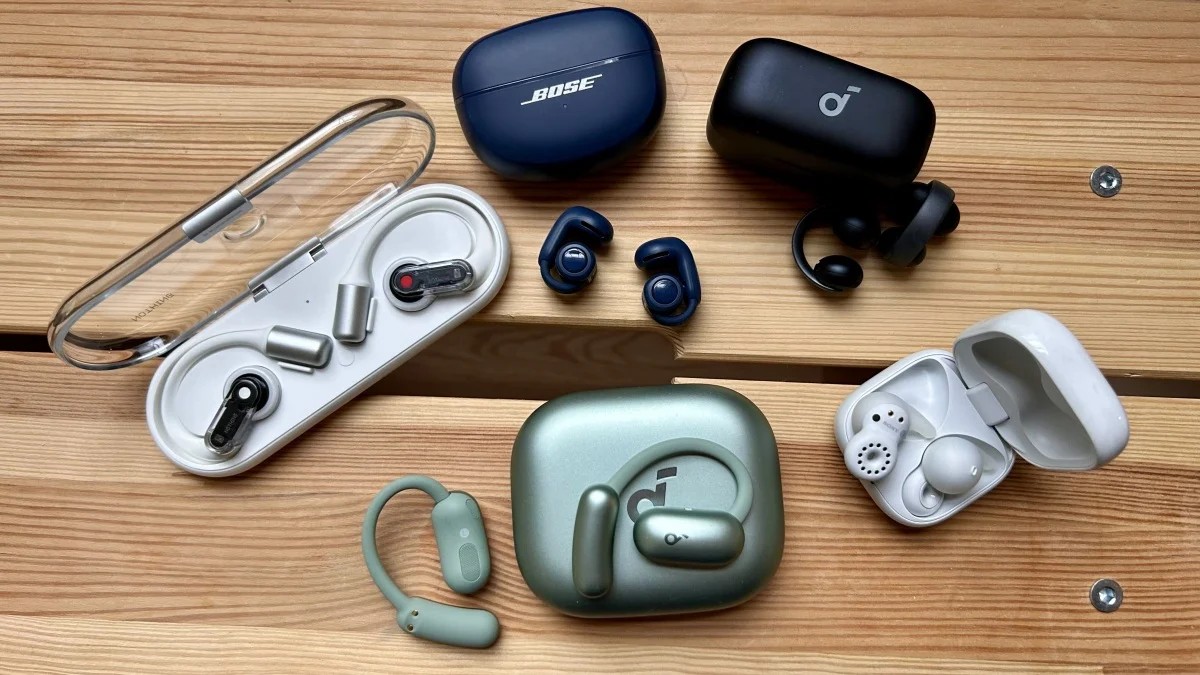
They’re everywhere right now. Open earbuds. You’ve seen the cuff-style clips floating around social media feeds, likely from Bose. Maybe you’ve seen the hooks, too. Everyone is asking the same question: Should I ditch my noise-cancelling in-ears for this?
It’s not new tech, by the way. Bose launched its first open-air models in 2021. But in 2026, the market is exploding. JBL dropped five new styles at CES. Soundcore teased hybrid tech. Sony switched to pastel clips. Shokz is messing with noise reduction. It seems like every major brand is betting big on leaving your ear canal open.
But are they better than the bulky ANC buds you currently own? The answer is complicated. It depends entirely on what you value more: silence or survival.
Зміст
How do open earbuds actually work?
Let’s strip the marketing speak away. Open earbuds don’t sit inside your ear canal. They hover. They use air conduction to send sound directly into your ear through the air, rather than pushing it down a tunnel.
Some people lump bone conduction headphones (like the Shokz OpenRun) into this category. Technically, they’re cousins—both leave the canal open—but for this guide, we’re focusing on the air conduction clip-on or hook designs. These feel like small speakers resting on the outer rim of your ear.
The main draw? It’s permanent transparency mode.
Traditional noise-canceling earbuds often hiss when you turn off ANC. They can feel pressurized. Open earbuds have none of that. You hear the world naturally. No amplification. No artificial boost. Just your life, uninterrupted. This matters if you hate the feeling of plugging up your ear. Or if you’re prone to infections (leaving the canal clear is hygienic). Or if your standard buds fall out every time you move.
Do open earbuds offer noise cancellation?
Short answer: No. Long answer: Sort of, but not in the way you think.
Because they don’t seal the ear, active noise cancellation (ANC) is physically impossible for standard designs. There’s no barrier to break up sound waves. If you’re looking to block out a screaming jet engine or a chatty coworker, these aren’t for you.
Instead, you rely on the audio itself to mask the noise. It works to an extent. But it will always be less effective than a sealed ANC bud. That’s the trade-off.
The real benefit is balance. With good open earbuds, you get a mix. You hear your podcast and the barista calling your name. You hear the bass and the car passing by. It feels less unnatural than the “hyper-real” transparency mode found in expensive in-ear buds, which often sound like microphones cranked up to 11. It’s closer to wearing personal speakers.
The Hybrid Exception
There are exceptions to the “no ANC” rule. Soundcore recently released a hybrid model that can switch between open-air mode and a semi-in-ear ANC mode. It’s clever. It’s versatile. But it’s pricey. And when you use the ANC, you’re wearing it more like a traditional bud.
Shokz is also introducing noise reduction in their new OpenFit Pro. Not cancellation. Reduction. They dampen the background noise so your music cuts through easier, but you still hear everything else. It’s a middle ground. If the total silence of traditional ANC scares you away from open buds, take a look at these hybrids. But expect to pay for the versatility.
Can people hear what you’re listening to?
Ideally, sound leakage is minimal. In reality? It happens.
At low volumes, no one cares. At high volumes? People standing two feet away might catch the lyrics. It’s not like leaving Bluetooth speakers on in the breakroom, but it’s noticeable. I’ve compared it to those chunky early-2000s CD player headphones that leaked sound if you leaned too far forward.
If you plan to study in a library or use them on a quiet date, be careful with the volume slider. In a loud gym or on a busy street, it won’t matter.
The good, the bad, and the ugly
Not everyone will like this form factor. If you love deep, rumbling bass and total isolation, stick to in-ears. But if you prioritize the following, open earbuds will change how you consume audio:
- Comfort: This is the big one. They weigh almost nothing. They don’t push against your eardrum. You can wear them for hours without the fatigue that sets in with heavy over-ears.
- Awareness: Safety first. Running on the sidewalk? You hear traffic. Walking in the park? You hear approaching pedestrians. It’s safer than being acoustically blind.
- Gym-ready: Many models have high IP water resistance ratings. They handle sweat. The hook design locks them in during burpees or sprints. You won’t lose them in a pile of gym clothes.
The downsides are real. Audio quality will never match sealed buds. Without the seal, bass falls apart. You’ll get the melody, maybe the vocals, but the thump is often missing. Also, audio leakage can be a liability in quiet spaces. You risk disturbing others or looking like a fool if your phone is blasting.
How to wear them correctly
Fit matters more with open buds than in-ears. With in-ears, you shove them in and hope. With open buds, positioning changes the sound.
Ear hooks take a second to adjust. Ear cuffs are usually simpler—just clip it on. But regardless of the style, you need to find the “sweet spot.”
Here’s the hack: Play a track you know well. Wear the buds. Then, nudge them slightly forward or backward. Rotate the hook. Find the angle where the bass hits right and the vocals are crisp. Do that during the first few uses. It becomes muscle memory after a while.
Are they worth the money?
For the right user, absolutely.
If you spend half your day commuting on trains, these aren’t your best bet. The lack of ANC will drive you crazy. But if you’re reading in the park, working at a standing desk, or hitting the gym, they’re superior to anything else. I’ve worn open buds longer than any over-ear headphone I own, and that’s saying something.
The price range is wide. You can get decent pairs for under $50. Top-tier models run $200 and up. Audiophiles should probably stay away—the sound stage isn’t as precise as wired headphones. But for general listening? They’re compelling.
The Verdict
We’ve tested dozens of pairs. Some clip on beautifully. Others fall out if you blink too hard. Sound quality ranges from muddy to surprisingly rich. But they all share one trait: they let you exist in the world while still listening to it.
If you want to escape reality, buy ANC buds. If you want to enhance reality without blocking it out, open earbuds are worth the look. Just maybe turn the volume down in the library.