The magazines on your kitchen table are not printed page by page. It comes from giant web offset printing presses that consume paper like hungry beasts. Imagine a 1 ton roll of paper (2000 pounds of raw material) is fed into the machine. The continuous current creates a stream of pulp that feeds the printing press until the final print is made. Only then is the huge sheet cut into individual copies.
This is not your grandfather’s printing press. Sheetfed presses can use pre-cut paper, but web presses work very quickly. We are talking about 50,000 impressions per hour. One impression equals a full 38 x 22.75 inch sheet. For publications like How Stuff Works Express, that single sheet yields 12 pages. The number is amazing.
The principle of continuous printing
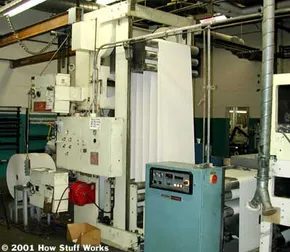
You may be wondering how the machine deals with the inevitable problem of running out of paper. It won’t stop. It never ends. The secret lies in a mechanism called “festoon”.
A festoon is a series of rollers mounted inside a tall tower. The system anticipates the splice when the volume is almost empty. The festoons rise to the tower, grabbing slack and storing large amounts of paper. This creates a buffer.
At the exact moment of the splice, the rotating rolls halt temporarily. The end of the roll’s end meets the beginning of the new roll’s and they automatically stick together. the festoons descend from the tower as the new reel gains traction and speed. The descent speed is adjusted according to the press speed. The operator doesn’t touch the controls. They don’t even need to watch. The balance is automated.
Maintaining Physical Tension
Machines must maintain a certain physical equilibrium. It’s a tug of war between forward force and backpressure. There must be enough resistance to keep the paper tight and flat as it passes through the rollers. If the tension is off, the ink washes out and the paper will tear. If the tension is too high, the web snaps. It is a delicate dance of physics and mechanics.
Ink and water chemistry
The basic principle of offset lithography is simple. oil and water don’t mix.
The ink is hydrophobic. Water is water. The press exploits this chemical incompatibility. Printing plates are treated in such a way that image areas attract ink and non-image areas attract water.
First, apply water to the plate with a roller. The ink roller then follows. The ink only sticks to the areas that repel the water. This ensures crisp lines and accurate colors. The ink is spread from the fountain through a complex series of rollers, creating a uniform layer before touches the paper.
The next section looks at how the ink actually transfers to the page.