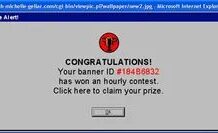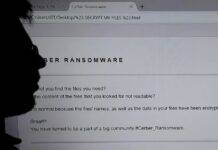
You don’t know what you’ve got until it’s gone. That’s the lesson computer viruses have taught us for decades. Some wipe hard drives clean. Others paralyze networks for hours. Some turn your PC into a zombie, using its power to spam or attack others. If your machine has never caught one, you might think it’s overblown. But the cost is real. Consumer Reports estimated that computer viruses caused $8.5 billion in losses for consumers in just 2008.
They are the most famous online threat. Not the only one. But the best known.
The idea isn’t new. In 1949, John von Neumann theorized that a self-replicating program was possible. The computer industry was barely a decade old. Someone already knew how to jam the gears. It took decades, though, before programmers known as hackers actually built these things.
Early versions were mostly pranks on large systems. The personal computer changed everything. It brought the threat to the public. Fred Cohen, a doctoral student, was the first to describe these self-replicating programs as “viruses.” The name stuck.
In the early 1980s, humans did the heavy lifting. A hacker would copy the virus to a disk. Then they’d distribute the disk. Spread was slow. It was physical. Modems changed the game. Suddenly, transmission wasn’t a local event. It was global. Today, we think of viruses spreading via the Internet. Email attachments. Corrupted web links. They move faster than ever.
Let’s look at the worst offenders. The ones that crippled systems. The ones that defined an era.
Зміст
10: Melissa
We start at the end of the list with a name that still triggers memories for many IT pros.

David L. Smith didn’t just write code in 1999. He wrote a weapon. It was spring, and Smith had built a Microsoft Word macro virus. He called it “Melissa,” after an exotic dancer from Florida. The intent was simple. Spread it. Watch it take off.
The social engineering was crude but effective. The email didn’t look like spam. It read: “Here is that document you asked for, don’t show it to anybody else.” People opened it. They always did. Once the macro ran, the virus replicated. It grabbed the top 50 contacts from the victim’s address book. It sent copies of itself to each one. Then those recipients did the same. The chain reaction was instantaneous.
How the Melissa Virus Spread
This wasn’t a slow creep. This was a firestorm. The United States federal government took notice. FBI officials later told Congress that the virus “wreaked havoc on government and private sector networks.” Email servers choked. Some companies had no choice but to shut down their email programs entirely just to survive the traffic spike.
Smith stood trial. He lost. The sentence was twenty months in jail. The fine was $5,000. The court also barred him from accessing computer networks without authorization. The Internet didn’t break. Not really. But Melissa was the first virus to make the general public pay attention. It showed that code could cause real-world chaos.
Different Types of Computer Viruses
Understanding Melissa requires understanding the landscape of malware. The term “computer virus” is often used broadly, but it has a specific technical meaning.
- Computer Viruses : These programs modify how a computer works. They self-replicate. Crucially, they require a host program to run. Melissa needed a Word document as its host. Without that file, the virus sat dormant.
- Worms : Unlike viruses, worms do not need a host. They are standalone applications. They replicate themselves and move through computer networks independently.
- Trojan Horses : These disguise themselves. A Trojan claims to do one thing but performs another. Some damage hard drives. Others create backdoors, granting remote users access to the victim’s system.
We just touched on the basics. The next section covers older threats. But first, a look at a virus with a sugary name and a brutal impact.
9: ILOVEYOU
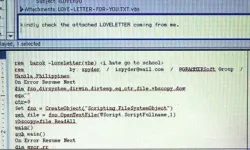
It had only been a year since the Melissa virus clogged corporate inboxes, but the internet already needed a new villain. This time, the threat didn’t come from a macro-enabled document. It emerged from the Philippines in the form of a true worm. A standalone program. A self-replicating beast that didn’t need a host file to ride the waves. It was named ILOVEYOU.
The vector was familiar, though. Email. The subject line was seductive: a love letter from a secret admirer. The attachment was the weapon. The file name was LOVE-LETTER-FOR-YOU.TXT.vbs. That .vbs extension was the tell. It pointed directly to Visual Basic Scripting, the language the hacker used to build the trap. Once clicked, the script didn’t just open a text file. It executed.
McAfee later detailed the sheer scope of the attack. The worm was aggressive. It copied itself repeatedly, burying duplicates across folders on the victim’s hard drive. It injected new keys into the Windows registry, ensuring it stayed buried but active. It replaced specific file types with its own copies, corrupting data in the process.
It didn’t stop at email. The worm propagated through Internet Relay Chat (IRC) clients, jumping from user to user in public chat rooms. But the real damage came from what it pulled down.
The worm downloaded a file called WIN-BUGSFIX.EXE. The name promised system stabilization. The reality was theft. This hidden program was a password stealer. It scoured the infected machine for secret information and emailed the data back to the hacker’s inbox.
So, who pulled the trigger? Most eyes pointed to Onel de Guzman, a young programmer in the Philippines. Authorities investigated him on charges of theft. But there was a legal hurdle. At the time, the Philippines had no specific laws against computer espionage or digital sabotage. Lacking legal cover and citing insufficient evidence, investigators dropped the case. De Guzman never confirmed his guilt. He never denied it, either.
The cost of this ambiguity was staggering. Estimates placed the damage from the ILOVEYOU worm at $10 billion globally. That’s not just lost productivity. That’s system reboots, data recovery, and the erosion of trust in digital communication.
The Aftermath and the Next Threat
The love fest is over. The worm has faded into tech history, but its legacy remains. It demonstrated how social engineering could bypass technical firewalls. It showed that human curiosity was the weakest link in the security chain.
But viruses aren’t the only threat. There are also virus hoaxes. These aren’t malicious code. They don’t replicate. They don’t steal data. They are fake warnings designed to panic recipients. The creators hope that media outlets and users will treat the hoax as fact.
The danger here is indirect but real. It’s the boy who cried wolf. When a hoax spreads, people get fatigued. They start ignoring warnings. Then, a real threat arrives. And this time, no one listens.
8: The Klez Virus
The pattern continues. As security tightened, new variants emerged. The Klez virus was one of the most widespread to hit the web in the following years. It combined the worm’s replication with the Trojan horse’s disguise. Like its predecessors, it relied on the user to make the first move. Click the attachment. Trust the sender. Open the file.

The Klez virus didn’t just add to the noise in 2001. It changed the playbook.
It arrived late that year and stuck around for months. Its variations plagued the internet. The core mechanism was simple but brutal. The worm entered via email. It replicated. It then scanned the victim’s address book. It sent copies to everyone listed there. Some variants carried worse payloads. They could render a computer inoperable.
Depending on the version, Klez behaved differently. Sometimes it acted like a traditional virus. Other times it functioned as a worm or a Trojan horse. In one notorious twist, it could disable your antivirus software. It might even pose as a virus-removal tool. The deception was part of the attack.
Hackers quickly refined this approach. They modified the code to increase effectiveness. The email spoofing feature was the key upgrade.
Like earlier worms, it harvested contacts from your address book. But it didn’t just use its own sender address. It picked a random name from the list. It placed that name in the “From” field of the email client. This is called spoofing. The email appears to come from a trusted source. It is actually coming from the worm.
This technique serves two distinct purposes. First, it complicates defense mechanisms. Blocking the sender in the “From” field is useless. The email is not coming from that person. It’s coming from the infected machine. If the worm spams an inbox with multiple messages, recipients can’t identify the true source. They can’t block the real threat.
Second, it exploits psychology. People recognize names. If the “From” field shows a friend or colleague, they are more likely to open the attachment. Trust is the vulnerability.
Protecting Against Modern Threats
Having antivirus software is non-negotiable. Keeping it updated is equally important. But there is a rule of thumb: use only one suite. Running multiple antivirus programs creates conflicts. They interfere with each other. This slows down your system and can leave gaps in protection.
Some established options include:
- Avast Antivirus
- AVG Anti-Virus
- Kaspersky Anti-Virus
- McAfee VirusScan
- Norton AntiVirus
The landscape of 2001 was crowded. Several major viruses debuted that year. The tactics evolved rapidly. The next step in this timeline involves a different kind of threat.
7: Code Red and Code Red II
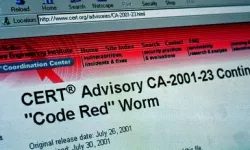
The summer of 2001 wasn’t just hot. It was compromised.
Code Red and its sequel, Code Red II, hit the internet like a shockwave. They didn’t care if you were a casual user or a enterprise server admin. If you were running Windows 2000 or Windows NT, you were in the crosshairs.
The exploit was ugly but simple. A buffer overflow problem. The systems couldn’t handle receiving too much data. When the buffer filled up, it spilled over into adjacent memory. Chaos ensued.
The original Code Red worm had a specific, almost theatrical goal. It tried to initiate a distributed denial of service (DDoS) attack on the White House. Imagine thousands of infected machines hammering the same web servers at once. Overloading the machines until they buckled. It was noise. It was chaos. It was public.
Code Red II was different. It didn’t just crash things. It took over.
The Backdoor Problem
Once a Windows 2000 machine picked up Code Red II, it stopped belonging to you. The worm created a backdoor into the operating system. Remote access wasn’t just possible; it was guaranteed.
This is a system-level compromise. The person behind the virus could access your files. They could use your bandwidth. They could even use your machine to commit crimes.
Think about that for a second. You aren’t just dealing with a slow computer. You are potentially falling under suspicion for crimes you didn’t commit. The liability alone is enough to keep anyone up at night.
Windows NT machines fared slightly better, but only by accident. The viruses caused them to crash more often than normal. That was the extent of it. No backdoors. No remote control. Just a lot of downtime. Compared to the total loss of control on Windows 2000, crashing wasn’t so bad.
The Patch Trap
Microsoft moved fast. They released software patches that addressed the security vulnerability in Windows 2000 and Windows NT. Once patched, the original worms could no longer infect a new machine.
But here is the catch. The patch didn’t remove viruses from already infected computers. If you were already hit, the patch did nothing for you. You had to clean it up yourself.
That leaves you with a difficult question. What do you actually do when you realize your machine is compromised?
It depends on the virus. Many antivirus programs can scrub a system clean. If the virus is still in its early stages, you might get lucky. But if the virus has damaged files or data, you need to restore from backups.
This is why backing up your information often isn’t just advice. It’s a requirement.
With worms like Code Red, relying on a simple antivirus sweep is risky. Some worms allow other malicious software to load onto your machine. They hide things. They leave trails. A standard scan might miss the secondary infections.
The safest move is often the most drastic. Completely reformat the hard drive. Start fresh.
It’s painful. You lose your settings. You lose your apps. You have to reinstall everything. But it’s the only way to be sure the backdoor is gone.
6: Nimda
By early 2001, the internet was already a chaotic place, but Nimda threw a wrench into the gears that everyone thought were secure. The name itself was a cheeky nod to “admin” spelled backward, hinting at the havoc it wreaked on system privileges. This wasn’t just another bug in the system. It was a worm that moved faster than anyone had seen before.
According to Peter Tippett, then-CTO of TruSecure, Nimda went from zero to fully reported in the attack logs in just 22 minutes. That’s not a typo. Twenty-two minutes. It became the fastest-propagating computer virus of its time, setting a benchmark for speed that still makes security engineers sweat today.
Targeting the Infrastructure
While Nimda could technically infect a home PC, its eyes were locked on internet servers. The goal wasn’t just to mess with your personal files. It was to turn the internet infrastructure into a traffic jam. It achieved this by using multiple vectors to spread, including email attachments and network shares. This multi-pronged approach allowed it to jump across servers at a record pace, clogging bandwidth and grinding legitimate traffic to a halt.
The Privilege Escalation Trap
Here is where Nimda got clever, and where it became genuinely dangerous. The worm planted a backdoor into the victim’s operating system. But the level of access it granted depended entirely on who was logged in when the infection hit.
If an average user with limited privileges ran the worm, the attacker got limited access. Not great, but manageable. If an administrator triggered the infection? The attacker got full control. Complete root access. This dynamic meant that Nimda didn’t just spread; it scaled its own power based on the hierarchy of the network it invaded.
A Distributed Denial of Service (DDoS) by Accident
The sheer volume of traffic generated by Nimda’s replication and its backdoor activities acted as a distributed denial of service attack. It didn’t need a botnet command structure to do it. The worm itself consumed system resources, causing network systems to crash under the weight of its own propagation. It was a self-inflicted DDoS that brought major networks to their knees without any external coordination.
Phoning It In: Viruses Beyond the PC
Not every digital threat lives on a desktop or server. The landscape of malware expanded into handheld devices and portable media, proving that if it has a chip and a connection, it can be compromised. This era saw the rise of viruses targeting the new wave of mobile technology.
- CommWarrior: A worm that specifically targeted smartphones running the Symbian operating system. It used Bluetooth and SMS to spread, exploiting the early reliance on wireless pairing.
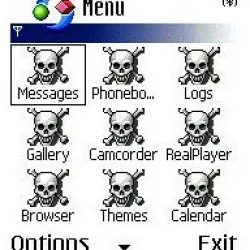
- Skulls Virus: Also hitting Symbian phones, this one was more psychological than functional. It hijacked the home screen, replacing it with an image of a skull instead of the user’s preferred interface.
- RavMonE.exe: A peculiar threat that infected iPod MP3 players manufactured between September 12, 2006, and October 18, 2006. It turned a music player into a vector for malicious code.
- Pre-installed Threats: Fox News reported in March 2008 that some electronic gadgets left the factory with viruses already embedded. These didn’t need to spread initially; they waited for you to sync your device with your computer to jump the fence.
These portable viruses showed that security was no longer about protecting the firewall. It was

The early hours of late January 2003 changed how the internet viewed its own fragility. A new worm swept through web servers with terrifying speed. Most networks had zero defense against it. The result was chaos. Bank of America ATMs went dark. Seattle’s 911 dispatch systems failed. Continental Airlines grounded flights because their electronic check-in infrastructure collapsed.
The attacker was known as SQL Slammer, or Sapphire.
Financial estimates placed the damage at over $1 billion before patches and antivirus definitions could catch up. The propagation was almost incomprehensible. Within minutes of infecting its first target, Slammer doubled its victim count every few seconds. By the fifteen-minute mark, it had infected nearly half of the internet’s core DNS servers.
The Lesson of Speed
Slammer taught a hard lesson. Just having the latest patches and antivirus software isn’t enough. Hackers hunt for unpatched vulnerabilities, especially those not widely known. You can’t just head off viruses. You need a worst-case scenario plan. When disaster strikes, redundancy matters more than prevention.
A Matter of Timing
Some malware is designed to sleep. It sits dormant on a victim’s machine until a specific date triggers its payload. History offers a few chilling examples of time bombs:
- The Jerusalem virus deleted data on Friday the 13th.
- The Michelangelo virus activated on March 6, 1992, marking the artist’s birthday.
- The Chernobyl virus struck on April 26, 1999, the 13th anniversary of the reactor disaster.
- The Nyxem virus wiped files on the third of every month.
These viruses exploit fear. They make users feel helpless and vulnerable. But Slammer wasn’t just about timing. It was about speed. And the next chapter in this saga of digital panic would bring a new level of personal violation.
4: MyDoom

MyDoom, also known as Novarg, wasn’t just a nuisance. It was a worm that installed a persistent backdoor in your operating system. The original strain—and its many variants—relied on two specific triggers to control its behavior. One command launched a denial-of-service (DoS) attack on February 1, 2004. The other told the worm to stop spreading on February 12. Even after the distribution ceased, those backdoors stayed open. The damage was already done.
Later that year, a second wave hit several search engine companies hard. MyDoom operated like many of its peers: it scoured victim computers for email addresses to fuel its replication. But it went a step further. It also sent search queries to search engines and harvested the addresses found in the results. The result was a deluge of millions of requests from infected machines. Google and others saw their services slow to a crawl or crash entirely under the weight of this traffic.
The worm spread via email and peer-to-peer networks. At its peak, MessageLabs reported that one in every twelve emails carried the virus. Like the Klez virus, MyDoom spoofed sender addresses, making it nearly impossible to trace the source of the infection.
Oddball Viruses
Not every virus is designed to cripple your hardware or destroy a network. Some just make computers behave strangely. Take Ping-Pong, an early example that displayed a bouncing ball graphic on the screen. It didn’t cause serious damage. Then there are the “joke programs.” These might convince you your PC is infected, but they are harmless applications. They don’t self-replicate. If you are unsure what is running on your system, let antivirus software handle the removal.
Next, we look at a pair of viruses created by a single hacker: Sasser and Netsky.

Most malware authors slip through the net. They leave digital footprints that fade before anyone notices. But occasionally, the trail holds. This is what happened with the Sasser and Netsky worms. Both traced back to one source: Sven Jaschan, a 17-year-old from Germany.
Two different worms. One creator.
Security analysts spotted the similarities in the code structures. It was a fingerprint in the syntax. The result? A rare moment where authorities caught up to the origin of a digital plague.
How Sasser Attacked Windows
The Sasser worm didn’t use the usual suspects. No email attachments. No social engineering tricks. It exploited a specific vulnerability in Microsoft Windows.
Once inside, the logic was brutal in its simplicity. The worm scanned random IP addresses. It found other vulnerable systems. It instructed them to download the virus copy.
The real damage wasn’t just the spread. It was the denial of service. The worm altered the operating system to prevent normal shutdowns. The only way to stop the chaos was to cut the power. Computers became bricks until the battery died or the plug was pulled.
The Netsky Email Flood
Netsky played a different tune. It moved through email and Windows networks. It spoofed addresses to look legitimate. It hid inside a 22,016-byte file attachment.
The impact was immediate and noisy. As systems collapsed under the weight of the traffic, the network suffered a denial of service attack. The volume was staggering.
For a period, researchers at Sophos estimated that Netsky and its variants made up 25 percent of all computer viruses on the internet. That is a massive chunk of global digital noise.
Justice for a Minor
Jaschan avoided jail time. The outcome wasn’t a prison cell. He received one year and nine months of probation.
The legal system treated him differently because of his age. Being under 18 at the time of his arrest meant he couldn’t be tried as an adult in German courts. The penalty was lighter. The lesson, however, was clear.
Not Just Windows
We have focused heavily on PC malware. Windows dominates the desktop space, so it makes sense. But Macintosh computers are not immune. They are not safe by default.
The next section reveals the first virus to specifically target the Mac OS. The landscape is changing.
Who Are the Black Hats?
Good witches and bad witches exist in stories. Good hackers and bad hackers exist in reality.
The term for the malicious actor is black hat. These are the hackers who create viruses. They are the ones compromising security. They exploit vulnerabilities for crime, not for discovery.
They gather at conventions like Black Hat or Defcon. These events are where the industry discusses the impact of these threats. It is where they explain how they use security flaws to commit crimes.
Leap-A and Oompa-A

You might remember that old Apple ad. Justin Long playing it cool next to John Hodgman’s sweating, virus-stricken PC. The pitch was simple: Windows has over 100,000 threats. Macs? Not so much.
It’s mostly true. Security through obscurity kept Apple users breathing easy. Apple controls both the silicon and the software. That closed garden meant hackers had less incentive to write code for a niche market. If you’re writing a virus, why target the second-place brand when you can hit the majority?
But the “safe” reputation cracked in 2006. The Leap-A virus—also known as Oompa-A—proved the point. It rode into Macs via iChat. It scraped your contact list. It sent out a fake JPEG. It didn’t do much damage, just enough to show the door was unlocked.
As Macs took over the home market, the hackers followed. Custom malware started targeting Apple’s growing user base. Hodgman’s character might get his revenge after all.
But we aren’t here to talk about the runner-ups. We’re at the end of the list. The top spot. The one that actually made headlines for the right reasons.
Breaking Into Song
Let’s get one thing straight: media hysteria often outpaces real-world damage. Take the Michelangelo virus. It got massive press coverage. The actual harm? Minimal. It was more of a joke than a catastrophe.
That absurdity even inspired “Weird Al” Yankovic’s Virus Alert. In the song, he warns about “Stinky Cheese,” a fictional malware that wipes your hard drive, forces you to listen to Jethro Tull, and legally changes your name to Reggie.
It’s funny because it’s absurd. Real viruses aren’t that theatrical. They’re quiet. They’re persistent. And the number one spot on our list belongs to one that proved how easily we can be taken advantage of.
1: Storm Worm
The Storm Worm didn’t just break in. It stormed the gates.
Why is it still relevant years later? Because it pioneered the social engineering playbook we still see today. It didn’t rely on a complex zero-day exploit to get in. It relied on you opening an email.
The worm spread through email attachments disguised as news reports. Headlines about war, natural disasters, or corporate scandals. You see the subject line. You feel the urgency. You click.
Once inside, it established a botnet. A massive network of infected computers working in unison. This wasn’t just about deleting files. It was about control. The Storm Worm allowed attackers to send spam, launch DDoS attacks, and steal data from millions of machines simultaneously.
It showed that the weakest link in security isn’t the code. It’s the human. You can have the best firewall in the world, but if your employee clicks a phishing link because they’re worried about a breaking news story, the game is over.
The Storm Worm taught us that malware isn’t just a technical problem. It’s a psychological one. And as long as humans feel urgency, curiosity, or fear, the inbox will remain the front line of the war.
So, what’s next? The landscape has shifted. Mobile devices, cloud infrastructure, IoT gadgets. The attack surface is bigger than ever. But the method is often the same.
You see a link. You click it. You wonder why your computer is acting strange a week later.
It’s not magic. It’s just bad decisions, packaged as news.

The Storm Worm and the Evolution of Malware
The Storm Worm arrived in late 2006, catching security experts off guard. The public gave it its grim name after seeing emails with the subject line “230 dead as storm batters Europe.” Antivirus firms had their own labels for it. Symantec called it Peacomm. McAfee named it Nuwar. This naming chaos wasn’t new. A 2001 virus also bore the name W32.Storm.Worm. Don’t get them mixed up. They are completely different programs.
The 2006 variant is a Trojan horse. It doesn’t just replicate itself. It delivers a payload. That payload changes depending on the version. Sometimes it turns a user’s PC into a zombie. Other times it creates a bot. Once infected, the computer becomes vulnerable to remote control. Hackers behind the attack can now steer the machine. They use these compromised systems to build a botnet. This network of infected computers sends spam mail across the Internet.
Social engineering does the heavy lifting here. The worm tricks victims into downloading the malicious application. It hides behind fake links to news stories or videos. The attackers are smart. They update the email subject lines to match current events. Just before the 2008 Beijing Olympics, new versions appeared. Subjects included “a new deadly catastrophe in China” or “China’s most deadly earthquake.” Clicking the link didn’t show a news story. It activated a download of the worm.
The scale was massive. Several news agencies and blogs ranked this among the worst virus attacks in years. By July 2007, Postini reported detecting over 200 million emails carrying links to the Storm Worm. This detection spanned several days. Good news? Not every email led to an infection. But the volume alone was a headache.
Despite its widespread presence, the Storm Worm isn’t the hardest to detect. Removal isn’t a nightmare either. Keep your antivirus software updated. That’s the baseline. Use caution with emails from unfamiliar senders. Ignore strange links. Do that, and you avoid major headaches.
Beyond the Storm: Understanding Malware Types
Computer viruses are just one subset of malware. There are other types you need to know about. Spyware and adware are common cousins.
Spyware operates in the shadows. It spies on what a user does with their computer. A frequent tactic is keystroke logging. It records every key pressed. The goal? To discover login codes and passwords. Adware is more visible. It displays ads while you use larger applications like a Web browser. But it’s not always harmless. Some adware contains code that gives advertisers extensive access to private information.
The line between annoyance and threat gets blurry here.