LinkedIn isn’t just another place to scroll through photos or argue with strangers. It’s a digital Rolodex built for people who want to get work done. While Facebook and MySpace were busy helping users share vacation pics and listen to indie bands, LinkedIn was quietly building a infrastructure for careers. The difference? You aren’t looking for a date. You’re looking for a job, a client, or a co-founder.
The explosion of social networking in the mid-2000s was undeniable. By August 2007, MySpace was pulling in over 60 million unique visitors, with Facebook right behind at 19 million. Both saw massive year-over-year growth. But there were more than 300 other sites out there, too. Video sharers. Bookmarking hubs. Music communities. LinkedIn carved out its own lane by ignoring the “social” part of social media in favor of the “professional” part. It was designed for discovery. For leads. For connections that could actually pay the bills.
Зміст
The Origin Story
The platform launched in May 2003. The team behind it was a mix of Stanford alumni and Silicon Valley veterans: Reid Hoffman, Allen Blue, Jean-Luc Vaillant, and Konstantin Guericke. The core idea came from Hoffman and Guericke, who had been mulling over the concept of an online professional network back in the late 1990s. They saw a gap. The internet was connecting people, but it wasn’t connecting workers.
By October 2007, the site had more than 15 million members. It was one of the fastest-growing networks on the planet. Traffic between July 2006 and July 2007 jumped 323 percent. That kind of velocity made it the number one destination for anyone trying to navigate their career online.
Most people on the platform have a few dozen connections. Two or three dozen is standard. But then there are the superusers. The power connectors. Some have amassed as many as 34,000 contacts. That’s not a network. That’s a database.
Why Profiles Matter More Than Posts
On other platforms, engagement is about likes and shares. On LinkedIn, it’s about visibility in search results. Your profile is your landing page. It’s how recruiters find you. It’s how potential partners vet you. It’s the proof that you can actually do the job you say you can do.
LinkedIn is the No. 1 online destination for professional networking.
The site doesn’t care if you posted a funny cat video. It cares if you listed the right skills. It cares if your connections vouch for your work. It’s a system built on trust, but also on data.
We’re going to walk through how to build that profile. How to use the features. Who actually uses the site. And whether all those connections mean anything in the real world. Let’s start with the basics.
LinkedIn Profiles
Setting Up Your LinkedIn Presence
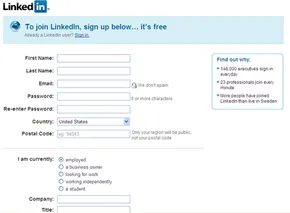
Getting started on LinkedIn is a two-step process: register and build your page. The sign-up form demands specific personal data. You provide your name. An email address. Location. Current employer. College attended. It is basic demographic stuff. Once that is out of the way, the platform prompts you to flesh out the rest of your profile.
Think of your LinkedIn profile as a digital resume. It is not a social diary. The focus is strictly on professional history. Employment details take precedence. Education history follows. Hobbies go nowhere. Favorite movies have no place here. The goal is to showcase career trajectory.
To fill out the profile, you create distinct entries for every role. Current jobs get listed. Former jobs get listed too. For each position, you input the job title. You name the employer. You select the industry. You set the start and end dates. You write a short description of the role. This description matters. It explains what the job entailed. It gives context to the title alone cannot provide.
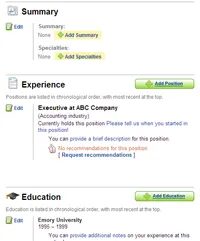
You treat education on LinkedIn like a series of distinct data points, not a single block of text. After high school, every institution gets its own entry. You input the school name. You list the degree. You note the years you were there. You add awards if you won them. Any other details go in the notes section.
This isn’t just for archival purposes. LinkedIn uses this employment and education history later to connect you. It helps the algorithm find former colleagues. It helps it locate classmates. The data feeds the network graph.
Employment and education form the backbone of your profile. But the summary section is where you add voice. It’s a short description of your professional experience and skills. It sits right below your name and title. You also need a profile picture. Real photos work better than headshots with plain backgrounds.
Beyond the basics, you can link external sites. Personal blogs. Professional portfolios. Both count. There is space for interests too. A short list of hobbies or passions. Affiliated groups come next. Honors and awards get their own slot if they don’t fit elsewhere.
Finding Connections
Now you move to the network. How do you find people to add?
LinkedIn suggests connections based on your data. It looks at your email contacts. It checks your phone book. It scans your previous employment history for colleagues. It cross-references education for classmates. You can search for people by name, company, or school. The search bar is your primary tool.
Start with people you already know. Add former coworkers. Add classmates. These are low-hanging fruit. Their profiles are likely complete. They might recognize you. That increases the chance they accept your request.
Don’t spam. Don’t add strangers without a note. A personalized message matters. It shows you aren’t just collecting numbers. It shows intent.
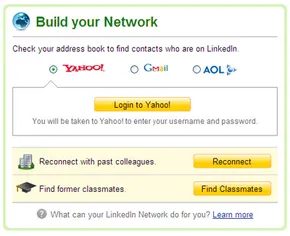
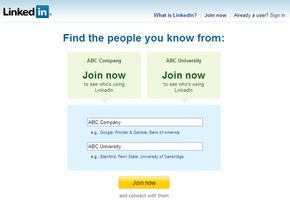
Finding the people you actually know is the hard part of building a network. Once your profile is live, you need to populate it with actual connections. LinkedIn doesn’t make you wander into the void. It gives you several specific paths to locate existing contacts.
You can upload your email contacts. You can search for colleagues. You can look up classmates. You can do a basic name search or dive into advanced filters.
Leveraging Your Email Address Book
If you are using Gmail or AOL, the process is frictionless. You type in your login credentials. LinkedIn scrapes your address book. It identifies which of those saved contacts already have accounts on the platform.
You can also use the “Find Contacts Wizard.” This tool works with Microsoft Outlook or virtually any other address book software. It handles the upload. It matches names and emails.
Once the list is pulled up, you have choices. You can selectively invite specific users to join your network. You can also cast a wider net. Invite everyone on the list to join LinkedIn, even if they aren’t members yet. It is a double-edged sword. You get new connections, but you also risk annoying people who don’t want to join.
Finding Past Colleagues
Your employment history is not just text on a screen. It is a search engine. LinkedIn uses the jobs you have held to surface your professional peers. It shows you current and former colleagues who are already on the site.
You see the list. You decide who belongs in your inner circle. You send the invites. These are people you have likely worked with. The connection is pre-validated by shared experience. That usually means a higher acceptance rate.
Reconnecting with Classmates
Education history works the same way. The classmate search function pulls up everyone who attended your college or graduate school during the same time frame as you.
You can refine this further. Narrow the results to only those who graduated in your specific year. It filters out the broader alumni base. It focuses on the people who actually walked the same halls. It is a direct line to your academic network.
Manual Name and Advanced Searches
Sometimes automated tools miss someone. You click on the “People” section. You start typing.
A name search is straightforward. Enter a full name or just a last name. LinkedIn returns a list of all current members with that name. If your name is John Smith, expect a long list. You have to sift through the noise.
For more precision, use the advanced search. This allows you to combine multiple criteria. Industry, location, company. It helps you find people who fit a specific profile rather than just a name.
The algorithms do the heavy lifting for the easy connections. But the manual search remains essential for those harder-to-find contacts. You type. You wait. You hope the person you are looking for hasn’t deleted their account.
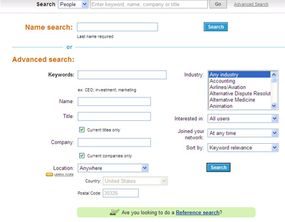
You can dig deeper than the basic bar. LinkedIn advanced search filters by keywords, specific job titles, current employers, geographic location, and even industry sectors. This isn’t just about finding names. It’s about locating the person who knows how the sausage is made.
Why does this matter? You get an inside contact at a target firm. That contact becomes a warm sales lead. Or, it becomes the person who can slip your resume to the right hiring manager before the ATS even sees it. That is an edge. Not everyone knows how to use it.
Turning acquaintances into connections
Once your profile is built and you’ve identified people you already know, the next move is conversion. You don’t just list them. You turn contacts into connections.
This is step three in the sequence. Step one was the profile. Step two was the search. Step three is the handshake, digital style.
When you send an invite, you’re not just adding a number to your count. You’re opening a channel. The algorithm favors active networks. You get more visibility when your graph is dense with real interactions. But don’t force it. Only connect with people who matter to your immediate goals.
“A connection is a door. An engagement is the key.”
Think about where these people are. Are they in your industry? At a competitor? In a department you want to pivot into? The location tag on their profile tells you if they’re local or remote. The industry tag tells you if they’re in tech, healthcare, or finance. Match those to your needs.
Who to target first
If you’re job hunting, look for Hiring Managers or Team Leads at companies you like. Don’t just apply through the portal. Find the person who posted the job. See who they connect with. Often, you’ll spot a second-degree connection. Use that mutual link as an excuse to reach out.
If you’re selling something, find Decision Makers in your niche. Use the title field to filter for “Director,” “VP,” or “C-Suite.” Narrow it down by company size if you can. A CEO at a startup has different pain points than a VP at a Fortune 500.
Location matters too. If you’re in sales, local events often convert better than cold emails. Filter by city. Find people who are active in your area. Comment on their posts. Show up.
It’s not magic. It’s just better hygiene. Most people stop at the name search. They don’t drill down. They don’t see the industry filter. They miss the angle.
Do you really need 500 connections? Or do you need five people who can open a door?
Quality beats quantity every time. A sparse network with high-intent connections is worth more than a bloated list of strangers. Use the filters. Be specific. Ask for the connection with a reason. Don’t just say “Nice to meet you.” Say, “I saw your post about X. I’d love to connect.”
Simple. Direct. Effective.
The rest is just waiting for the notification.
Finding people is the easy part. The real leverage comes from accessing the networks of those you already know. To unlock that, you need to build a solid list of LinkedIn connections.
There is a distinction here. A connection on LinkedIn isn’t the same as a Facebook friend or a MySpace buddy. These are people you know well or trust professionally. The platform explicitly advises against adding strangers. Don’t just accept random invites, and don’t send them out blindly.
To become LinkedIn connections, both parties must agree. You invite, they accept. Or they invite, you accept. Once that handshake happens, you’re automatically on each other’s lists. It’s a mutual link.
Sending the invite is straightforward if you’re pulling from your email contacts or a search of colleagues and classmates. Check the box next to their name. Hit send. LinkedIn sends a generic message unless you type a personal note.
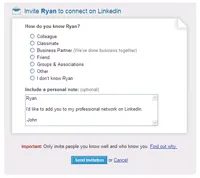
Things get trickier if you found someone through a name search. LinkedIn needs proof that you actually know this person. It will ask for the context.
You have to categorize the relationship:
– Colleague
– Classmate
– Business partner
– Friend
– Group or association
– Other
– “I don’t [name]”
Pick “friend” or “other,” and it will demand the person’s email address to verify. Choose “I don’t know [name],” and the system blocks you. You can’t send the invite. For the other options, you must specify which job, school, or organization ties you together.
You can also control who reaches out to you. Filter your inbox. Only accept notifications from people who already have your email in their contacts. It keeps the noise down.
Need to cut ties later? You can remove a connection. Go to your list. Check the box. Click remove. LinkedIn won’t notify them. It’s silent.
Direct Connections
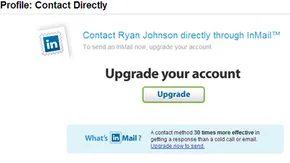
Most social platforms treat everyone as equals. LinkedIn draws hard lines. If you aren’t in someone’s immediate circle, you’re locked out of direct communication. This isn’t a bug. It’s the architecture of professional networking.
Your “direct connections” are the only people you can email freely. Click their profile. Hit “send e-mail.” Done. They’re one degree away. You know them. Or at least, they accepted your request.
The rest of the network is a maze.
Second-degree connections are your friends’ friends. Third-degree are their friends’ friends. Technically, they’re all “your network.” In practice, you can’t reach them with a simple email. LinkedIn forces you to use specific tools. InMail, introductions, or OpenMail. The barrier exists for a reason. It’s about quality over quantity.
Using Introductions on LinkedIn
Even free accounts get some access. LinkedIn gives you five introductions. That’s it. If you need more, you pay. But the mechanism is indirect. You don’t message the target. You message a mutual friend.
Here is the workflow:
- Locate a direct connection who is already linked to your target.
- Send that mutual friend an introduction request. Ask them to forward it.
- The mutual friend decides whether to pass it on. They can ignore you.
- If forwarded, the target decides whether to accept. They can delete it.
- Acceptance doesn’t mean friendship. You still need to send a formal connection request. This often requires their email for verification.
It’s a chain of trust. If one link breaks, the message dies. It’s annoying. It’s also effective. People respond to friends more than strangers.
What Is LinkedIn InMail?
For serious users, InMail is the standard. It’s available only to premium subscribers. You pay a monthly or annual fee. The benefit is direct access. No intermediaries. No waiting for a mutual friend to act.
You can message anyone on the platform. A CEO in London. A recruiter in New York. A startup founder in Berlin. The message lands in their inbox. They see it immediately.
This removes the friction of introductions. You don’t need to map out the network. You just type and send. The cost is financial. The upside is reach.
Understanding OpenLink Messages
There is another option. OpenLink messages. These work differently. Instead of you paying to reach out, you open your inbox to incoming messages from anyone. The sender pays nothing. You do.
Why do this? Privacy.
You keep your personal email hidden. You stay within LinkedIn’s ecosystem. But you become visible to a wider audience. Recruiters find you. Salespeople contact you. It’s a funnel. You control the volume. You control the access.
How LinkedIn Differs from Other Social Networks
This structure sets LinkedIn apart. Facebook is about personal life. Twitter is about public broadcasting. Instagram is visual. LinkedIn is transactional. Every interaction has a potential professional outcome.
The messaging tools reflect this. They are gateways, not open doors. They filter noise. They demand intent. You don’t just “connect.” You justify why you’re connecting.
This is why the platform feels different. It’s colder. More calculated. But for career growth, that’s the point.
The system rewards patience. It punishes spam. If you want access, you play by the rules. You use introductions when you have them. You upgrade to InMail when you’re serious. You open your inbox when you’re available.
It’s not always intuitive. Sometimes it’s frustrating. The process is long. The barriers are high. But when it works, it works. A message from a second-degree connection can change

Social media platforms often get lumped together, but the distinction between general socializing and professional branding is stark. LinkedIn operates on a fundamentally different logic than its peers. It isn’t a place for casual connection. It is a digital workspace.
Think of a LinkedIn profile as an online résumé that never expires. The feature set reflects this purpose. You cannot upload vacation photos. There is no blog integration. You can’t embed YouTube clips or use playful interaction tools like the old “poke” function. The interface is rigid. There is no option to customize colors or layouts. And certainly, there is no search bar for filtering potential partners by age or marital status.
This design isn’t an oversight. It’s a strategic choice.
LinkedIn’s leadership, including CEO Dan Nye, has explicitly stated the goal: to present members in a professional way on the Internet. The clean, streamlined aesthetic serves as a buffer against the reputational risks that plague more open platforms.
The Cost of Casual Social Media
The push for professional polish stems from real-world consequences. News cycles are littered with stories of candidates rejected for jobs or employees terminated because of controversial posts. A poorly chosen photo on MySpace. A inflammatory comment on a Facebook wall. These digital footprints can haunt a career long after the post is made.
LinkedIn removes the clutter that invites scrutiny. By stripping away the ability to personalize the look and feel, the platform forces users to focus on content: experience, skills, and endorsements. It reduces the noise. It minimizes the chance of a frivolous post overshadowing a candidate’s qualifications.
Connections as Professional References
The most critical difference lies in how relationships are defined. On other networks, a “friend” might be a high school classmate you haven’t spoken to in a decade. On LinkedIn, a connection implies something heavier.
LinkedIn recommends treating every connection as a potential professional reference. This isn’t just advice. It is the core mechanic of the network’s trust model. When you connect with someone, you are essentially vouching for them. You are signaling to their network that this person is credible.
Consider the visibility implications. Once someone becomes your connection, they gain access to your extended network. They can see who else you are connected to. This creates a web of mutual accountability. You do not want to connect with individuals who might embarrass you or misrepresent your professional standing to their own contacts. The barrier to connection is higher. The stakes are higher.
“A connection on LinkedIn implies more than a casual acquaintance.”
Individual Achievement vs. Group Affiliation
If Facebook is a town square, LinkedIn is a portfolio. The structural differences highlight this contrast.
Facebook is group-based. It thrives on collective identity. The platform automatically assigns members to “networks” based on geographic location or alma mater. This legacy feature dates back to Facebook’s early days as an exclusive college network. Users can then join thousands of other groups, forming communities around hobbies, causes, or interests.
LinkedIn is individual-focused. While it has groups, the primary emphasis is on the individual and their accomplishments. The profile is the hub. The network is secondary. There is no automatic grouping by college or city unless you manually choose to highlight that information. The focus remains on what you have done, not who you are with.
This distinction matters for job
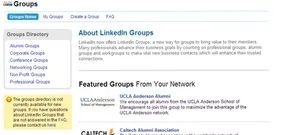
Creating a LinkedIn Group isn’t like signing up for a Facebook community. You can’t just hit a button and start posting. LinkedIn runs a special review panel for new group requests. They only accept professional organizations, alumni groups, industry conferences, and similar business-oriented entities. Once a group is added, the manager holds all the cards. They accept or reject every application to join.
This control reflects a broader difference in how LinkedIn operates compared to other social networks. It uses a distinct business model. There are some Google ads on the site. But there are no corporate sponsors or commercial ads. This stands in stark contrast to MySpace, which pulled in nearly $25 million a month in online ad revenue by February 2007. Facebook announced an advertising scheme in early November 2007 to bring targeted ads from companies like Coca-Cola and Verizon Wireless to its platform.
LinkedIn makes money differently.
How LinkedIn Monetizes Professional Data
The site charges users for specific services. Want to send more than five introductions? You must upgrade to a premium account. The options include Personal Plus, Business, or Pro. The same rule applies to sending InMail or receiving OpenLink messages. Posting job openings costs money too. Reference searches and expedited customer service carry fees as well.
But the real money comes from LinkedIn Corporate Solutions. This tool is powerful for recruiters and corporate headhunters. When you add your professional and educational experience to your profile, you are feeding your personal information into the LinkedIn professional database.
For a steep annual subscription fee, ranging from $100,000 to $250,000 for some companies, LinkedIn provides enhanced search tools and management software. Recruiters use these tools to find passive candidates.
A passive candidate is someone who already has a job and isn’t actively looking for a new one. LinkedIn claims that passive job candidates generally have higher qualifications than the average active job seeker. Corporate recruiters search out skilled workers in other companies and try to convince them to switch firms. LinkedIn estimates that more than 100,000 of its members are professional recruiters.
Who is actually on LinkedIn?
Now let’s look at who uses LinkedIn and for what purposes.
Reconnecting without the pressure
Let’s be honest. For a lot of people, LinkedIn is just a digital Rolodex. It’s where you go to see if your old college roommate is still at the same company or if your former boss got promoted. There is no deep strategy here. You click “Connect.” You watch the feed. You stay visible.
The theory is simple: you build social capital now so you can cash it in later when you need a referral or a warm intro for a sales lead. Until then, it’s just low-stakes socializing with people you used to work with.
The job seeker’s proximity advantage
Then there is the crowd that actually wants something. Job seekers.
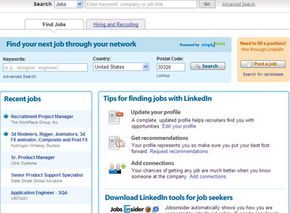
Using the platform to find work is free. You type in a keyword. You pick a location. You hit search. But the magic isn’t in the list of jobs—it’s in how they are sorted.
LinkedIn doesn’t just show you openings. It ranks them by network proximity.
Imagine you apply to Acme, Inc. The system flags that the hiring manager is only two degrees away from you in your professional graph.
This changes everything. Instead of cold-applying into a black hole, you have a clear path. You can ask a mutual connection for an introduction. You can name-drop. You can bypass the initial HR filter because someone on the inside already knows your face. That proximity is the unfair advantage most applicants ignore.
Hiring without the $145 price tag
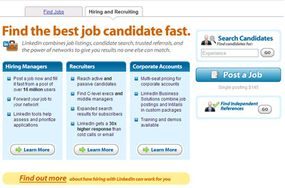
If you are the one posting the job, the standard price is $145 per listing. That adds up fast if you are hiring for multiple roles. But you don’t have to pay to start.
Smart recruiters use the free tools first.
- Keyword searches: Use the hiring page to hunt for candidates based on specific skills or industry experience.
- Advanced people search: Filter by niche criteria to build a talent pool before you even write the job description.
- Network broadcasting: Post an update to your direct connections. “We’re hiring X. Who do you know?”
Your existing network becomes your recruiting arm. It’s often faster and cheaper than a paid job board.
The premium reference check
Once you have applications, vetting them is where things get interesting. If you have a premium account, you can run a reference search.
This isn’t just reading a LinkedIn recommendation. It’s a database query. You can search by company name and time period. You want to know who worked at Company X between 2018 and 2020? You can find them. Then you can reach out to former colleagues for real-time feedback on the candidate.
It’s due diligence at scale.
The recruiter’s playground
Finally, there are the professionals whose entire job is on this platform. Headhunters and corporate recruiters.
They don’t use LinkedIn to post jobs. They use it to hunt talent. With Corporate Services subscriptions, they get access to deeper data layers and better search filters. For a platform with millions of active users, it is the largest professional database in the world. They leverage it to find candidates who aren’t even looking for jobs.
The tool works both ways. You are either the hunter or the hunted. Knowing which side of the fence you are on changes how you use the site.
The traditional playbook for generating business-to-business leads is expensive. Sales teams often shell out thousands for curated lead lists that may or may not be current. LinkedIn disrupts this model by putting the prospecting engine directly into the salesperson’s hands. Instead of buying data, they can search their target industry in real-time.
The outreach path is straightforward. A salesperson identifies a potential buyer. They check for mutual connections to leverage a warm introduction. If no bridge exists, they send an InMail. The pitch lands directly with an inside contact, bypassing generic info@ emails.
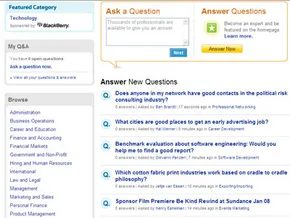
For entrepreneurs, the platform serves as a dynamic networking hub. You can hunt for partners, clients, or specialized vendors without leaving your desk. The LinkedIn Answers feature (now largely integrated into LinkedIn Groups and Q&A sections) allows you to broadcast questions to your extended network—up to three degrees of separation.
Start a small business? Ask for industry-specific advice from people you don’t directly know but are connected to your connections. Need a contractor? The LinkedIn Services page aggregates recommendations from other users. It’s a vetting mechanism powered by social proof.
Public relations pros face a similar challenge: finding the right reporter. Press releases often get buried. Advanced people search on LinkedIn helps locate journalists and editors who specifically cover your client’s vertical. Contact them through shared connections or direct InMail. This targeted approach increases the chance of pickup over cold outreach.
Journalists use the same tool in reverse. Instead of going through a corporate press office, they can find inside sources within companies. They bypass the PR filter to get unvarnished information.
So, does LinkedIn actually work? The results depend on how you use it.
LinkedIn Results
How LinkedIn Actually Works for Different Users
Let’s be honest: LinkedIn is either a powerhouse or a graveyard, depending entirely on your intent. It shines when you have a specific mission— hunting for a job or seeking niche advice from industry veterans. It goes dull, fast, if you’re just lurking as a passive member with a stale network who isn’t currently job-hunting or operating in a field that demands heavy networking.
At its core, it’s a digital Rolodex. The platform hits critical mass with 15 million members, projected to hit 18 million by the end of 2007. That scale means the odds are high your old colleagues and classmates have already signed up. You can reconnect with them in seconds.
Sure, there’s the voyeuristic thrill of seeing what an ex-coworker is up to. You can do that on Facebook. LinkedIn wants you to move past the nostalgia and get down to business. If you treat it like a hobby, it fails you. If you treat it like a tool, it pays off.
Why Recruiters Love the Platform
One thing is clear: LinkedIn works for recruiters. It’s not even close. We found data on a recruiting firm spending just over $7,000 a year on Corporate Services. They pull in more than $100,000 in commissions from candidates found exclusively through the site. That’s a massive return on investment.
Another recruiter using InMail—the direct messaging feature—reports hitting a 90 percent response rate from prospects. Most cold email campaigns dream of a 2 percent open rate. LinkedIn is operating on a different level entirely.
The logic is simple. Human nature dictates that it’s easier to get hired by someone you know than by a stranger. LinkedIn expands your “known universe.” A user with only 41 direct connections can actually access a network of 200,000 members. These are people three degrees of separation away. When you need a job, you don’t cold-call the hiring manager. You ask a mutual friend for an intro. That’s the power of the platform.
Generating Sales Leads Through Warm Introductions
It also works for sales, but with caveats. If you have a large network of direct connections, the leads generated are high-quality. We read about a CEO of an online advertising company who used an introduction from a direct connection to reach the COO of a potential client. The invite was for lunch.
The COO responded immediately. He didn’t have time for lunch, but he admitted he needed a new ad server. They signed a contract two weeks later.
LinkedIn doesn’t give you thousands of leads like a purchased list. It gives you leads with an inside track. As Inc.com noted, it takes a cold call and “warms it up” using shared friends and colleagues. That trust transfer is worth more than volume.
Advice for Entrepreneurs and Small Business Owners
For entrepreneurs, LinkedIn Answers is a surprisingly effective resource. Browsing the “Startups and Small Businesses” section reveals thoughtful, long-form advice on everything from health insurance for small teams to building IT infrastructure cheaply. It’s not just spam.
That said, it’s still a public forum. You’ll encounter self-promotion. LinkedIn is adding a flagging tool to help users quickly report and remove that clutter. Until then, you have to sift through the noise to find the signal.
The “Real Life” Transition
Like any social network, LinkedIn can be a time-waster. It can devolve into a place where you just chat with the same people you knew five years ago. But the company is positioning itself as the destination for serious professional networking. The idea is that the college crowd, busy with Facebook, will migrate here when real life—and real careers—kick in.
Privacy and Hacking Concerns
Let’s talk about the risks. Because you’re sharing professional data, you’re also painting a target on your back.
- Data Exposure: Your current role, salary history, and future plans are visible. If you’re job hunting, your current employer might see you’re looking if you’re not careful with your settings.
- Social Engineering: Recruiters and salespeople can use your network to craft highly personalized phishing attempts. They know who you work with. They know what you care about.
- Account Compromise: Hacked LinkedIn accounts are often used to send spam to your entire network. If your account is breached, your contacts get tricked into clicking malicious links.
You can limit visibility in settings, but the more you use the platform, the more data it holds. It’s a trade-off. Convenience for exposure.
Why Your LinkedIn Profile Is a Social Engineering Goldmine
You spend hours crafting the perfect professional narrative, highlighting achievements and expanding your network. It feels productive. It feels safe. But when you publish detailed career history on a high-traffic platform like LinkedIn, you might be handing social engineering hackers the keys to your digital identity.
Social engineering isn’t about breaking encryption or exploiting zero-day vulnerabilities in server code. It’s about exploiting the one component that can’t be patched: human psychology. Hackers use manipulation to trick people into handing over passwords or corporate secrets. They target the weakest link in any security chain. That link is you.
Consider a classic scenario. An attacker calls an IT helpdesk, posing as a stressed executive who has lost access to their account. The caller is frantic. Urgent. The pressure is real. The IT worker, eager to help and under time pressure, bypasses standard verification protocols. The password is reset. The door is open.
This works because the attacker already knows who they are talking to. They know the executive’s name. They know the company structure. They know the pressure points.
The Public Profile Problem
Many users assume their LinkedIn data is locked behind a login wall. They think only invited connections can see the depth of their profile. That assumption is dangerous.
LinkedIn operates differently than private social networks like Facebook. It allows search engines like Google to index a specific version of your profile known as the public profile. When you create an account, you aren’t just building a resume for recruiters. You are generating a publicly accessible webpage. Anyone who searches for your name, your job title, or your company can find this page.
This isn’t a bug. It’s a feature designed for visibility. But for a malicious actor, visibility is data.
Controlling Your Digital Footprint
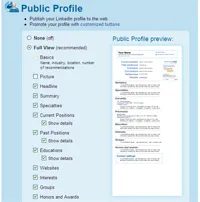
You do have control. LinkedIn provides privacy settings that dictate what the world sees. You can toggle the public profile visibility entirely, or you can fine-tune the data points. You can choose to display only your name, location, and current job title. Or you can allow the “full view,” which includes your work history and education, but excludes recommendations and direct contact info.
Crucially, even in full view mode, your list of connections remains hidden. Only people you have directly connected with—those one degree away—can see who you know.
This distinction matters. If you leave your public profile wide open, you are broadcasting your entire professional biography to anyone with a Google account.
Building the Con
Why does this level of detail matter to a hacker? Because context builds credibility.
If a social engineer knows your name, your employer, your alma mater, and the names of your former colleagues, they aren’t just guessing. They are researching. They can call you using a colleague’s name. They can reference a shared project. They can mention a mutual school event.
This is how the “con” is built. It’s not about force. It’s about familiarity.
“If a social engineering hacker knows your name, where you work, where you worked, where you went to school, as well as names of current and former colleagues and classmates, it’s much easier for him to come up with a convincing scam.”
The more information you broadcast, the easier it is for an attacker to lower your guard. They can subtly persuade you to share sensitive information you would never give to a stranger. They can make a phishing email feel like an internal memo. They can make a phone call feel like a peer-to-peer conversation.
Accepting connection requests from strangers amplifies this risk. Every new connection expands the pool of data an attacker might access if they compromise that account or scrape the platform. You are in control of your privacy settings. You are in control of who you connect with. The question is whether you are paying attention to what you are leaving exposed.
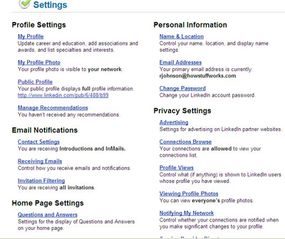
Managing your visibility on professional networks isn’t just about protecting your resume—it’s about controlling who knows where you work and who you know. LinkedIn gives you direct control over this visibility through the Accounts & Settings menu, located in the top-right corner of every page. From there, you can hide your name and current location from other users. You also decide if your connections get notified when you update your profile or add new contacts. Want to keep your inner circle private? You can stop even your direct connections from browsing your full list of connections.
Your data is not sold, but it is used. LinkedIn promises never to sell personally identifiable information to partners.
The company’s privacy policy is strict on one front: they do not sell your personal identifiable information. However, that doesn’t mean your data stays locked away. LinkedIn shares broader, non-PII data—like your industry and geographic region—with website partners to drive advertising. If you visit a partner site, you might see ads tailored to your job title or location. This is the mechanics of LinkedIn targeted advertising. Fortunately, you can toggle this off entirely via the same Accounts & Settings page where you manage your profile visibility.
The mechanics of social networking come down to two things: identity and exchange. You provide data; the platform provides access to opportunity. Understanding where that data goes—who sees your location, who gets your job title for ad targeting—is the difference between a passive user and a strategic one.
Related HowStuffWorks Articles
- How Social Networks Work
- How Online Social Networks Work
- How Human Networking Works
- How Hiring Works
- How Net Generation Students Work
- How Sales Leads Work
- How Public Relations Works
- How Building a Sales Team Works
- How Sales Techniques Work
- Can Facebook make me rich?
More Great Links
- LinkedIntelligence Blog
- CareerJournal.com Professional Networking Tips
- Planet Green: Green Job Search
Sources
- “Ask the CEO: Dan Nye Responds to Users” LinkedIn Blog. http://blog.linkedin.com/blog/2007/10/weekly-news-rou.html
- “Business of LinkedIn is… Business” USA Today. http://www.usatoday.com/tech/webguide/internetlife/2007-09-04-linked-in_N.htm
- “Facebook Gives Online Ads a Social Spin” PC World. http://www.pcworld.com/businesscenter/article/139355/facebook_gives_online_ads_a_social_spin.html
- “How to Be a Master Networker” Entrepreneur.com. http://www.entrepreneur.com/growyourbusiness/portfoliocombusinessnewsandopinion/article182564.html
- “LinkedIn Corporate Solutions Offers New Tools for Corporate Staffing Departments and Executive Recruiters.” http://www.linkedin.com/static?key=press_releases_041807
- “LinkedIn Traffic Up, But is it Enough?” TechCrunch. http://www.techcrunch.com/2007/07/13/linkedin-traffic-up-but-is-it-enough
- “MySpace Monthy Ad Rev. Nears $25 Million” MediaWeek. http://www.mediaweek.com/mw/news/recent_display.jsp?vnu_content_id=1003543487
- Nielsen Netratings August 2007. http://mashable.com/2007/09/13/nielsen-august
- “Recruiters Get LinkedIn in Search of Job Candidates” Workforce.com. http://www.workforce.com/section/06/feature/24/58/49/index.html
- “Savvy Companies Get LinkedIn to Find Top Talent” HR.com. http://www.hr.com/servlets/sfs?&t=/Default/gateway&i=1116423256281&b=1116423256281&application=story&active=no&ParentID=1119278002800&StoryID=1168261749559&xref=http%3A//www.google.com/search%3Fhl%3Den%26safe%3Doff%26client%3Dsafari%26rls%3Den%26q%3Dlinkedin+recruiting+services%26btnG%3DSearch
- “Social Engineering Attacks: What We Can Learn from Kevin Mitnick” SearchSecurity.com. http://searchsecurity.techtarget.com/tip/1,289483,sid14_gci865450,00.html
- “Social Engineering Fundamentals” Security Focus. http://www.securityfocus.com/infocus/1527
- “Turning Sales into Science” Inc.com. http://www.inc.com/magazine/20061201/sales-into-science_pagen_1.html