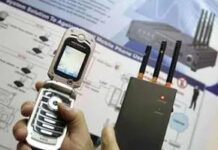
We often look back at 3G as just another letter in the alphabet of mobile connectivity. It was the bridge. But before smartphones became the pocket computers they are today, we needed a network that could actually handle the weight of that promise. That is what third-generation mobile networks were built for.
2G gave us digital voice and basic text. It was a massive step up from the analog days, but it was still tethered to simple signals. Then came 3G. The industry didn’t just want faster ringtones. They wanted the true multimedia cell phone. We called them smartphones back then, too, though they looked nothing like the glass slabs we swipe now. The goal was simple: bandwidth. Enough of it to make web browsing on a tiny screen feasible and to allow for audio and video files that didn’t take all day to load.
The technology wasn’t a single monolith. It was a collection of protocols competing and coexisting. If you were in the US, you likely saw CDMA2000, which evolved directly from the 2G Code Division Multiple Access standard. In Europe and much of Asia, WCDMA (also known as UMTS) dominated. Then there was TD-SCDMA, a time-division variant that found its home primarily in China. Each had its quirks, but they all shared one massive upgrade over their predecessors.
The numbers tell the real story. 3G promised up to 3 Mbps. To put that in perspective, you could download a standard 3-minute MP3 in about 15 seconds. Compare that to 2G, which maxed out at 144 Kbps. On a 2G network, that same song took roughly eight minutes. Eight minutes is an eternity in human attention spans.
This speed differential changed how people used their devices. Suddenly, the phone wasn’t just for calling. It became a mini-laptop. You could video conference, albeit with the pixelated, laggy charm of early video calls. You could stream video, send faxes, and sync email attachments without staring at a spinning wheel for ten minutes. The barrier between “calling” and “computing” started to dissolve.
It wasn’t perfect. Coverage was spotty. Speeds fluctuated wildly. But it established the foundation for everything that followed. It proved that a cell phone could be a broadband appliance. And once that door was opened, there was no going back.
We spent years refining this infrastructure before the next leap. The industry kept pushing, looking for more speed, lower latency, and wider capacity. That drive led directly to the development of the next standard, which would redefine the experience once again.