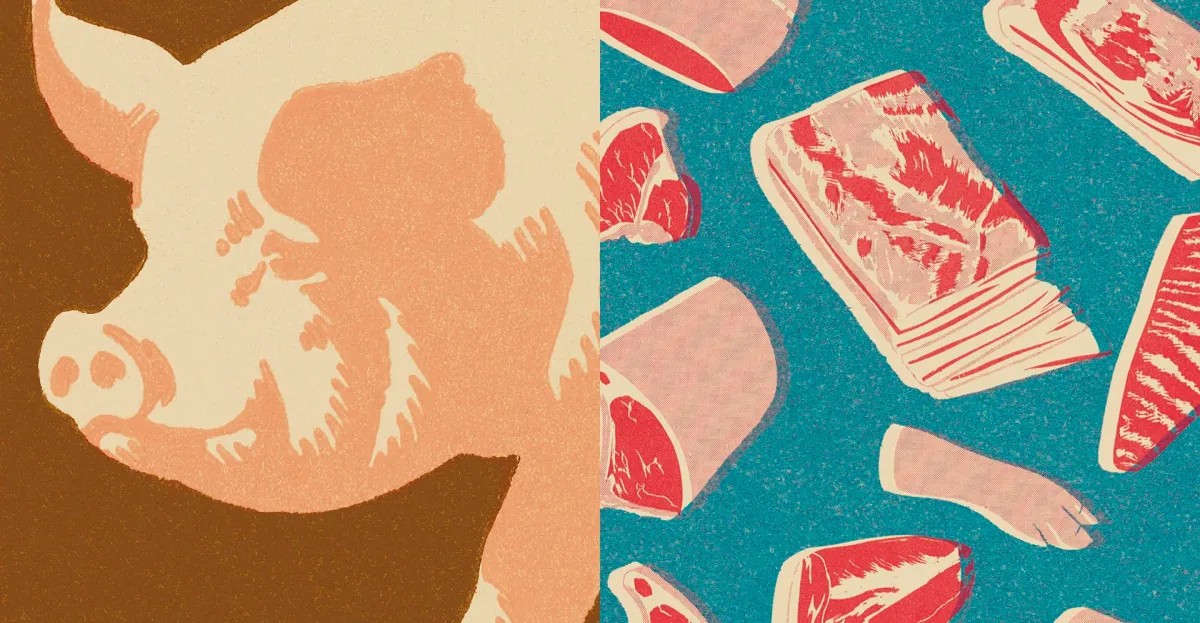
We like animals. We also like eating them. The resulting cognitive dissonance is exhausting.
It’s the quiet war inside your head.
Billie Eilish recently declared you can’t claim to love animals if you eat them. The internet, predictably, exploded. Not because the logic was flawed. Because the statement poked a very specific nerve. It triggered the meat paradox.
This is the psychological glitch at the center of our plates. It’s the discomfort that rises when your actions collide with your affections. You don’t want them harmed. Yet here you are.
Most of us carry this contradiction daily.
We don’t talk about it much. Not really. We swallow the beef. We drink the milk. We ignore the elephant in the room. But researchers see the cracks forming. They see how we fight to close them.
Зміст
Ignorance isn’t just ignorance
Here is a puzzle for you.
In a survey of nearly 1,000 Americans, the majority labeled standard farming practices—like gassing pigs or beak-trimming hens without anesthesia—as unacceptable. Very unacceptable.
Turn the page. Look at a poll of 12,00+ adults from Pew Research. There, eating meat ranked as almost entirely non-moral. On par with having an abortion or gambling. Wait. On par with using IVF. It was considered socially acceptable. Morally neutral.
How do both truths exist?
Hank Rothgerber studies this. He teaches psychology. He says the first culprit is simple. Most of us literally do not know.
We assume the cow in our steak dinner was happy. That the eggs are free-range. When asked if meat is wrong, we aren’t thinking of the factory. We’re thinking of a hamburger. The disconnect protects our comfort.
But Rothgerber goes deeper. It’s not just lack of data.
It’s motivated ignorance. We actively look away.
A study showed that one in three people chose a blank screen over a photo of pregnant pigs in crates. Why? To avoid the guilt. The pain is easier than the truth. If you see the pig, you have to change the behavior. Most of us aren’t ready for that shift. So we close the eye. We stay blind on purpose.
Rewiring the brain to ignore the source
It gets worse. Or better? Depending on where you stand.
We don’t just look away. We change what we think about the animals to make eating them easier.
Try this thought experiment. Imagine eating cashews. Then imagine eating beef jerky. Both times you answer the same question: How much moral consideration does a cow deserve?
The study showed the jerky-eaters rated the cow as having less moral worth.
Not just a little. Significantly less. They saw the animal as having less capacity for suffering. This wasn’t because the cow changed. The cow is the same. We changed. The meat softened the heart toward the beast. It reversed cause and effect. Our actions shaped our morals to suit the action.
We also try to decouple. The meat isn’t a cow. It’s beef. The pork isn’t a pig. It’s bacon. We sanitize the language. We erase the face.
Some argue they only buy humane meat. Some say they eat very little of it. Some say it’s their right. These are defense mechanisms. Shields against the dissonance.
And animal advocates are stuck. They shout about the cruelty. We agree. The cruelty is bad. But we still want the cheap egg. Still want the nugget. When pressed, we get defensive. Angry. We call the mess “wicked.” A complex web with no clear exit.
Small nudges, big shifts
So what do we do?
One path is to ignore the paradox and attack the farm itself. This is working, in a way. Cage-free laws passed in half the states. The US egg supply has shifted. Corporate policies improved.
This works because voting is different than dining. When we vote, we care about welfare. When we eat, we care about price and taste. The voter us is nicer than the eater us.
But there are limits. There are too many cruel practices. The lobby is strong.
What actually changes minds?
Two things stand out in recent data.
First. Change the default.
Put plant-based burgers front and center in a cafeteria. Not off in a corner. Main stage. Make oat milk the default at Starbucks. If you want dairy, ask for it. Friction changes behavior. If the choice requires effort, fewer people will take it.
Second. Break the dissociation.
A study at a zoo in the Netherlands posted a single question above a veggie burger: Do you consider animal welfare to be helpful?
Sales of the veggie burger doubled.
In a UK university, they placed a picture of the animal next to its meat dish. Pig for pork. Chicken for nuggets. Diners switched to vegetarian options at higher rates. The link between plate and animal could no longer be denied. The brain could not hide.
It’s a small number. Three point two percent less meat consumed. Sounds trivial.
Now scale that. Imagine every cafeteria doing it. Every menu. Every chain restaurant. The number of animals saved would be in the billions.
There are heavier tools too. Virtual reality headsets that drop you inside a slaughterhouse. Watching Dominion. Ethics courses. They work. Short-term? Sure. Can you make 330 million people put on VR goggles? Probably not.
Changing the ask
We are trapped in our minds. The paradox is durable. It will likely stay.
But we can route around it.
Björn Ólafsson wrote about this after the Billie Eilish storm. His advice is counter-intuitive.
Stop trying to save everyone from eating meat right now.
Ask them to help in another way.
Don’t ask the carnivore to give up their bacon. Ask them to donate. The movement to end factory farming is underfunded. A dollar there is more impact than a half-eaten steak left on the plate out of guilt.
We need policy changes. We need better default options in schools and hospitals. We need menus that force a look at the source.
The discomfort won’t vanish overnight. We will continue to eat meat. We will continue to feel weird about it. But the gap is closing. The dissonance has a way out.
It’s just that we have to want to look.