Google didn’t just build the internet. It swallowed it.
You wake up. You check your phone. You search for something. You maybe publish a blog or check your location history. It’s all there. The company’s footprint is so deep it feels less like a corporation and more like gravity.
This dominance wasn’t accidental. It happened because Google moved fast. It bought small startups before they got too big. It made Android the default operating system for the mobile revolution. In under ten years, it went from a search engine to the backbone of personal computing.
They are good at predicting what you want next. Their products slide into your routine so smoothly you forget life existed without them.
But here is the thing nobody admits. Google fails constantly.
The company throws every idea at the wall. Some stick. Most don’t. The “rollout and re-absorb” strategy is the norm now. Everything is perpetually in beta. If you loved a product that vanished, its best features likely survived. They just changed names. They moved to different apps.
This isn’t a list of trash. It’s a graveyard of innovation.
We look at these failures to see how online development actually works. Mistakes are just data points. Google recycles them. It takes the parts that worked and hides them in plain sight.
Зміст
10: Google Lively
Let’s start with ghosts.
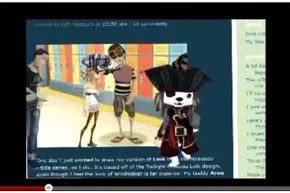
Google Lively launched in 2008. It was supposed to be the future of social networking. Think of it as a 3D virtual world built into your browser. You didn’t just read posts. You inhabited spaces. You moved avatars around. It felt like a hybrid between Second Life and a chat room.
It flopped. Hard.
Why? Because browsers weren’t ready for that kind of rendering in 2008. And people didn’t want to log into yet another virtual space. It was too much work. Too niche.
Google pulled the plug in 2010.
But look closer.
The concept didn’t die. It split apart.
The avatar system? It became Google+ Circles. The visual spaces? They influenced how Google displayed search results. The idea of a persistent, graphical identity? It bled into Google Hangouts and eventually Google Chat.
Google Lively was the prototype for a social graph that felt alive. It failed as a standalone product. It succeeded as a R&D lab.
The lesson? Don’t mourn the death of Lively. You’re using its DNA every time you send a message with a profile picture that moves.

The Ghost of Lively Past
Google Lively barely blinked into existence. Six months in 2008, then poof. Nobody remembers it because it wasn’t just bad—it was invisible. It remains the definitive example of a solid concept crippled by terrible execution. Meanwhile, giants like Second Life are still dragging their feet in the same virtual space, proving that “non-game” worlds are hard.
But looking back, Lively wasn’t just a flop. It was a love letter to an idea we’ve largely abandoned: what online life could actually mean.
The Technical Dream vs. The Laggy Reality
Users built avatars. They wandered 3D spaces. It felt like Minecraft before Minecraft existed, mixed with the chaotic energy of old-school chat rooms. The architecture was recognizable. The interaction was real.
So why did it die? Server glitches. Lag. Frustration.
The idea was right. Chat rooms have been the internet’s social backbone since the dial-up days. We used them to talk to friends we knew and strangers we didn’t. Trends shifted fast. Chatroulette had its moment of viral chaos. Now, we’re stuck waiting for real-time video to finally replace the video-phones we were promised in the nineties.
The Shift from “Places” to “Features”
Here is the core problem. Chat rooms and bulletin boards were the standard for online friendliness once. Now? The social web has changed the rules.
We don’t meet strangers in the wild anymore. We meet them through shared connections. Facebook. Twitter. These platforms operate on a simple premise: trust is derived from existing relationships. You see a friend of a friend, so you talk.
In the dawn of the internet, Lively made sense. It was like a digital nightclub or coffee shop. You went there. You visited. The internet was a destination.
It isn’t anymore.
The internet is no longer a place you “visit.” It’s the layer beneath everything we do. Mixing with strangers isn’t an escape from reality; it’s a feature of living in the world. We don’t need virtual lobbies to meet people. We just need better tools to bridge the gaps in our existing networks. Lively tried to build a new world. We just needed to improve the old one.
The End of the Universal Tip Line
We stopped looking for “answers” the moment Google became instant and free. Yahoo! Answers still exists, sure. People use it now for the weird, entertaining chaos, not because they expect useful information. When you actually need to know something, you go to niche forums. You DM the experts in your network. It’s a shift from a obsolete universal tip line to a model that mirrors real life.
Several companies tried to build that old model. ChaCha. AskJeeves. The premise was simple: ask anything, get an answer. It was essentially paying someone else to Google for you. Sounds insane. It was stupid business. Google Answers used an auction model. Freelancers bid to answer questions. The highest bidder got paid.
It feels silly now. Your browser gives you results automatically. Google’s algorithms get smarter every day. But between April 2002 and November 2006, it served a purpose. It filled the gap before search became second nature.
Google Print and Radio Ads
Before the ad ecosystem looked like today’s programmatic monolith, Google tried specific vertical plays. They didn’t just stick to text links. They experimented with physical media and broadcasting.
Google Print Ads targeted books. The idea was to let users search inside books. If you found a relevant snippet, you could buy the book. It was a bridge between digital search and physical retail. It didn’t fully take off as a standalone revenue driver for Google, but it pointed toward the future of content discovery.
Google Radio Ads were even more ambitious. They wanted to bring targeted ads into the car. The concept involved placing audio ads on radio stations based on listener data. It was an attempt to capture attention in a medium that was largely immune to digital tracking at the time. The infrastructure was complex. The privacy concerns were immediate. The revenue potential was speculative.
Neither became a defining pillar of Google’s income like search or YouTube. But they show how hard the company worked to diversify its ad inventory. They weren’t just a search box. They were trying to own the entire attention chain. The radio experiment in particular highlights a trend that is only accelerating now: the push into offline, linear media with digital precision.

The pressure to monetize didn’t stop at screens. Driven by revenue mandates, Google tried to take its precision targeting tactics into the physical world. The logic seemed sound on paper. They held the most detailed maps of consumer behavior ever assembled. Product purchase data. User location history. Why not apply that same analytical power to radio and print?
It sounded like a win for offline advertisers. Imagine reaching a specific demographic with the same surgical accuracy you get when searching for “best running shoes.” But the plan collided with reality. The metrics that work in a browser don’t translate to a printed page or a car radio.
Why Offline Tracking Broke Google’s Model
Online ads are trackable. You click. You convert. You get a pixel back. It’s a closed loop. Offline advertising is messy. It’s fuzzy. There is no immediate feedback mechanism when someone hears a radio spot or sees a billboard.
Google’s approach required advertisers to hand over their proprietary audience data. Radio executives and print publishers were not keen on this idea. They didn’t trust the tech giant to manage their core business asset. They also couldn’t see the immediate ROI. Without clear attribution, spending money on Google’s offline campaigns felt like a gamble. And in a post-recession economy, advertisers were unwilling to roll dice.
The result was a quiet retreat. Google didn’t officially announce a massive failure. They just stopped pushing these initiatives with the same vigor. The infrastructure for offline measurement simply wasn’t ready, and the industry players weren’t willing to cooperate.
7: Dodgeball
Before Google became the monolith of search, there was Dodgeball.
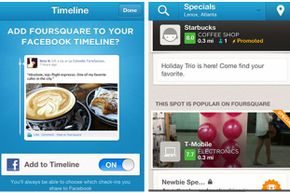
It wasn’t a game of throwing balls at people. It was a location-based social networking service. Launched in 2000, it predated Facebook’s check-ins and Swarm by over a decade. The concept was simple. You told the service where you were. You tagged your friends who were nearby.
Users interacted via SMS or a basic web interface. The goal was to find out where your friends hung out. It tapped into a primal social need. Curiosity. The desire to know who is in the room with you.
Google acquired the service in 2005. They likely saw potential in the location data. Mobile was rising. GPS was becoming standard. But Google struggled to integrate it into their core search product. They didn’t have a clear monetization path that aligned with their ad engine.
Dodgeball faded. The users moved on. It became a footnote in tech history until its data and talent were absorbed into what would eventually become Google Latitude. Then Latitude was absorbed. The lineage is hard to trace now.
But the DNA remained. Location-based services are everywhere today. From restaurant recommendations to targeted local ads. The experiment failed as a standalone product. But it proved that people wanted their devices to know where they were. Google just took a wrong turn in how to package it.
The story of Jaiku mirrors the frustration of Dodgeball. It wasn’t that the tech was bad. It was that the timing was off.
In 2006, Google acquired Jaiku, a microblogging service from Finland. Think of it as Twitter before Twitter was huge. The founder, Sami Keijonen, joined Google. The idea was clear: map out a real-time stream of life updates. It fit the “online meets offline” narrative perfectly.
Then, silence.
For two years, nothing happened. The integration was sloppy. The product felt abandoned. Keijonen left in frustration. He took the concept and built his own thing, but the damage was done. The window for Jaiku had closed. Twitter had already won the microblogging war.
Jaiku is the third example in this pattern. Google buys a promising, niche idea. They shelve it. The founder leaves. The market moves on. The original concept succeeds elsewhere, often in a form that ignores Google’s specific vision.
The Pattern of Missed Opportunities
This isn’t just about one app or one founder. It’s about how Google handles early-stage social experiments.
They acquire. They incubate poorly. They lose the talent. The idea escapes.
Jaiku proved that the infrastructure for real-time updates was ready. But Google couldn’t deliver it. Twitter did. The lesson is consistent across Android, Jaiku, and Dodgeball. The idea is sound. The execution at Google is the failure point.
Where Do We Go From Here?
We’ve seen this happen three times in five years.
- Android: Success, but irrelevant to this argument.
- Dodgeball: Led to Foursquare. Google made Latitude, which died.
- Jaiku: Led to Twitter dominance. Google made nothing of value.
The “real world parallel” suggests that these services will eventually converge. Check-ins, microblogs, location data. They’re all becoming one thing: digital context for physical life.
But who owns that convergence?
Twitter didn’t need Google’s help. Foursquare didn’t need Google’s help. The founders who left were the ones who understood the nuance. Google’s engineers built platforms. The leavers built cultures.
So when you check in now, are you helping Google? Probably not. You’re helping the ecosystem that formed because Google let you go.
The Future of Augmented Reality
The check-in is dead. Long live the context.
Instagram maps. Snapchat lenses. TikTok locations. The gamification of Dodgeball was a novelty. The utility of Jaiku was a feature. But the integration of all three is the new standard.
Google is trying to catch up. They have Latitude. They have Google Maps. They have Android.
But they missed the cultural moment. Twice.
Maybe they’ll get it right this time. Or maybe they’ll just buy another app, wait two years, and watch another founder leave.
The pattern is hard to break. The hardware is ready. The users are addicted. The question is who controls the narrative.
It’s not Google. Not anymore.
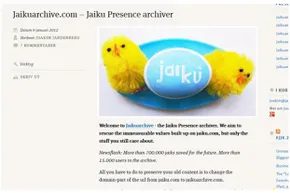
By October 2007, Google had already bought Jaiku. It was supposed to be the next big thing in microblogging. It wasn’t. By January 2009, the writing was on the wall. Twitter had won the short-post war. You can’t build a powerful network if you don’t have the people. Twitter already had them. Jaiku was just catching up to a ghost.
Rumors swirled about bad blood between Google and the Finnish team. Doesn’t matter now. The code went open-source in 2009 anyway. Google killed it officially in 2011. The shutdown happened on January 15, 2012. It’s a shame. We’ll never know what it could have been. Think about MySpace. That graveyard became a hub for underground bands. MySpace’s music tools kept it relevant longer than the social feed did. Jaiku might have found its niche too. Now it’s just silence.
5: Google Notebook and Shared Stuff
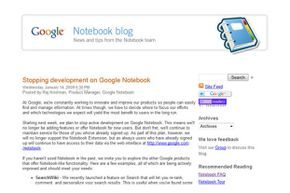
Before the cloud ate everything, you had to carry your data around. Literally. Google Notebook let you clip headlines, quotes, and images from any website. You saved them in one place. It wasn’t just a bookmark. It was a digital scrapbook.
The problem was access. Notebook was tied to your Google account. If you logged in from a friend’s computer, you lost it. Unless you shared it. Sharing was the workaround. You’d generate a link and send it via email or paste it into a forum. It worked. Kind of.
It felt fragile. One server hiccup, one account suspension, and your notes were gone. Google shut down Notebook in 2013. They didn’t warn us for long. Users scrambled to export their data. Most gave up. Years of research? Buried.
Other tools popped up to fill the void. Evernote. Pinterest. Even Twitter threads became a way to save things publicly. But nothing had that specific feel of Notebook. It was lightweight. Fast. It didn’t try to be a social network. It was just a place to keep thoughts before they disappeared.
Now, we clip to browser extensions. We save to Pocket. We forward emails to ourselves. The friction is lower. The risk is higher. If the service dies, your data is scattered across a dozen apps. Notebook was centralized. You had it all in one bucket.
Why did it matter? It taught us to curate. To think before we click. We weren’t just consuming. We were building a second brain. And when it vanished, we realized how much we’d leaned on it. The silence isn’t just about Jaiku. It’s about all the digital scraps we thought were permanent. They weren’t.
Google never built the killer app for the “getting things done” crowd. Not really.
While Google Docs eventually became the shared-document service that Google Wave partially aspired to be, they missed the mark on personal productivity tools. They needed a competitor to Evernote, but they never delivered.
The strategy was predictable. Cut and paste clips that retain their Web citation. It seems like a sure thing when integrated with the browser itself. Google has tried it so many times.
And yet, it failed.
The learning curve was too steep. Or the feature load was overwhelming. The interface was clunky. The world of squirreled-away factlets and quotations remains firmly under the regime of developers with leanest extensions and simplest features.
When everything is in the cloud, porting notes from home to phone to office is no longer a selling point. It’s assumed. Seamless integration is the baseline, not the bonus.
Shared Stuff and the Social Pivot
Then there was Shared Stuff. An improbably named attempt.
It tried to work the Google Docs and Google Notebook angles. It made those clips and notes available to everybody.
The development had problems. It was buggy. It never really integrated into the Google world. The result was a less-fun version of social bookmarking sites like Delicious (often misspelled as Delicio.us).
Social bookmarking privileged the “social” aspect of the concept into its own activity. Whether it takes the form of Delicious, Reddit, or even BuzzFeed.
What’s important isn’t so much what you share, but what you and your friends have to say about it.
These were the aspects of Notebook and Shared Stuff that were eventually integrated into Google Reader. The social signal mattered more than the raw data.
4: Google Buzz

It didn’t ask permission. It just showed up in February 2010, tucked into Gmail like a hidden folder you didn’t know existed. Opt-out? Sure. But the damage was done. Users woke up to a new tab that felt less like a feature and more like an invasion.
What was actually inside? Essentially, it was a bastardized version of Google Reader. Remember that? It was the peak of RSS before the world moved on to curated feeds and app-based consumption. Back then, checking a hundred unread items wasn’t stress-inducing. It was a ritual. Buzz turned that ritual into a chore. Every time you opened your email, you were met with rising numbers. Subconscious anxiety attached to content you might not even want to read anymore.
Google should have gamified it. Reward the cleanup. Clear the cache. Give users a dopamine hit for closing tabs. They didn’t. Instead, they let the unread count stack up like unpaid bills. By late 2011, the experiment was over. Google retired Buzz, effectively admitting defeat.
The Return of the Tablet and the Death of RSS
The irony? The medium changed, but the behavior didn’t. We stopped reading blogs on desktops and started reading magazines on tablets. The hardware shifted from rectangular screens to something shaped like a magazine. Google missed the boat on the transition because they were too busy trying to force RSS into an email client.
RSS didn’t die because the technology was bad. It died because it became tedious. People want curation. They want someone else to filter the noise. Buzz offered none of that. It just offered more noise in a familiar, trusted interface.
3: Wikipedia Alternatives
While Google was failing at social feeds, another giant was facing a different crisis. Trust.
Wikipedia works because of community policing. It’s messy, yes. It’s biased, sometimes. But it’s self-correcting. The problem isn’t the content; it’s the perception of reliability among the general public. That’s where the alternatives step in. They promise accuracy without the chaos.
Do we need them? Probably not for everything. But for specific niches—science, history, law—users are starting to look elsewhere. The question isn’t whether these platforms can beat Wikipedia’s volume. It’s whether they can beat its credibility without becoming gated, expensive, or irrelevant.
Most fail because they try to out-Wikipedia Wikipedia. They copy the model instead of fixing the flaw. The flaw isn’t the open-edit system. It’s the lack of immediate authority. Can a smaller team provide that? Some can. Most can’t.

The memory of the pre-Wikipedia era is hazy for many. Back then, “wiki” wasn’t just a tool; it was a cultural phenomenon. Niche communities and TV fandoms still cling to these platforms today, maintaining dense, user-edited archives of facts about their obsessions. Wikipedia’s dominance comes down to one thing: sheer scale and community devotion. Critics often dismiss it because “anyone” can edit, but that chaos is actually its strength. Knowledge is written by committee. It’s messy, sure, but it works.
Google saw this. They didn’t just watch. They tried to build their own version.
The Google Wiki Trilogy
Starting in the summer of 2008, Google launched a series of experiments aimed at replicating or augmenting Wikipedia’s crowd-sourced power. The strategy was simple: if you can’t beat them, try to join them. If you can’t join them, maybe you can just annotate over them.
They tried three distinct approaches. Each failed for different reasons.
Knol was the direct competitor. It launched as a platform for user-written articles, effectively a Wikipedia clone. But it lacked the critical mass. By May 2012, Knol was shuttered. It never gained traction because Wikipedia already solved the problem of “crowdsourcing knowledge” better than Google could. Wikipedia isn’t perfect, but it’s solid. It serves everyone from novices to deep experts simultaneously. That utility is hard to beat.
SearchWiki took a different tack. Instead of creating content, it let users sort and annotate Google’s search results. The idea was to let the community curate the answers. It didn’t catch on. Users were reluctant to tamper with organic search results. In late 2010, Google replaced the feature with a simple star-rating system, admitting the experiment was over.
“Any attempt at a ‘Wikipedia killer’… was never going to measure up in sheer crowdsourcing power.”
SideWiki was the most intrusive. It was a browser extension that added a sidebar for annotating web pages. It felt clunky. Users didn’t take to commenting in a sidebar while browsing. Google pulled the plug in September 2011.
The pattern is clear. Google can build infrastructure. It can optimize search. But it cannot manufacture organic community engagement. You can’t force people to care about your wiki.
The Lesson for Google Video
This history matters because it sets the stage for what comes next. Google has failed to replace Wikipedia. It has failed to curate search results through user annotation. So what happens when they try to apply this same logic to video?
2: Google Video

Google Video’s Failed Bet Against YouTube
Google Video didn’t just stumble. It charged headfirst into YouTube with a sleek interface and smart algorithms, betting that superior engineering could crush a platform built on chaos. The comparison to Wikipedia is apt. YouTube mirrored that crowdsourced energy, letting community reputation surface the best content while Google Video tried to impose order. It was a fight between organic growth and curated control. Google ultimately paid $1.65 billion to buy YouTube anyway. The market decided for them.
The origin story is stranger than a simple acquisition. In January 2005, the project launched with a radically different goal. It wasn’t about user uploads. It was about turning television broadcasts into searchable text transcripts. By summer, they pivoted to video sharing. Within a year, the transcript ambition vanished entirely. The concept of searchable TV logs lingered in fragments, eventually resurfacing in YouTube features by 2012, proving Google never fully let go of that initial idea.
The fatal flaw lay in complexity. While YouTube offered open standards, Google Video introduced a proprietary file type and player. This created friction. Users had to do extra work to create or view content. In an era where portability between devices became the defining metric for success, this closed ecosystem was a liability. YouTube’s open, usable architecture won because it removed barriers. Google added them.
After acquiring YouTube, Google tried to rebrand the service. It failed. The entity shifted again, this time becoming a video rental service to compete with Netflix. That attempt also faded. Today, Google Video exists as a static archive. Uploading is disabled. It remains a testament to a brief, expensive period where Google tried to build its own video community. It holds over a billion dollars’ worth of legacy content. Eventually, these remnants will likely fold back into YouTube’s infrastructure.
1: Google Wave
The Biggest Miss in Google’s History
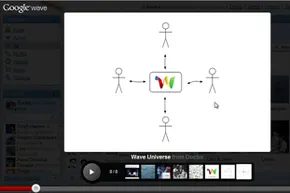
If you are looking for the definitive example of a Google product that crashed and burned, look no further than Wave. It wasn’t just another failed experiment. It was the biggest failure in the company’s portfolio. The project tried to cram too many unrelated features into a single interface, wrapping them in a confusing layer of complexity that alienated users before they even started. It wanted to be the everything-app for content sharing, mirroring the hubris of later attempts like Google+. That social experiment may still have a pulse, but Wave is long dead.
A Feature Overload Nightmare
Why did people hate it? Or rather, why did they struggle to use it? Let’s break down the experience. You already had Gmail for emails. You didn’t need Wave to send an email. But if you wanted to send a message to a chaotic, hard-to-understand list of recipients using a process that defied intuition, Wave was your tool.
The platform promised multimedia integration. You could turn an email into a song. Or a video. Or a conversation about those songs and videos, which itself contained embedded media. It was recursive and bizarre.
Then there was the social aspect. You could juggle participants coming and going in a stream. You never really knew if you were talking to the right person or if anyone was even following the thread. Want a sidebar conversation? Wave let you create constant, parallel chats alongside the main thread. This created a valid, low-grade paranoia that everyone was talking about you behind your back. It combined the lags of chat rooms, the awkwardness of early online document collaboration, the toxicity of flame wars, and the cringe of corporate mixers into one app. And critically, most users didn’t know how to use it either.
The Hype vs. Reality Gap
It wasn’t actually that terrible. The real story here is about expectation. Like many Apple products or high-profile political events, the anticipation of a release often overshadows the actual utility. If you spend enough money and get enough value from a mediocre project, you’ll defend it fiercely. You’ll swear the Emperor is wearing the finest clothes.
But when a product is free, or when users feel defeated by its complexity, it becomes the worst thing that ever happened. Wave fell into this trap.
The Invite-Only Backlash
Wave launched in 2009 using the “invite-only” system. This was the same strategy that worked for Google Voice. It created a buzz. It spread through the culture via early adopters—those who turn backflips on release day and talk about a product for two weeks on either side of its launch.
This is a risky strategy. Wave had no broad-spectrum use case. It required more than two weeks to learn, even for hard-headed Google fans. It was performance art. It was a joke. It was not a tool.
Why Programmers Couldn’t Explain It
Even seasoned developers struggled to explain to laypeople why Wave was so unloved. Part of the issue was technical. The code language was complex. The precise reasons it failed to integrate with other Google suites are buried in the architecture.
But likely more important is the anticipation-backlash effect. Users expected a revolution. They got a confusing interface. The “right place, wrong time” argument also holds water.
The Legacy of Misfit Toys
Whatever features users liked in Wave didn’t disappear. They migrated. Those pieces of broken and abandoned products that make up Google’s “Island of Misfit Toys” get picked up, dusted off, and integrated into new configurations.
The DNA of Wave lives on in other products. The real-time collaboration concepts, the threaded conversations, the media embedding—they all seeped into the broader ecosystem. Wave failed as a standalone product. Its ideas survived.