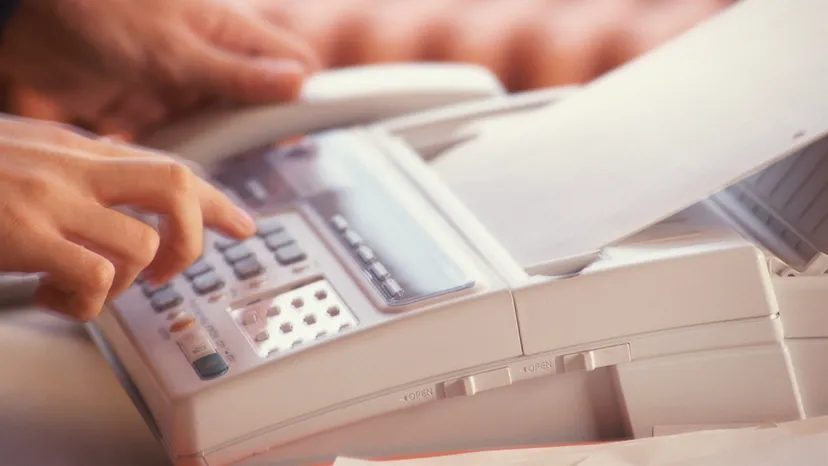
No more dusty machines with cartridge dust collecting in the corners. Internet faxing takes the old-school concept of faxing and removes the hardware. It relies on a web interface instead of a physical fax unit. This method offers a flexible and affordable way to transfer documents.
Most services assign each subscriber their own fax number. You can receive faxes to this number. You can also send faxes by email without touching the printer. Here is the breakdown of how that actually happens.
Send a fax by email
The process is simple. Attach the document to an email. The document can be a scanned image of the paper. You can also use files created with Microsoft Word or other software.
Send the message to the recipient’s fax number. But it’s more than just sending to a phone number. You append the name of the faxing service. For example:
The service takes over from there. Convert attachments to a format that traditional fax machines can read. This service sends data over phone lines. The recipient’s fax machine decodes the data. It prints the fax.
Senders do not need a scanner. There is no toner on the receiver side. Data simply passes through a bridge between the Internet and the Public Switched Telephone Network (PSTN).
Digital fax reception
The reverse process is just as easy. The sender uses a traditional fax machine. Call the number assigned to your Internet fax service. The machine translates the document into data. This information is transmitted over the telephone line.
The service receives incoming signals. It translates the data into an image file. The service then sends the image to your email address.
You open your email. Open the attachment. View the file.
Why this matters
This is not just for convenience. This is about infrastructure. It can be delivered with the reliability of the telephone network, taking into account the speed and accessibility of e-mail.
For companies, this reduces the cost of maintaining physical fax machines. Paper storage is unnecessary. This allows employees to send and receive legal documents from their laptops.
This technology has remained largely unchanged for decades. The principle is the same. The delivery mechanism has just changed.
This service translates attachments so faxes can read them.
This bridge between analog and digital is why Internet faxing still exists today. This is suitable for situations where traditional email may not be acceptable due to regulatory compliance or official announcements. It’s a niche field, but an important one.
If you want to understand the mechanism better, you can look at how fax machines handle signal modulation. Alternatively, you can examine how the Internet infrastructure routes these packets. The two systems are different. They meet only at the gateway.